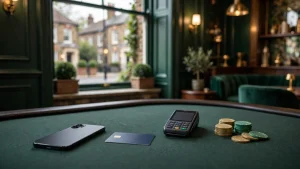
A practical guide to checking casino features, payment options and account details on an iPad in the UK.

An online casino can look polished on an iPad and still be awkward once you try to use it. I’ve learned not to treat a neat homepage as proof that the whole service will behave properly. Before putting money in, I check whether I can read the important details, move around the account and understand what I’m agreeing to without fighting the screen.
Start with the way you actually use your iPad. If you tend to hold it in portrait mode, check that the account menus and cashier remain usable that way; if you prefer landscape, turn the device and see whether controls stay accessible. Text should be readable without constant pinching and zooming, and buttons should be easy to tap without hitting a neighbouring option by mistake. These are small things until you’re trying to correct an account detail or find a limit setting.
I also look beyond the first screen. Can you reach the account area, help pages and terms without getting trapped in a pop-up or sent back to the start? Does the page remain clear when you move between sections? If something looks cut off, hidden or oddly arranged, I don’t assume it will sort itself out when money is involved. I’d rather leave than guess what a button does.
If you’re choosing an iPad casino in the UK for 2026, payout timing is one practical detail to consider. Use these short verdicts as a starting point when deciding what to check next.
EvoSpin
EvoSpin lists a payout speed of 1–3 business days. You can use that as a reference when considering your options.
Revery Play
Revery Play lists a payout speed of 1–3 business days. You can use that as a reference when considering your options.
WinBeast
WinBeast lists a payout speed of 1–3 business days. You can use that as a reference when considering your options.
Amunbet
Amunbet lists a payout speed of 1–3 business days. You can use that as a reference when considering your options.
Britsino
Britsino lists a payout speed of 1–3 business days. You can use that as a reference when considering your options.
NightWin
NightWin lists a payout speed of 1–3 business days. You can use that as a reference when considering your options.
x3bet
x3bet lists a payout speed of 1–3 business days. You can use that as a reference when considering your options.
Jetsetspins
Jetsetspins lists a payout speed of 1–3 business days. You can use that as a reference when considering your options.
NightLuck
NightLuck lists a payout speed of 1–3 business days. You can use that as a reference when considering your options.
Dieselwin
Dieselwin lists a payout speed of 1–3 business days. You can use that as a reference when considering your options.
A useful check is to browse without rushing. Open the pages you’ll need before playing, not just the ones designed to get you there. Read the deposit information and the relevant account terms, and make sure you can find the operator’s help route. You don’t need to memorise every condition. You do need to know where it is, and be able to return to it on the device you plan to use.
Then consider your connection and your own setup. If the page is slow or keeps reloading, pause rather than repeatedly tapping controls; duplicate actions can make it harder to tell what has gone through. Keep your iPad’s software and browser current, and use a private device you control. Avoid saving account details on a device that other people use. None of that guarantees a smooth session, but it gives you fewer avoidable problems to deal with.
Before depositing, check the cashier on that operator’s site. Minimum deposits, transaction limits, fees and the financial controls available to your account can vary, and the current cashier is where to confirm them. Don’t rely on an old review, a search snippet or a number remembered from another casino. If you can’t see the relevant terms clearly on your iPad, stop and find them before proceeding.
There’s one step I’d put ahead of the payment choice: if you’re a new remote customer, consider a financial limit before making your first deposit. Set one that makes sense for your circumstances, rather than choosing a figure because the site makes it easy to click through. After registration, account-level limit facilities should remain accessible, so check that you can find them again without having to start a new session or contact support. A limit is useful only if you can locate and manage it.
I used to think I could sort out sensible boundaries later, once I’d got a feel for a site. That was backwards. It’s easier to decide before the excitement of a deposit or a session starts nudging your judgement. If the limit controls are difficult to find, unclear or absent from the account area, don’t brush that aside as a minor design flaw. It affects how much control you have over your own play.
For real-money use, be deliberate about the point at which you move from browsing to paying. Check the amount shown before confirming, and make sure you understand whether you’re making a deposit or changing an account setting. If a page behaves unexpectedly, don’t keep pressing the same control. Return to the account or cashier and check the status first.
A “tablet-friendly” label is just a claim until the important parts work for you. I’d want to read the terms, reach account controls and use the cashier without squinting or guessing. If those basics aren’t clear, there’s no prize for persevering. Try another time—or another site.
“Best” is a sales word, not a useful test. I have learned to look past the headline and ask what I can confirm for my own account, on my iPad, before money is involved. A casino can look polished and still be a poor fit if its cashier terms are unclear or the payment option you expected is not available to you.
Start by treating comparison tables and reviews as signposts, not promises. A specialist review can help you identify details worth checking, but payment information can change. Go to the operator’s live cashier and read the terms shown there. If a figure or condition matters to your decision, confirm it at the point where you would actually deposit.
Before depositing, check the minimum deposit, the maximum transaction value, and any fees shown for the method you intend to use. These conditions can differ between payment methods and operators, so a claim that a casino has “easy deposits” tells you very little. The live cashier is where the practical detail should be.
Check the financial-limit controls too. If you are a new remote customer, pause to consider a limit before your first deposit rather than leaving the decision until after a session has started. The account should continue to give you access to limit facilities afterwards. I used to think I would sort that out later. Later is a slippery word.
Then look at how clearly the operator explains its terms. Are the cashier conditions easy to find? Do they identify which method each limit or fee applies to? Is the information consistent between the cashier and the relevant terms? If the details are vague or conflict, do not fill in the gaps with assumptions. Ask the operator or choose only when you understand what you are agreeing to.
Payment details are not fixed features of an iPad. Minimums, maximums, charges and processing times for deposits and withdrawals depend on the selected method and the live cashier. Public banking information does not give stable UK-specific figures for casino withdrawals, so the current cashier is the place to check what applies.
That matters when a review describes a method as “fast” or presents a limit as though it will always apply. Those words may reflect one point in time, one account, or one payment route. I would not use them as a basis for choosing without checking the operator’s current terms. A detail that was accurate when a page was written may no longer match what appears when you sign in.
A useful comparison is not the one with the longest list of features. It is the one that answers your practical questions clearly. Can you find the cashier information without hunting? Can you see the conditions before committing to a payment? Are the account’s financial controls accessible? Does the site work as you intend to use it on your iPad? Those checks are more informative than a banner calling a service “the best”.
Keep your own notes if you are comparing several options: record what the live cashier says, when you checked it, and which payment method the information concerns. That stops you accidentally comparing one operator’s deposit terms with another’s withdrawal terms, or relying on an old review instead of the current account information.
Do not treat a method shown in a general review as guaranteed to be available to you. The cashier may present different choices, and conditions can depend on the selected method. Before depositing, check the figures and fees that apply to that choice, rather than assuming the terms for another method will carry over.
I also separate a confident tone from a clear answer. A page can call a casino “top-rated” without telling you what its cashier will allow or charge. If the important terms are hard to locate, that is itself a reason to slow down. No badge can do the checking for you.
The point is not to find a universal winner. It is to compare current, specific information and decide whether the arrangement suits you before you pay in. When the cashier and terms are plain, you can make that call with your eyes open. When they are not, I move on.
An iPad can make casino games feel close to playing on a desktop, but the device alone does not tell you what a casino offers. I would not treat a page labelled “best iPad slots” as proof that its titles are in the operator’s current lobby. Game catalogues can change, and a list copied from elsewhere may not match what you can actually open.
Check the casino’s own games area while using your iPad. Look for the categories you care about, then open a game and see whether its controls, text and layout work properly on the screen. A title appearing in a catalogue is not the same as confirming that it loads and plays as expected on your device.
For slots, pay attention to the controls before staking money. Online slot autoplay is not allowed in Britain, and each spin must last at least 2.5 seconds. If a game appears to offer autoplay, or its pace seems inconsistent with that rule, stop and check what you are using rather than assuming the feature is permitted.
A “free” label also needs context. It may refer to trying a game without staking real money, but it does not establish that the same title is available for real-money play. Keep that distinction clear when browsing; free-play options are a separate question from the operator’s real-money catalogue.
I would also avoid assuming that a game advertised for phones will behave identically on an iPad. Test the actual game screen: can you read its information, reach the controls and understand the stake before starting? Those details matter more than a long list of titles.
There is no reliable universal catalogue of iPad casino games to take at face value. The useful check is the current game lobby on the casino you intend to use, viewed on your iPad. Verify the specific games there, and judge the experience from the game itself. No guesswork.
When I see “free” beside a slot game, I stop and work out what the word applies to. It might describe play that does not involve staking cash, rather than a route into real-money gambling. Those are different experiences, even if the screens look similar. A free-play label alone does not tell you whether you can win money, whether you are being asked to deposit, or what happens if you move from one type of play to another.
I’ve learned not to treat a familiar casino look as an answer. Read the description on the service itself and notice what it says about the play being offered. If the wording is vague, don’t fill in the blanks with what you hope it means. “Free” is a claim to check, not a promise that every part of the experience costs nothing.
If your aim is to pass time without gambling for money, keep that boundary clear. A free-play experience should not be confused with opening a real-money gambling account or making a deposit. If you are asked to fund an account, you have crossed into a different decision; take a moment before continuing rather than assuming it is just another step in accessing free slots.
There is no need to deposit simply because a screen invites you to. You can leave and reconsider. That sounds obvious, but I have clicked through prompts before without stopping to ask what I was agreeing to. A pause would have helped.
If you do decide to move to real-money gambling, the rules change. In the UK, online gambling is legal only through a site holding a current UK Gambling Commission licence, and players must be at least 18. The operator must verify your age before allowing you to deposit. These are not details to infer from a game’s appearance or its use of the word “casino”; check who is providing the gambling service and what it says about its status.
A free slot app may sound like a single, clear category, but the label does not tell you exactly what is included. Check whether the description refers to play without cash stakes, whether it mentions any paid features, and whether it explains what happens if you choose to fund an account. I’m not saying every free experience has extra costs; I’m saying the word “free” by itself doesn’t settle the question.
Be especially careful with the difference between playing for fun and gambling for money. If you cannot tell which one is on offer, don’t enter payment details or make a deposit until you can. If the description leaves you guessing, that is a reason to stop, not a puzzle you need to solve by tapping further.
For real-money slots in Britain, there are also rules about how play works: autoplay is banned, and each online slot spin must last at least 2.5 seconds. Those rules do not turn free play into gambling, nor do they prove that a particular game is available. They matter when you are considering real-money online slot play.
If you decide to make a first deposit, consider a financial limit before you do. That is a sensible point to decide what you can afford to spend, rather than choosing while caught up in the moment. Account-level financial-limit controls should remain accessible afterwards, so you can review or change your limits through your account.
I’d keep free play and real-money play mentally separate, too. A session that costs nothing is not a reason to assume a deposit will be harmless, and enjoying a free game does not tell you whether real-money play suits you. Make that choice on its own terms.
So, if you are looking for free slot games on an iPad, judge the offer by what it actually says: whether play is free, whether real money is involved, and whether a deposit is being requested. Don’t rely on a label to answer all three. Small check, big difference.
When I look at a casino on an iPad, I don’t assume an app is automatically better than the website. An app can put the service on your home screen; a browser can spare you an installation. What matters is whether the route you choose works properly on your device and gives you clear access to the account and cashier.
If you’re considering an app, find it through the operator’s own website or a recognised app store, and check that the publisher matches the casino you intended to use. A familiar name or convincing icon is not enough. Don’t install a file from an unfamiliar download page just because it promises a “better” experience; you may not be dealing with the service you think you are.
Before signing in, confirm that the operator holds a current UKGC licence for serving UK players. Then check the terms and privacy information provided for that service. If an app asks for access that seems unrelated to using an account, pause rather than tapping through.
A browser visit has its own simple check: make sure the address is the operator’s genuine site before entering login details. I’ve learned not to trust a page just because it looks familiar. Small screen, easy mistake.
Open the casino’s website in your usual iPad browser and see whether you can reach the account area, read the terms, and open the cashier without awkward workarounds. Try rotating the device and using the controls you’d actually rely on. If text is cramped or buttons are difficult to use, an app may not fix the underlying problem; it may simply package the same service differently.
Testing Browser Access
Open the website
Launch the casino's site in your usual iPad browser and check for clear access to the account area and cashier.
Rotate the device
Switch between portrait and landscape modes to ensure controls stay accessible and text remains readable.
Verify navigation
Attempt to reach help pages and terms without being trapped by pop-ups or sent back to the start.
Don’t treat “download” as proof that a dedicated iPad app exists. An operator might direct you to its mobile website, offer an app for a different device, or provide another installation route. Follow the operator’s current instructions and check that they explicitly cover your iPad before proceeding. I wouldn’t install anything on the strength of an old forum post or a third-party download link.
There’s no universal winner here. The browser is a straightforward way to test access without installing anything. An official app may suit you if you prefer a home-screen shortcut, but only if the operator confirms it supports your device and you’re comfortable with its permissions. “Best” is personal. Test the basics.
Whichever route you use, make sure you can find the current cashier and account settings after signing in. Before depositing, check the operator’s current terms, any identity checks still outstanding, and the payout route available to your account. A specialist casino review can offer a snapshot of payment arrangements, but it may not reflect what your account can use now.
Also check whether the deposit method you’re considering is available for withdrawals. Don’t infer that from a payment logo on the deposit screen. I’ve made that assumption before, and it’s a poor way to discover a restriction later.
If the app and browser behave differently, use the operator’s own support or help pages to clarify which access route is supported. Don’t submit payment details until you can identify the official service, reach the relevant account information, and understand the current terms. The screen is only the doorway.
When I’m choosing slots to play on an iPad, I treat the payment method as a separate decision from the games. Payforit or Boku may appeal if you want to pay by phone, but neither should be assumed to appear in a particular casino’s cashier. Check the deposit options shown for your account before you plan around one.
A specialist review reports Payforit minimum deposits in the £3–5 range and a £30 maximum. Those figures can change, so use them as a prompt to check the live cashier, not as a promise that every operator applies the same limits. Payforit is generally intended for mobile players, and the deposit is charged to your monthly phone bill or taken from your pay-as-you-go balance. The process involves choosing Payforit, entering your mobile number, then submitting the confirmation code sent by SMS.
That can feel straightforward on a tablet, but the small ceiling matters if you were planning a larger deposit. Don’t try to work around it by splitting payments; check the operator’s available options instead. A modest cap is still a cap.
Deposits are charged to your monthly phone bill or pay-as-you-go balance, typically with a £30 maximum.
Requires SMS confirmation before funds move, with a standard reported maximum of £30 per transaction.
Boku has a standard reported maximum of £30 per transaction, according to a specialist review. Before using it, confirm that the cashier currently offers Boku and check the amount that will actually be charged. You need to confirm the transaction by SMS before the funds move. Your phone credit must cover the deposit and any network fee; a mobile network may charge a processing fee, and the amount can vary with your network and tariff. If the confirmation does not arrive or the available credit is short, the payment may not complete.
There’s another practical difference: Payforit is charged to your phone account or prepaid balance, while Boku’s fee and confirmation steps can affect the final amount and whether the transaction succeeds. Check the cashier and the payment screen before approving anything. I’ve learned not to treat a familiar logo as proof that the method is available or cost-free. Read what is displayed.
If you’re browsing slots on an iPad without intending to deposit, don’t let a pay-by-phone prompt blur that choice. A deposit is real money, whether you make it on a phone or tablet. Set a limit before your first deposit, and keep the account’s limit controls accessible for later.
The iPad changes how you reach a casino, not the rules that apply when you gamble. I used to treat a familiar-looking site as a reassuring sign. It isn’t. For real-money play, check that the operator holds a current UK Gambling Commission (UKGC) licence. Remote operators serving customers in Great Britain need the relevant licence, wherever the company itself is based.
The legal framework is not identical across every part of the UK: the Gambling Act 2005 covers England, Scotland and Wales, but not Northern Ireland. So don’t assume a site is suitable just because it loads on your tablet or accepts your details. The important check is whether it is properly authorised for the market it serves.
Age is another practical gate, not a box to rush through. Online gambling under a UKGC-licensed operator is for people aged 18 and over, and the operator must verify your age before allowing you to deposit. If an account is still awaiting checks, don’t try to push money through first and sort it out later. That can leave you stuck before you even get to play.
Payment rules matter, too. UKGC rules bar remote gambling licensees from taking credit-card payments for gambling. That restriction also applies when the payment is routed through a money service business, so moving credit-card funds through another payment service does not make it an acceptable workaround. I learned not to read a payment logo as permission: use a method the cashier actually offers for your account, and don’t try to disguise where the funds came from.
These checks are not specific to an iPad casino; they apply to the gambling account behind the screen. A site can look polished on a tablet and still be the wrong place to deposit. I now check the operator’s status and make sure my age verification is complete before putting money in. Basic, but it saves trouble.
An iPad can make the deposit part feel almost too simple: choose a payment option, confirm it, and get back to the game. I’ve made the mistake of treating that first successful payment as proof that cashing out would follow the same path. It isn’t proof. A deposit route and a withdrawal route are separate things, and the cashier’s current rules decide what your account can use.
Before putting money in, check the payout route available to your account, whether any identity checks are still outstanding, and the operator’s current terms. That is the point to find out whether you can withdraw to the method you intend to use, not after a balance is waiting to be cashed out. A specialist review may describe a payment option as available, but that does not establish what the live cashier will offer to you now.
The distinction matters because a method that accepts a deposit may not appear among the withdrawal choices. Some non-UK casinos require withdrawals to go back through the deposit method, but that condition should not be assumed to apply everywhere. Equally, don’t assume it does not apply: read the operator’s terms and check the cashier for your account. If you cannot find a clear answer, ask customer support before depositing and keep the response.
Specialist reviews describe debit cards, bank transfers, PayPal and e-wallets such as Skrill or Neteller as possible withdrawal routes at UK-licensed casinos. Treat that as a guide to methods you might encounter, not a promise that each will be available at a particular casino or on your iPad account. The live cashier is the place to confirm the options actually offered to you.
Then check that the route matches your account details and currency. A payout can become complicated if the payment account is not yours, or if the name or currency does not match what the casino requires. The method’s name on a general payment page is not enough; make sure the cashier shows it as an option for your account and read any conditions attached to it.
I also look for the withdrawal minimum and maximum, fees and processing information before paying in. These details depend on the operator and selected method, and can change. If a request is below the casino’s minimum withdrawal threshold, it may be rejected. If it exceeds a maximum, a casino may divide it into separate payments. Neither outcome is something to discover by surprise after a win.
A specialist review can be useful for knowing what to look for, but it cannot replace a check of the live cashier. Banking details are not stable across operators, and published processing statements may no longer match the current terms. Read the current information with your own account in mind.
I’d make this a short pause, not a research project. Before depositing on an iPad, confirm:
The final point is easy to miss when you’re focused on getting started. A deposit method that is convenient on a tablet may not be the route you want for receiving money later. If the cashier offers a different payout method, check that you can use it and that its account details match yours before you fund the account.
It’s not exciting admin. Still worth doing. A real-money casino on an iPad should be judged by the whole journey: money in, checks completed, and a workable route back out. A successful deposit only answers the first part.
An iPad casino bonus can look straightforward until you read the conditions attached to it. I check the operator’s current promotion terms before making a deposit: they should say who is eligible, which deposits qualify and what restrictions apply. A “no-deposit” offer still has terms, so don’t assume the label means you can withdraw any winnings without meeting conditions.
Payforit needs particular attention. Specialist reviews report that most UK casinos exclude Payforit deposits from welcome bonuses and other promotions. If you plan to pay by phone, check the specific offer’s rules first; a deposit can go through without qualifying for the promotion. Annoying, but better to know before paying.
Bitcoin is another search that can lead to assumptions. Specialist reviews have listed major cryptocurrencies among payment methods, alongside Visa, Mastercard, Skrill, Neteller and PaysafeCard. That does not confirm that Bitcoin is available at a particular casino, or that it can be used from an iPad. Check the operator’s live cashier for the methods currently offered to your account, and read the promotion terms for any exclusions tied to a payment method.
I’d keep the deposit decision and the bonus decision separate. First confirm that the method you want is shown in the cashier. Then read the offer’s full terms rather than relying on a banner or a short description. If the cashier and promotion page don’t clearly agree, don’t guess that your payment will qualify.
That small pause matters. A bonus is an offer with conditions, not extra cash already sitting in your balance.
An iPad can make a live-dealer table feel close at hand, but the screen is only part of the decision. Before choosing a live casino or blackjack table, I check what happens after a deposit. A payment option shown in the cashier is not automatically a way to withdraw winnings.
A specialist review notes that deposit and withdrawal arrangements can vary, so treat any general description as a prompt to check—not as a promise about your account. Open the casino’s current cashier and look for the withdrawal methods available to you. If the deposit method is not listed for withdrawals, find out which payout route you can use before you play.
I also check whether the account has outstanding identity requirements. If verification is still needed, establish what the operator needs and whether anything remains unresolved before depositing. It is a frustrating point to discover only when you want to cash out. Better to check first.
For live blackjack on an iPad, keep the practical order simple: confirm the cashier’s current payment details, check the payout route for your account, review any identity checks, then read the operator’s current terms. A specialist review can help flag what to look for, but it cannot confirm the options currently available to your account. The cashier and account information are the useful checks.
That takes a few minutes. It can save a muddle later.
Payforit is listed at Kwiff, NetBet, JackpotJoy and Virgin Games. Check the operator’s live cashier, as payment options can change.
Usually not: most UK casinos exclude Payforit deposits from welcome bonuses and other promotions.
Payforit deposits are capped at £30 per transaction. Check the cashier for the operator’s current terms.
No. Payforit can be used for deposits, but not to withdraw casino funds.
They must be debit-card payments: UK-licensed casinos cannot accept credit-card payments for gambling. Check that your card is a debit card before depositing.
The listed methods include Visa, Mastercard, Skrill, Neteller, PaysafeCard and major cryptocurrencies. Payforit is also available at some operators.