Bank-transfer availability, speed and payout routes depend on the cashier and account checks.
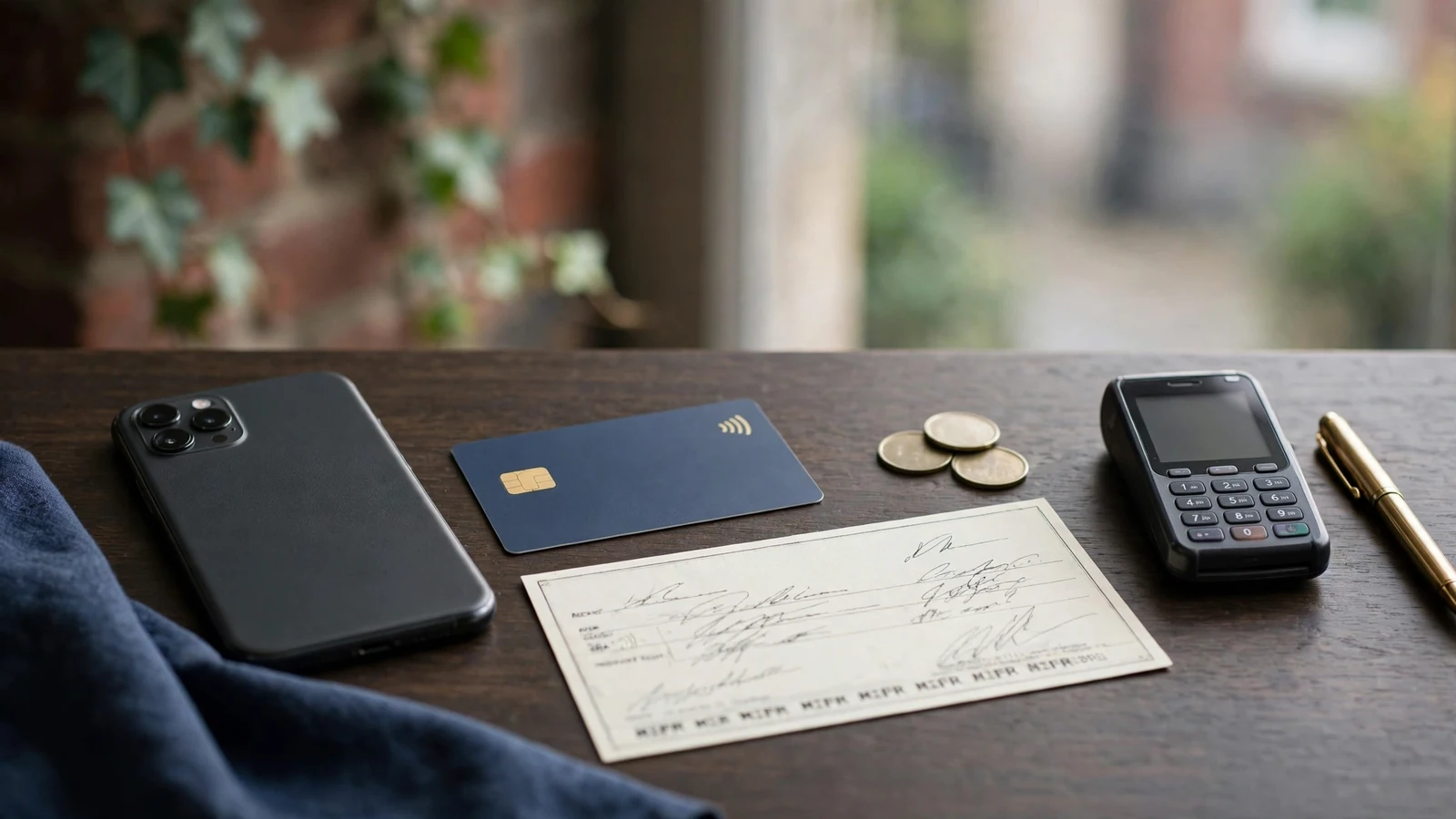
When I compare casino payment options, I try not to treat them as interchangeable buttons. A bank transfer, a card payment, an e-wallet and a prepaid option each involve a different route for moving money. The name in the cashier tells you which route is being offered; it does not, by itself, tell you whether it suits the way you manage your account.
A bank transfer is the option to look for when you want the payment to come from a bank account rather than from a card or a separate payment service. That can make it feel like the straightforward choice. But “straightforward” is not the same as automatically better. The cashier still matters, and the alternatives are worth understanding before you settle on one.
Current independent specialist reviews list Visa, Mastercard, Skrill, Neteller, PaysafeCard and several major cryptocurrencies among casino payment methods. That is a snapshot of what those reviews report, not a promise that every casino accepts every option. A method appearing on a review page does not confirm that it is available to your account or in the cashier you are using.
If you’re looking for an instant bank transfer casino, check payout timing too: an instant transfer option does not by itself tell you how quickly withdrawals are paid. The listings below state each operator’s payout speed.
EvoSpin
EvoSpin lists a payout speed of 1–3 business days. You can use this as a guide to its stated withdrawal timing.
Revery Play
Revery Play lists a payout speed of 1–3 business days. You can use this as a guide to its stated withdrawal timing.
WinBeast
WinBeast lists a payout speed of 1–3 business days. You can use this as a guide to its stated withdrawal timing.
Amunbet
Amunbet lists a payout speed of 1–3 business days. You can use this as a guide to its stated withdrawal timing.
Britsino
Britsino lists a payout speed of 1–3 business days. You can use this as a guide to its stated withdrawal timing.
NightWin
NightWin lists a payout speed of 1–3 business days. You can use this as a guide to its stated withdrawal timing.
x3bet
x3bet lists a payout speed of 1–3 business days. You can use this as a guide to its stated withdrawal timing.
Jetsetspins
Jetsetspins lists a payout speed of 1–3 business days. You can use this as a guide to its stated withdrawal timing.
NightLuck
NightLuck lists a payout speed of 1–3 business days. You can use this as a guide to its stated withdrawal timing.
Dieselwin
Dieselwin lists a payout speed of 1–3 business days. You can use this as a guide to its stated withdrawal timing.
The broad choice breaks down into a few familiar types:
That is enough to see why the phrase “casino payment method” can hide important differences. The options are not simply different labels for the same process. They involve different providers and ways of funding a payment. If you have only ever used a card, an e-wallet may sound like a small variation; if you want to pay directly from your bank, it is a different route altogether. No magic button.
I used to read a long list of cashier logos as a sign that I had plenty of choice. It took me a while to notice that a list and a usable option are not quite the same thing. An independent review can help you see which methods are being reported, but the casino’s own cashier is where you see the options presented for that operator. I would not assume that a method named in a general review is available everywhere.
There is also a practical difference in how much you want to separate your gambling payments from other spending. Some people prefer a direct bank route; others like the idea of using a separate e-wallet or a prepaid option. That preference is personal, not a ranking. I have found that choosing a payment method because it sounds modern or gets called “convenient” is a poor substitute for understanding what it actually is.
A bank transfer can be considered alongside cards, e-wallets, prepaid payments and cryptocurrencies, but it should not be confused with them. In particular, a card bearing a bank’s name is still a card payment, while a transfer is a bank-account payment route. Skrill and Neteller are e-wallet names, not bank-transfer brands. PaysafeCard is a prepaid option, not a transfer. The distinctions sound obvious when written down; in a cashier full of logos, they are easy to blur.
This is why I would approach “online casino with bank transfer” as a description of one possible cashier option, not a quality mark. The same goes for claims about the best or top bank-transfer casinos: the payment label alone cannot tell you whether an operator is right for you. What matters at this stage is knowing where a transfer sits in the wider set of payment choices, without assuming that every site offers the same menu.
If you are comparing an online casino bank transfer with a card or an e-wallet, start with the route itself. Ask whether you want the payment to come directly from your bank account, through a card, through a wallet, or from a prepaid balance. Then check what the cashier actually displays. That keeps the comparison grounded in the options in front of you rather than a broad list copied from somewhere else.
Money is sent through a bank-account route.
Card-based options, distinct from a direct bank transfer.
E-wallets acting as intermediaries between a funding source and the casino.
A prepaid payment option.
Digital assets rather than ordinary bank-account payments.
I would keep cryptocurrencies in a separate mental box, too. They appear in some current independent reviews, but that does not make them equivalent to a bank transfer or establish that a particular casino accepts them. The same caution applies to every method on a review list: a reported option is not a universal one.
There is no single payment type that wins for everyone. A bank transfer is one route among several; Visa and Mastercard, Skrill and Neteller, PaysafeCard and some cryptocurrencies are other types identified in independent reviews. Knowing the difference is a useful start. The choice itself should come from the live cashier, not a label that sounds like a recommendation.
A bank transfer option can look reassuring in a cashier, but the payment label alone tells you very little about whether the account suits you. I would not call a site the best bank transfer casino just because it displays a familiar route or uses the word “simple”. What matters here is what the cashier shows before you commit: the amount you can deposit, any charges, and the controls you can use to keep spending within bounds.
Start with the live cashier while signed in to your own account. A general payment page or an old review can help you understand what to look for, but it cannot confirm the terms currently attached to your account and selected method. A specialist review may recommend checking the cashier for deposit limits, fees and financial controls; treat that as a prompt to inspect the details yourself, not as proof that every casino handles them the same way.
Look for the minimum deposit and maximum transaction value shown for the bank transfer option. They tell you whether the amount you had in mind can be accepted in one go and whether the route has a threshold that makes it unsuitable for your plans. Do not infer either figure from the casino’s general terms if the cashier presents a method-specific value.
Check that the limits apply to the option you have selected, rather than to a different payment route. A cashier may show several methods together, and a figure beside one does not necessarily describe another. If the bank transfer entry leaves the relevant amount unclear, pause and check the operator’s terms or ask support before putting money in.
That small pause saves guesswork. I have been tempted by a payment button and only then gone looking for the conditions; it is the wrong order. Decide whether the stated limits work for you first.
The amount entered at checkout is not the only detail worth checking. Find out whether the cashier or the terms disclose a fee for using the selected method, and whether it applies to the transaction you are about to make. If the cost is not clear, do not assume that the transfer is free simply because no charge is highlighted beside the button.
This is not about hunting for a supposedly perfect casino. It is about being able to see the cost before confirming anything. If two payment choices are available to you, compare their displayed terms rather than relying on a broad claim that one is “better”. The right choice is the one whose limits and charges you understand and are willing to accept.
A useful cashier is not only one that accepts a deposit. Check what spending controls are available at account level and where you can find them again after setting up your account. The operator must prompt a new remote customer to consider a financial limit before the first deposit, and account-level limit facilities must remain accessible afterwards.
Take that prompt seriously rather than treating it as a box to clear. Consider setting a limit that reflects what you can afford to spend, then check how the account lets you review or manage its controls. If you cannot find those facilities, ask the operator before depositing. A limit is only useful if you know what it does and can locate the relevant controls later.
I prefer to check this while I am calm, not halfway through a deposit. Less pressure, clearer choices.
Before you proceed, make sure you can answer a few plain questions: What is the minimum deposit for this method? What is the maximum transaction value? Is a fee stated? Where are the account’s financial-limit controls? If any answer is missing or seems to refer to a different payment option, stop and clarify it.
That is a more useful test than chasing a “best” or “fast” label. Those words do not tell you whether the cashier’s terms fit your budget or whether the controls suit the way you want to manage your account. A bank transfer casino worth considering is one where you can inspect the relevant information before depositing and make a decision without filling in the gaps yourself.
Keep the check specific to the account and method in front of you. Payment details can change, and a description you saw elsewhere may not reflect what the cashier currently offers. I would rather spend a moment verifying the figures and controls than rely on a confident-sounding promise. No guesswork needed.
“Instant” sounds like a clear promise. In a casino cashier, though, it can leave the important question unanswered: instant at which point? The payment option may be described as instant, but that label alone does not tell you the transaction limit, any fee, or when the money will be available. I would treat it as a claim to check, not a figure I can rely on.
A specialist review of UK payment options notes that there are no stable UK-wide figures for bank-transfer limits, fees or processing times. Those details can depend on the operator’s live cashier and the payment method you select. So a figure you saw in an old review, or on another casino’s payment page, cannot safely fill in the blanks for your account. Check the current terms where you intend to pay.
That matters because “bank transfer” is not enough information to predict what your own transaction will do. The cashier may display conditions for a specific option only after you select it or sign in. The relevant details are the ones attached to that option on the live page—not a general statement elsewhere that transfers are fast or free. Small print matters. Annoying, but useful.
The word can refer to different parts of the payment experience, and the label by itself does not explain which. It may describe how quickly a payment is initiated, while leaving unclear when the casino credits it. It may also be broad promotional wording rather than a firm processing statement. Unless the cashier explains what is meant, don’t turn the word into a guaranteed arrival time.
I have made the mistake of reading a payment badge as if it answered every practical question. It didn’t. A promise about speed is not a substitute for seeing the amount the cashier will accept, whether a charge applies, and what the operator says about processing. Those are separate details. If they are not visible before you confirm, pause and look for the payment terms or ask the operator to clarify them.
The same goes for the word “instant” in a page title or payment description. It does not establish that every UK bank, account or transaction will be handled in the same way. Nor does it prove that the casino has credited your balance simply because you have completed an instruction on the payment screen. Follow the status shown in your account and the operator’s stated process; don’t assume the label answers questions it does not address.
A specialist review also cautions that minimums, maximums, fees and processing statements for deposits and withdrawals can vary with the live cashier and the method selected. That is why I would check the exact bank-transfer option shown to me, rather than rely on a casino’s headline wording or a description copied from a different payment route.
Before confirming a deposit, look for the minimum amount and maximum transaction value displayed for that method. Check whether a fee is shown, and read any processing wording attached to the transaction. If the cashier presents these details in separate screens, take the time to review them before submitting. A quick click can turn uncertainty into a real payment.
Do not treat the absence of a visible fee as a promise that no fee applies. Equally, do not assume a fee exists just because another payment option charges one. The cashier and its terms are the place to verify the selected method. If something is unclear, get an answer from the operator before proceeding rather than guessing from a general description.
Processing statements deserve the same care. “Fast” is not a measurable estimate, and “instant” does not tell you what happens if a transaction needs further handling. Use the wording the operator provides for that specific method, and keep your expectations within it. If no timing is stated, there is no sound basis for turning the marketing label into a personal deadline.
Cashier information can change. A previous visit, an old review, or a saved note may no longer describe the option available today. I’d check again when making a payment, especially if the amount or timing matters to me. The current screen is more useful than a remembered claim.
Keep the distinction between what the cashier confirms and what you hope will happen. It can show the available transaction range, charges and processing information for the selected method. A broad “instant bank transfer” label cannot, on its own, settle those questions. If the information is incomplete, contact the operator or choose not to proceed until you understand the terms. Better a pause than a surprise.
Seeing bank transfer in a casino’s deposit menu tells you only that it may be available for adding funds. It does not confirm that the same route can be used to receive a payout. I used to treat a payment option as a two-way door: money went in, so surely it could come back the same way. That assumption can leave you choosing a deposit method before you know what your account can use for withdrawals.
A bank transfer is a cashier option, not a feature attached to an individual slot. If you want to play slots after funding your account, the practical question is whether your casino account can be paid out through a route that works for you. The labels on the deposit page do not answer that. Check the withdrawal area as well, or ask customer support to confirm the route available to your account.
A specialist review advises players to verify whether their chosen deposit method is also offered for withdrawals. Treat that as a prompt to check the operator’s current information, not a promise that the methods will match. The available payout route can depend on your account, and the cashier or support team is where you can confirm what applies to you.
Before depositing, check three things together: the payout route available to your account, any identity checks still outstanding, and the operator’s current terms. I would not leave those checks until after a win. If a verification step or account condition affects a withdrawal, finding out only when you request one is a frustrating way to discover that the deposit menu was never the whole story.
A useful check is to open the cashier while signed in and look for the withdrawal options, rather than relying on a general payment-method page. If the route is unclear, ask directly whether bank transfer is available for withdrawals on your account and whether anything remains to be verified. Keep the answer grounded in the current cashier or the operator’s own support response; payment information can change.
This distinction matters whether a page describes a casino with bank transfer or an instant bank-transfer option. “Instant” may describe the deposit flow, but it does not establish that a bank transfer is available for cashouts. Do not read a deposit label as a withdrawal promise.
I now check the way out before choosing the way in. It is a small step, but it keeps the decision tied to the account I will actually use, rather than to a general list of payment methods. Confirm the payout route first; then decide whether the deposit option suits you.
A bank transfer can look like a straightforward way to fund a casino account, but it does not remove the checks that apply before you can deposit. The detail I would not skip is age verification: operators must verify a customer’s age before allowing them to put money into a gambling account. If that check is still outstanding, a payment option appearing in the cashier does not mean the deposit can go ahead.
That can be irritating when you are ready to play and the account asks for more information. I would rather find that out before starting a payment than assume a transfer will make the account ready. If the casino asks you to complete verification, follow its instructions and wait until the account is cleared to deposit. A fast-looking route cannot override the operator’s responsibility to check who is using the account.
There is another restriction worth keeping clear. UK Gambling Commission rules stop remote gambling licensees from accepting credit-card payments for gambling. That includes a credit-card payment routed through a money service business, so sending the funds through an intermediary does not make it an acceptable workaround. Don’t try to disguise where the money came from. It is not a clever shortcut.
This matters when you are searching for a casino that accepts bank transfer in the UK. The wording can make the method sound like a way around card restrictions or account checks; it is neither. A bank transfer is simply a payment route, and the operator still has to apply its checks before accepting a deposit. I would treat any suggestion that you can sidestep those requirements as a warning sign, not a perk.
Before your first deposit, there is also a responsible-gambling step built into the process: new remote customers must be prompted to consider setting a financial limit. Account-level limit tools must remain available afterwards, so you can revisit your settings rather than treating the first choice as permanent. I used to focus on getting through the cashier and leave these controls for later. That was backwards. Set a limit you can live with before money goes in, and know where to change it.
These checks are separate from whether a bank-transfer option is available on a particular casino’s cashier. A payment method may be displayed, but that does not guarantee your account is ready to use it. Check the account prompts, complete any requested age verification, and consider your financial limit before trying to deposit. No detours, no guesswork.
When I see a casino described as a bank-transfer option, I check what the cashier actually offers rather than assuming every way to pay from a phone is a bank transfer. Boku and Payforit are pay-by-mobile services: they use your mobile account or phone credit, not a transfer from your bank. They may be alternatives if you want another deposit route, but they are different products with different checks.
A specialist payment-method review groups Boku, e-wallets and Paysafecard as alternatives to Payforit. That does not mean every casino accepts them, or that any of them will appear alongside a bank-transfer option. Availability is operator-specific. I learned to treat a payment logo on a review page as a prompt to check, not as proof that I can use it at the cashier.
Boku needs particular care. Confirm that it is listed in the casino’s current cashier before you plan around it; support can’t be assumed from the name appearing in a general payment guide. If it is available, the deposit requires an SMS confirmation before the money moves. So it is not just a tap-and-done bank payment. You need access to the phone number involved and must complete the confirmation step.
A specialist review describes Boku’s standard maximum as £30 per transaction. I would verify the limit shown in the live cashier rather than treating that figure as guaranteed for every operator or account. The cashier is where the applicable amount should be clear before you commit. Small print matters.
There may also be a network fee. A payment can fail if your available phone credit does not cover both the deposit and any applicable charge, so check your network’s terms as well as the casino’s payment screen. That is a different cost from a bank-transfer fee, and it may depend on your network and tariff.
The useful distinction is simple: bank transfer uses a bank payment route; Boku and Payforit charge through a mobile account or phone credit. If you are comparing bank-transfer slots with pay-by-mobile options, don’t count the latter as instant bank transfers just because the deposit may be confirmed on a phone. Check which method the cashier names, whether it is currently supported, and what confirmation and charges apply. No assumptions.
“Fast” sounds useful, but it is not a processing commitment by itself. I’ve learned to look for the wording behind the label: does the operator say when it handles a request, or does it simply describe the payment option as fast? Those are different claims.
Start with the live cashier and the operator’s current terms, rather than relying on an old review or a snippet saved elsewhere. Find the bank-transfer entry and read any timing information attached to that specific option. Then check whether the terms describe the operator’s own handling or the whole journey. If the wording is broad, or gives no clear stage, don’t fill in the gaps with an assumption.
A specialist review notes that withdrawal methods, limits, fees and processing statements can change over time. That is why a statement you saw previously may no longer describe the account or cashier in front of you. I treat outside reviews as a pointer for what to check, not as confirmation of what will happen now.
It also helps to look for conditions attached to a timing statement. Is it limited to a particular method or account status? Does the cashier show different information from the general terms? If the pages do not line up, ask support to clarify before relying on the more appealing version. Keep the answer, and check that it refers to bank transfer rather than another payment route.
I would not read “instant” as meaning every part of a transaction is completed immediately. The word can make a process sound more certain than the operator’s actual wording. If no current, method-specific statement explains what “fast” means, the honest answer is that the timing is unclear—not that it will meet your preferred schedule.
My test is simple: current wording, clear scope, no guesswork. If those are missing, I stop treating the speed claim as a reason to choose that cashier. Less exciting. More useful.
If you want to fund a slot session from your bank account, Payforit is not the same thing as a bank transfer. The name can appear in a casino cashier alongside other ways to pay, but the money does not move directly from your bank account through a bank-transfer route. Payforit is a pay-by-mobile deposit method.
The steps are simple, but the source of the money is different: select Payforit in the cashier, enter your mobile number, then use the confirmation code sent by SMS to approve the transaction. The deposit is charged either to your monthly phone bill or to your Pay as you Go balance. That’s the distinction. No bank account transfer.
I’d keep that clear when choosing how to pay for slots. A cashier option labelled Payforit does not mean the casino accepts bank transfers, and seeing a bank-transfer option does not mean Payforit is available. They are separate methods, so check the method you intend to use in the live cashier rather than relying on a general payment label.
There is another catch worth noticing before you deposit: Payforit cannot be used to withdraw casino funds. So if you use it to put money in, you need a separate payout source that is verified for your account. Don’t assume the deposit route will carry winnings back to you.
That’s where I’d pause before tapping “confirm”. Check which withdrawal method is available to your account and make sure you can use it. The deposit and payout routes are not interchangeable just because they sit in the same cashier.
Payforit can suit someone who wants a mobile-billed deposit, but it is not a shortcut for paying by bank transfer. If bank transfer is what you want, select that method specifically; if you choose Payforit, treat it as a phone-balance or phone-bill payment and plan the payout separately.
When you request a bank-transfer casino payout, the cashier’s rules determine whether the request can go through as entered. I learned not to treat the balance shown on screen as proof that the whole amount is immediately payable. The withdrawal page may set a minimum and a maximum, and those limits can affect what happens next.
A specialist review reports that a casino may reject a withdrawal request when the balance is below its minimum payout threshold. That can leave you needing to meet the stated amount before you can submit a request. Check the withdrawal terms rather than assuming that any available balance can be cashed out. Annoying, but worth checking.
The upper limit matters too. A specialist review notes that a request above a casino’s maximum withdrawal limit may be divided into separate payments instead of being paid as one transfer. That changes how you should read the amount and schedule shown in the cashier; a large request may not arrive as a single transaction. The operator’s current terms should explain how it handles this.
Some non-UK casinos require a withdrawal to use the same payment method as the deposit. That is a policy to check, not a rule to assume applies everywhere. For a UK-facing account, rely on the methods and conditions actually shown for your account, and do not infer that a bank transfer accepted for a deposit will necessarily be offered for a payout.
I’d read the withdrawal page before requesting money: confirm the minimum, maximum, any split-payment wording and the route available to you. If the terms are unclear, ask the operator before submitting. A rejected request or an unexpected split is easier to avoid than to untangle afterwards.
Before I put money into a casino account by bank transfer, I check the cashier while logged in. Payment details can vary with the selected method and change over time, so an old review is no substitute for what the account shows now.
Look for the minimum deposit, the maximum transaction value and any fee before confirming. Check the processing information too, but treat it as the operator’s current statement, not a promise that every transfer will follow the same timetable. If a detail is unclear, pause and ask the operator rather than guessing.
I also check the account’s financial-limit controls. New remote customers must be prompted to consider a limit before making their first deposit, and those controls must remain accessible afterwards. I’d rather set a limit while I’m thinking clearly than try to work out what I meant to spend halfway through a session.
One detail that is easy to skip: confirm the withdrawal route available to your account before depositing. A bank transfer shown as a deposit option does not, by itself, confirm that the same route will be offered for a withdrawal. Check that the payout details correspond to your own account information and currency; a mismatch can become a problem when you want to access funds.
A specialist review can help you know what to look for, but its payment information may no longer match the live cashier. I use it as a prompt, then verify the actual terms in my account. If the minimum, fee, limit controls or payout route are not clear, I wait.
A few minutes checking beats a surprise later.
Choose Payforit at the cashier, enter your mobile number, then submit the confirmation code sent to you by SMS. The deposit is charged to your monthly phone bill or deducted from your Pay as you Go balance.
You can’t withdraw casino funds through Payforit. Check the cashier for the withdrawal methods and limits available to your account.
Payforit deposits typically start at £3–5. Check your casino’s cashier for the current minimum for your account.
No. Payforit is available at some operators, generally for mobile players; check your casino’s cashier to see whether it’s offered.
Payforit deposits are capped at £30 per transaction. The cashier shows the limit that applies to your account.