Hi-Lo turns each round into a higher-or-lower call, but card values, tie options and the way cards are dealt depend on the version.
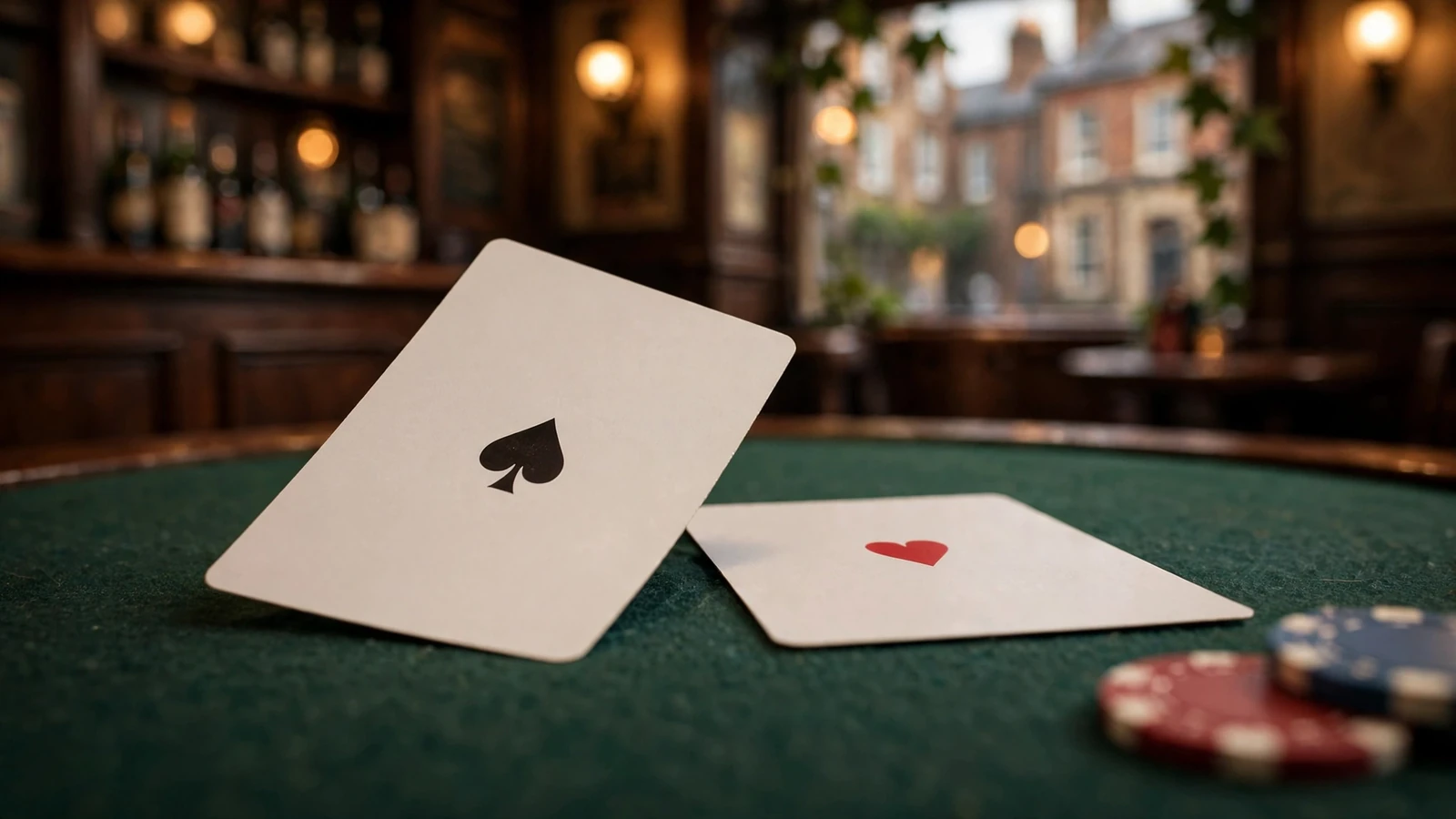
Hi-Lo comes down to comparing one card with the next. You look at the card in front of you and choose whether the next one will be higher or lower. The game then reveals the next card, and your guess is judged against the one you were comparing it with.
That is the whole decision in its simplest form. You are not choosing a suit or trying to name the exact card. You are calling the direction of the change. If the next card ranks above the current one, “higher” was right; if it ranks below, “lower” was right. The precise card values and rules around that comparison depend on the version you are playing, so I would not assume every Hi-Lo table or game uses the same setup.
Some versions also let you bet that the next card will have the same value. That gives you another possible call, but it is not available everywhere. Check the choices shown in the game itself rather than treating a tie bet as part of every Hi-Lo game.
It sounds almost too simple. I used to take that simplicity as a sign that the decision must be easy. It isn’t. A card can look as though it leaves an obvious direction, but the choice still depends on the rules and the price attached to the bet. The basic question stays the same; the consequences of a guess can differ.
A useful way to approach a hi-lo casino game is to keep the decision separate from the excitement around it. First identify the card you are comparing against. Then check which calls the game permits: higher, lower, and, if offered, the same value. Only after that should you think about placing a bet. A quick guess is still a bet, even when the game makes it feel like a casual tap.
You may see the name written as Hi-Lo, Hi-Lo casino, or simply Hi-Lo game. The label does not tell you which rules are in force. I learned that the annoying way: familiar names can cover different formats, and carrying an assumption from one version into another is an easy mistake. Read the displayed rules before you start.
 Live Baccarat Online Casinos UK: What to CheckLearn how to verify a UK operator’s licence, compare baccarat tables, understand bets and limits, and assess variations and bonus terms before…
 Live Dream Catcher Casino UK: What to KnowLearn how a live dealer stream and betting interface work, and why “live” alone does not explain the game rules or what…
There is also a difference between making a prediction and knowing what happens to your money. A correct guess may be handled according to that version’s pay table, while a wrong guess can wipe out winnings accumulated in that game. So don’t treat a run of correct calls as money already secured. The option to continue can make the next choice feel smaller than it is.
At heart, Hi-Lo asks for a comparison, not a complicated card forecast. You call the next card higher or lower than the current one, with a same-value call only where the game offers it. Keep that distinction in mind, and you have the basic idea without assuming that every game bearing the name plays alike. A small choice. Real stakes.
A live Hi-Lo round has a little more going on behind the table than the exposed card suggests. The dealer is working from a shoe, and the sequence of cards is shaped by what happens after one hand ends as well as by what you can see on the screen.
One specialist review describes a shoe containing six decks of 48 cards, with the tens removed. That is a description of a particular live-game setup, not a detail I’d assume applies to every table carrying the Hi-Lo name. The important point for following the deal is that this is not simply a fresh pack brought out for each hand.
Before the next winning card is revealed, the dealer burns three cards. “Burned” means they are dealt out of play rather than shown as the result you need to follow. You may see the dealer’s hands move, but those cards are not part of the visible sequence used to settle the round. If you’re watching casually, it can look as though the next result appears after an unexplained pause. That pause is part of the procedure.
The card that won the previous hand stays visible and becomes the reference card for the next round. So the table does not begin again from an unrelated starting point each time. The last winning card remains in view, and the next hand is dealt with that card as its point of comparison. I used to think the displayed card was just a recap of what had happened. It is doing a job in the next round, too.
There is also a continuous shuffler in the described live setup. Cards from the previous round are returned to it straight away, rather than being left aside until a larger batch of hands has finished. That means the visible run of results is not a simple walk through a fixed stack where you can track every card dealt since the shoe began. The dealt cards go back into the shuffling process as play continues.
That detail changes how the table feels. You see a reference card, a short dealing sequence, and a result; then the previous winning card carries forward while the used cards re-enter the machine. The shoe is being managed continuously in the background. It is easy to focus only on the large card shown on screen and miss that the dealer has burned cards and the shuffler is already taking cards back in.
A live stream can make all of this seem quicker than it is. The camera keeps the table in view, but it does not always make the handling of every card obvious at a glance. I find it helps to separate the visible reference card from the unseen parts of the procedure: the burn cards do not become the result, and the prior hand’s cards are not simply kept out of circulation.
That is the dealing rhythm to watch for when you open a live Hi-Lo table: the previous winning card remains exposed, three cards are burned before the next winning card is shown, and a continuous shuffler returns cards from the previous round to play. Not a fresh shoe each hand.
At a live Hi-Lo table, I would not make a Higher or Lower choice just by looking at the reference card and backing the direction that feels obvious. The practical recommendation is to choose the option that pays more. That gives you a clear comparison to make before placing the bet: check both prices, then select the better-paying side.
That is a decision rule, not a promise that the higher-paying option will win more often. A tempting payout can still come with a tougher result to call, and there is no reason to treat a bold-looking number on the screen as proof that a bet is favourable. I have made that mistake in other games: I saw a bigger potential return and stopped asking what had to happen to earn it. Don’t let the price do your thinking for you.
For a Higher or Lower bet, drawing the same value as the reference card is not a neutral outcome. It loses. That matters when you compare the two directions, because neither choice gives you a safe way to sidestep a repeat value. If the next card matches, the bet is gone.
It is easy to focus on the clean version of the guess: the next card is either above or below. But the tie is part of the decision too. A direction can look comfortable at a glance while still leaving that losing result in play. I would rather keep that in mind before betting than act surprised when the card lands on the same value.
There is no clever wording that changes the rule. A tie loses. So when you are weighing the displayed prices, remember what each side asks you to risk, including the possibility that the next card matches rather than moving in either direction.
A proposition bet is not simply another way to press Higher or Lower. The exposed card changes how you should assess those options. If a proposition outcome would count the exposed card as a winner, avoid betting on it: that card is no longer in the shoe and cannot supply the result you are hoping for.
That is a small detail with a practical consequence. You may see a card face up and instinctively count it as part of the possibilities ahead. For this kind of bet, that can lead you to back an outcome that depends on a card that has already been removed from the available cards. I would check the proposition against the exposed card before staking anything.
This does not mean every proposition bet is automatically poor, or that the exposed card makes every other choice attractive. It means the card you can see is not a live candidate for the next result. If your chosen outcome needs that card to win, leave that bet alone.
Live play can make a quick guess feel more informed than it is. The cards are visible, the pace is immediate, and it is tempting to turn a hunch into a system. I have learned not to confuse watching closely with having a useful edge. For the decisions covered here, keep it simple: compare the Higher and Lower prices, remember that a matching value loses, and rule out proposition outcomes that rely on the exposed card.
Also keep the game’s wording in view. A label can sound like a special opportunity, but the useful question is what result actually wins and what price is offered for it. If that is unclear, pause rather than fill in the gaps yourself. I have played through unclear rules because I did not want to lose the rhythm. Bad trade.
The same caution applies when one side appears more attractive because of the current card. A feeling that the next card “has to” go one way is not the same as a reason to ignore the payout or the tie rule. Make the choice from the terms shown at the table, not from momentum after a run of wins or losses.
In a live Hi-Lo casino game, disciplined betting is mostly about catching the details that are easy to skip: which side pays more, whether a same-value draw loses, and whether a proposition relies on a card already exposed. None of those checks makes a guess certain. They do stop you from placing a bet on terms you have misunderstood. That is worth doing before the next card is revealed.
In the online card version, you compare each new card with the one currently shown and choose whether the next will be higher or lower. The detail that changes the feel of the game is the deck: in the version described here, it is a single pack of 52 cards, and a card is not put back after it appears. The cards already dealt are out of play for that game.
The values run from ace at one point up to king at 13. So an ace sits at the low end and a king at the high end. Each reveal changes the card you are judging against, while the cards already used remain unavailable. It is still a simple choice on screen, but the sequence does not start afresh with the same full pack after every guess.
There is an important wrinkle: descriptions of online Hi-Lo do not agree on the deck arrangement. One account describes the single 52-card pack, while a specialist review describes six decks of 48 cards, with continuous shuffling. Those are different setups, not two ways of describing the same deck. Check the rules shown for the particular game you have opened rather than assuming that every online Hi-Lo casino uses the single-deck format. The distinction matters because a card that has already appeared cannot come around again in the single-deck version, whereas a continuously shuffled shoe is a different mechanism.
The pot is the other part worth understanding before you click. When your prediction is right, the winnings are added to your pot. When it is wrong, the money placed on that guess is lost, and the winnings accumulated in that game are voided too. That can make a run feel more valuable with every correct call, but it does not make the next call safer. I learned that the irritating way: a growing pot can make you feel as if you are playing with money already secured. You are not.
This is why I separate the on-screen balance from the amount you can actually take away. A correct guess increases what is sitting in the game; it is not the same as having collected it. If the next prediction fails, the run’s accumulated winnings go with it. The game keeps the decision narrow—higher or lower—but the consequence applies to the whole pot, not just to the last step.
Before starting, I’d check two things in the displayed rules: whether the deck is single and depleted card by card, and what happens to the pot after an incorrect guess. Those details tell you what sort of sequence you are entering. The label “online Hi-Lo” does not settle them on its own.
No reset. No safety net.
Draw Hi-Lo has a feature that changes the maths as the game goes on: it uses one 52-card deck, and cards stay out once dealt. Aces count low. So a card that has already appeared cannot turn up again in that game, and the mix of cards left in the deck keeps shifting.
That makes this version different from a game where each new decision is made from a fresh or continuously shuffled supply. The cards you have seen are information, but using that information takes attention. I’ve been tempted to treat a run of high cards as a promise that low ones must be next. It isn’t. The deck’s composition changes; it doesn’t owe you a particular result.
A specialist review reports a 96.07% return when following basic strategy for this described version. The same review gives 100.36% for a card-counting approach. Those figures belong to that specific Draw Hi-Lo setup, not every game carrying the Hi-Lo name. They are also reported theoretical returns, not a forecast of what your session will pay. A figure above 100% can look like permission to press on. It isn’t.
Card counting here means tracking what has left the deck and adjusting decisions to the cards still available. That is a more involved approach than simply following a basic strategy, and it can be easy to lose track when you are focused on recovering a previous loss. I’ve made that mistake: the count becomes an excuse to stay in, rather than a reasoned decision.
There is another cost to chasing. In this version, an incorrect guess loses the money staked and voids winnings accumulated during that game. A favourable-looking count cannot protect a pot once the guess goes wrong.
Use the return figure as a way to understand the reported model, not as a promise or a target to reach. If tracking cards makes you rush, or turns a loss into a reason to keep playing, stop. The deck is finite. Your patience should be, too.
A reel-based Hi-Lo can look familiar at a glance: you still pick higher or lower. But you are not comparing a card with the next card. The result comes from where a reel stops, so the game has a different feel from card-by-card versions.
A specialist review describes a version in which you choose a direction on one reel. If it stops on a number in the direction you selected, the bet wins. If it stops in the opposite direction, you lose; a tie also counts as a loss. That tie rule matters. It is not a neutral pause or a push, so a result that matches your starting point does not preserve the stake.
The reel’s motion can make the choice feel more dramatic than it is. I’ve caught myself treating the last few symbols as if they were evidence about where the reel would land. They aren’t a reason to change the rules in your head: the result is determined by the stop, and the tie outcome remains a loss. Keep the bet simple. The display is theatre; the paytable and stated rules tell you what the result means.
There is another difference after a win. In the version described by a specialist review, you can either parlay the original bet and its winnings into another attempt or collect and start again. Parlaying keeps the accumulated amount exposed to another result; collecting ends that run. The choice is not the same as deciding whether to make another card guess, because the reel version presents it as a choice after a win.
I used to hear “parlay” and read it as a clever way to build a payout. In practice, it means leaving the win in play. If the next result goes against your direction, the wrong guess voids all winnings collected in that game. Collecting is the point at which you stop risking that run’s accumulated winnings and begin again.
Parlaying keeps the accumulated amount exposed to another result, meaning a wrong guess voids all winnings collected in that game. Collecting ends the run and secures the current winnings.
Before staking anything, check that the game you have open actually has these rules. “Hi-Lo” can label different formats, and a reel game is not interchangeable with a card game just because both ask for higher or lower. Read how the reel defines a tie and what happens to winnings after a win; those details shape the decision more than the familiar name does. No clever spin. Just the rules.
A round starts with a random card. Take a moment to read it before choosing whether the next one will be higher or lower. When the card sits near the middle of the values, either direction may feel plausible; that is the point to make a deliberate guess, not to click just because the game is waiting.
I used to treat every prompt as a cue to keep going. It made the next decision feel automatic, even when I had stopped thinking about what I was risking. Slowing down helps: decide what you want to do with the current pot before you see whether the guess wins. No heroic streak required.
A correct call pays according to the game’s pay table. If the next card ties the current one, the bet pushes; a wrong call loses the money placed on it. In some versions, that loss also wipes out winnings gathered during the game, so check how the particular format handles a failed guess before building a long run around a growing pot.
After the first decision, some versions let you quit and collect what you have accumulated. That makes stopping part of the round, not an admission that you played badly. If you are no longer making a clear choice—or you are only continuing because you want to recover a loss—cash out if the game allows it. I have chased one more card often enough. It rarely felt clever afterwards.
When choosing a hi-lo casino in the UK, payout timing is one practical detail to consider alongside the games. Use this list to see the stated withdrawal timeframe for each option.
EvoSpin
EvoSpin lists a payout speed of 1–3 business days, a useful timeframe to keep in mind when considering it for hi-lo play.
Revery Play
Revery Play lists a payout speed of 1–3 business days, giving you a stated timeframe to consider for withdrawals.
WinBeast
WinBeast lists a payout speed of 1–3 business days, which may help you assess its fit for your hi-lo casino shortlist.
Amunbet
Amunbet lists a payout speed of 1–3 business days, a practical detail to note when considering where to play.
Britsino
Britsino lists a payout speed of 1–3 business days, giving you a stated withdrawal timeframe to factor into your choice.
NightWin
NightWin lists a payout speed of 1–3 business days, a relevant detail for you to consider alongside its hi-lo offering.
x3bet
x3bet lists a payout speed of 1–3 business days, providing a clear timeframe to consider for withdrawals.
Jetsetspins
Jetsetspins lists a payout speed of 1–3 business days, which gives you one practical point of reference when choosing a hi-lo casino.
NightLuck
NightLuck lists a payout speed of 1–3 business days, a stated withdrawal timeframe to bear in mind.
Dieselwin
Dieselwin lists a payout speed of 1–3 business days, giving you a practical detail to weigh when considering it for hi-lo play.
“Best” sounds like it ought to mean one obvious thing: the casino with the strongest Hi-Lo game. I used to read it as a promise of a clear winner. In practice, the useful comparison is narrower: what version is being offered, what return is reported for that version, and which betting choice is attached to that figure?
A specialist review reports a 96.23% return for a particular Hi-Lo game when the player bets higher than 4 or lower than 10. That is a specific figure tied to specific choices, not a general return for every game called Hi-Lo. It also does not mean you get that share back in any individual session. A return figure describes the game’s theoretical performance across play; your own result can be very different.
That distinction is easy to miss when a page puts a number beside a broad label such as “Hi-Lo”. The label may cover card games with different rules, or even a reel-based version where the bet works differently. If you compare only the title or the headline figure, you may end up treating separate games as if they were interchangeable. They are not.
The concrete detail worth checking is the bet attached to the reported return. For the figure above, the stated choices are higher than 4 or lower than 10. A return without its associated choice leaves out part of the information you need. The bet conditions matter because a figure for one option should not be assumed to apply to another.
I would also check that the return is presented as belonging to the exact game you are considering, rather than to Hi-Lo as a broad category. A single-deck card game, a live table game and a reel game do not become the same product just because their names share “Hi-Lo”. Each can have its own rules and pay structure, so one reported percentage cannot safely stand in for all of them.
That is where “best” can turn into brochure language. The word sounds decisive; the number may describe one specific set of rules. Look for the explanation beside it, not just the biggest percentage in a page title or promotional panel. If the game and the qualifying bet are unclear, the figure is hard to use as a comparison.
A return percentage is not a forecast for your next run of guesses. It does not promise that a session will finish in profit, nor does it tell you how much you personally will collect. I learned that the annoying way: a tidy-looking percentage can feel reassuring right up until a few bad calls wipe out the confidence you built around it. Paper maths. Real swings.
There is another practical catch. In a Hi-Lo game where a wrong guess voids all winnings collected during that game, the return figure does not remove the risk of losing the accumulated amount. The option to keep going may feel like a chance to improve a result, but it also leaves the winnings exposed to the next decision. A strong-looking return is not a reason to chase.
So when I compare Hi-Lo casinos, I do not treat the word “best” as a ranking by itself. I look for the exact game, the reported return, and the bet that qualifies for it. If the reported figure is 96.23%, I want to see that it is linked to betting higher than 4 or lower than 10, rather than assume it applies to every Hi-Lo option on the site.
That gives you a more honest basis for comparison than a list of operators with no explanation of the game behind the number. It will not tell you how your next round ends. It does tell you whether the percentage you are being shown belongs to the choice you are actually considering.
I still check the number. I just no longer let it do all the talking.
Before putting money into a Hi-Lo account, I’d deal with the account controls first, not after a session has gone sideways. Remote gambling operators serving customers in Great Britain must prompt new customers to set a financial limit before their first deposit. They must also make account-level limit controls accessible, so you can review or adjust your settings without having to hunt through the site.
Take that prompt seriously. Decide what you can afford to lose and set a limit that reflects it; don’t pick a figure because a deposit screen makes it feel routine. I’ve made the mistake of treating the first payment as a harmless test, then letting the next decision follow the first one. A limit set in advance gives you a boundary before that momentum starts. It does not make gambling profitable or guarantee that you will stop at the right moment.
Once the account is open, find the controls again. Check where the site lets you manage your financial limits and how to reach them from your account. The point is not to assume every casino lays things out in the same place, but to confirm that the controls are available to you before you need them. If you cannot find a setting, don’t assume it is active just because you remember seeing a prompt during registration.
Payment rules are another basic check. UK-licensed casinos cannot accept credit cards for gambling. That includes credit-card payments routed through a money service business, and operators cannot accept wallet payments for gambling where the wallet lets credit-card funds be used. So a wallet is not a workaround if the money behind it is credit-card money. Use a payment method you understand, and check its funding source rather than relying on the name shown at checkout.
Keep your game balance in perspective, too. A wrong guess voids all winnings collected in that game. That is a reason not to treat an on-screen running total as money already safely withdrawn, or to build a deposit decision around the assumption that a streak will continue. If I’m setting a limit, I want it based on the money I’m prepared to spend, not on winnings I have yet to collect.
These checks are about managing the account, not finding a site that promises to make Hi-Lo safer or easier. The limit prompt, accessible controls and payment restrictions give you practical points to verify before play. I’d rather take a moment to set them while calm than try to make a sensible decision after a run of guesses has already got under my skin.
Before I deposit at a Hi-Lo casino, I check who is legally responsible for it. A polished site and confident claims about safety do not prove that the operator is authorised to serve players in Great Britain.
The UK Gambling Commission regulates commercial gambling in Great Britain, including online casinos. It is the sole regulator for commercial gambling there. Remote operators offering gambling to Great Britain consumers must fall under its regulation even if their key equipment is located elsewhere. The location of a server, then, is not a substitute for checking the operator’s status.
The Commission issues operating licences to businesses and personal licences to individuals working in relevant roles. For a player, the practical check is the business’s operating licence: look up the casino or operator on the UK Gambling Commission’s public register and verify the licence number before depositing. Make sure the register entry corresponds to the business named on the site, rather than relying on a logo or a licence number pasted into a footer.
I used to treat a licence badge as a reassuring stamp and move on. That was lazy. A claim on a website is not the same as confirming the record with the regulator. If the operator’s identity or licence details do not line up, stop and resolve that before sending money.
The Gambling Act 2005 is the main framework for gambling in England, Wales and Scotland; it does not apply in Northern Ireland. So be precise about what a claim of UK regulation means, especially when a site presents itself as serving the whole UK. The relevant regulator and licensing position depend on where the gambling is offered.
This check does not tell you whether a particular Hi-Lo game is fair, enjoyable or a good fit for you. It answers a narrower question: whether the business appears in the regulator’s register with the required authority. Verify first. Then decide.