See how the live stream and betting interface work together, and why game history, free-play offers and casino claims need careful checking.
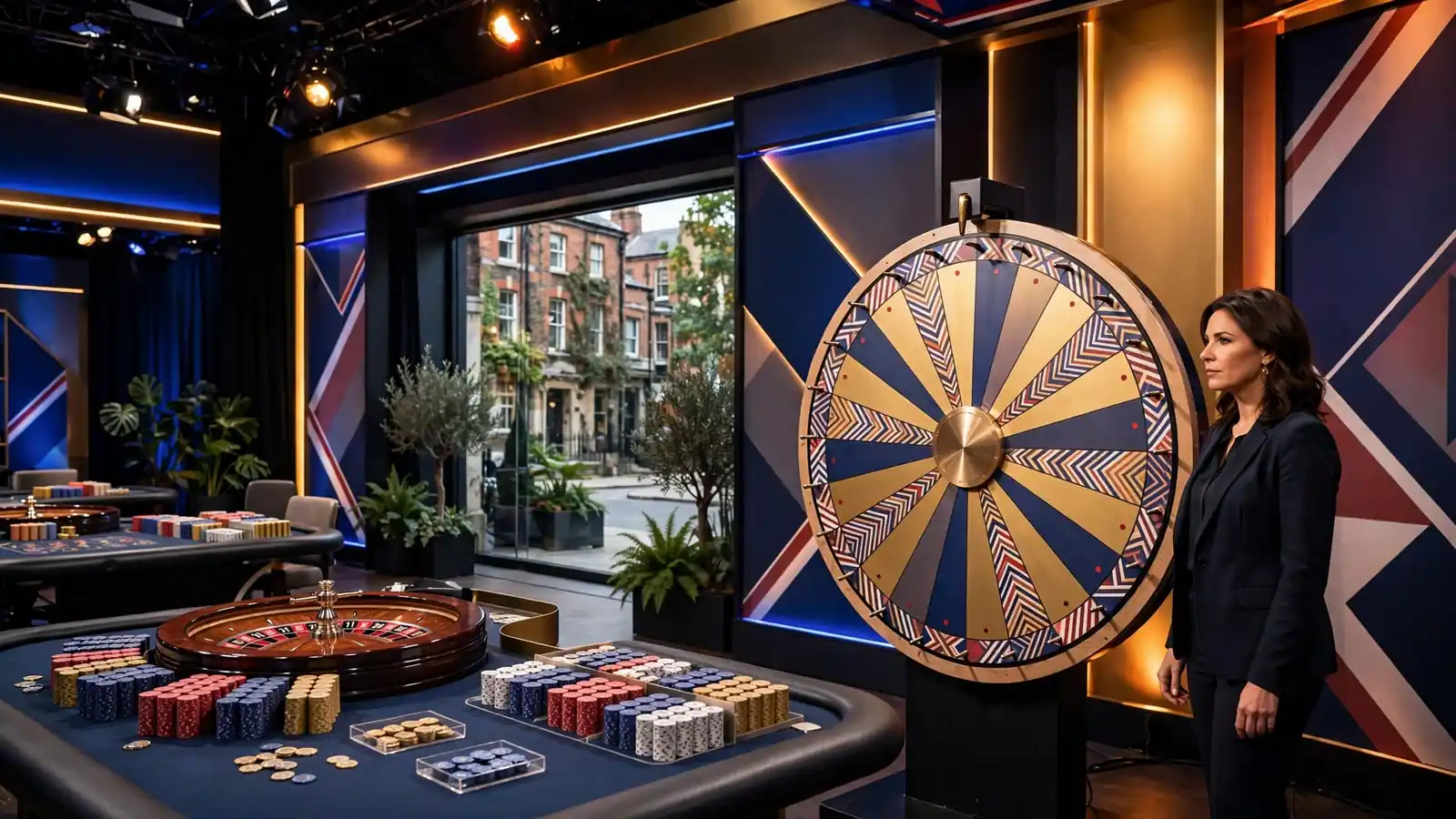
A live casino game is not simply a digital game with a camera pointed at it. You watch real-time footage from a studio, where a human dealer runs the game, and use an on-screen interface to place your bets. The video and the controls sit together on your device: the studio supplies the action, while the interface lets you take part.
That split can feel odd at first. You are watching something happen in a physical space, but your choices are made on a screen. You might see the dealer and the table clearly while your betting panel occupies part of the display. On a phone, that can leave less room for the video; on a larger screen, it is easier to keep an eye on both. Either way, the stream and the buttons are separate parts of the experience.
The basic rhythm is straightforward. You follow the dealer’s actions, make a selection through the interface while betting is open, and then watch the round play out. The exact controls depend on the game, so do not assume that a familiar-looking screen works the same way everywhere. Take a moment to read what each button does before you commit money. I have rushed past that bit before. It is a dull way to learn.
If you’re looking for a UK option for Crazy Time, payout timing is one practical detail to consider. Use the stated payout speed as a point of reference when reviewing the list.
EvoSpin
EvoSpin’s stated payout speed is 1–3 business days. You can use that as a reference when considering this option.
Revery Play
Revery Play lists a payout speed of 1–3 business days. You can take this timing into account when reviewing it.
WinBeast
WinBeast’s stated payout speed is 1–3 business days. This gives you a clear timing detail to consider.
Amunbet
Amunbet lists payouts as taking 1–3 business days. You can use this stated timeframe as one point of reference.
Britsino
Britsino’s stated payout speed is 1–3 business days. That is the available practical detail to consider here.
NightWin
NightWin lists a payout speed of 1–3 business days. You can factor this timeframe into your review.
x3bet
x3bet’s stated payout speed is 1–3 business days. This provides a specific timing detail for your consideration.
Jetsetspins
Jetsetspins lists payouts as taking 1–3 business days. You can use the stated timeframe as a reference.
NightLuck
NightLuck’s stated payout speed is 1–3 business days. This is the available detail to weigh when considering it.
Dieselwin
Dieselwin lists a payout speed of 1–3 business days. You can take this stated timing into account.
There is also less room to treat every moment as an instant decision. Live games move more slowly than digital versions because the action is being conducted and shown by a real dealer. That pause is part of the format, not necessarily a technical problem. If you are used to tapping through quick rounds, the waiting can make a live table feel more deliberate. It can also make it easier to lose track of time if you settle in without deciding beforehand when you will stop.
A steady internet connection matters. The stream needs to arrive clearly enough for you to follow what is happening, and interruptions can make the experience frustrating or leave you unsure of the round’s progress. If the picture freezes or the audio drops out, do not keep clicking in the hope that everything will catch up. Check the game’s on-screen status and its instructions before taking another action. A live game is only useful to you when you can follow it.
The money side deserves the same attention as the video. Live tables can have higher minimum bets than digital versions, so the smallest available stake may not suit every budget. The amount can vary by table; do not assume that a live game will let you play for the same stake as a digital one. Check the displayed minimum before joining and decide whether it fits what you can afford to lose. If it does not, leave the table rather than stretching your budget to get in.
 Deal or No Deal Casino UK: Format and GameplaySee how the Deal or No Deal slot round works, what the Banker’s offers mean and what the help files say about…
 Hi-Lo Casino UK: Rules and Online PlayLearn how higher-or-lower calls work, why rules vary between versions, and why a same-value bet may not be available in every Hi-Lo…
I would set a spending limit before opening a live game, then treat it as fixed. The dealer’s presence and the studio setting can make the session feel more social or absorbing than a screen full of buttons, but neither changes the fact that you are staking money. A losing round is not a reason to raise your stake or keep playing past the limit you chose. And a win is not a reason to abandon it either. That boundary is yours to set.
Before placing a bet, read the table rules and paytable shown for that game. Those details tell you how the table works and what its displayed outcomes mean. Do not rely on what you remember from another version: different formats can have different controls or rules, and a familiar label is not a substitute for checking. If something on the screen is unclear, pause instead of guessing.
There is no need to make the session feel like a performance. You do not have to use chat, follow other players’ choices or bet simply because the round is about to start. The dealer conducts the game; you decide whether to take part through the interface. If the pace, minimum stake or connection is not working for you, stepping away is a sensible option. No table is owed your attention.
So, when you encounter a live casino game online, expect a studio stream, a human dealer and betting controls on your screen—not a faster version of a standard digital game. Check the rules, the minimum stake and your own connection before joining, then stick to a budget you can live with. This is for entertainment only, not gambling advice. Keep it in perspective.
The name “Crazy Time” may sound as though it tells you what happens at the table. It does not tell you enough to make a decision about playing. I would not treat a game-show label as a description of its rules, how a round works or what a player can bet on. Those details matter, and guessing at them is a poor way to approach a real-money game.
That is especially worth remembering when a page presents the game as a sure thing: “wild”, “interactive” or “easy to follow” are sales words, not explanations. Before putting money down, you need to know what the actual game offers and how its rules work. If that information is not clear, pause rather than filling in the blanks from the name or from a promotional description.
The UK part is more straightforward. A live dealer casino can operate legally in the UK if it holds a licence from the UK Gambling Commission. That is the key point when considering a Crazy Time casino in the UK: the game’s name does not determine whether the casino is permitted to offer gambling to UK customers. The operator’s licensing status does.
I’d keep those two checks separate. One is about the particular game: do you understand its rules and the choices available to you? The other is about the operator: is it licensed by the UK Gambling Commission? A familiar-looking game title cannot stand in for either answer. Nor does a polished studio presentation, by itself, tell you whether the operator is properly licensed.
 French Roulette Online Casinos in the UK: RulesExplore how French roulette’s zero affects odds, compare live and RNG tables, limits and bonus terms; the European wheel has 37 pockets…
 European Roulette in UK Casinos: Odds and PlayLearn how the single-zero wheel shapes roulette odds, how live and RNG tables differ, and why the 2.70% house edge is a…
It is tempting to assume that every site using the same game name presents an identical experience. I would not make that assumption without checking the rules shown by the operator. The name alone does not establish what is on screen, how a round is settled or what conditions apply. If a site’s description is vague, that is a reason to seek clarity, not an invitation to rely on what another page says.
There is also a difference between seeing a game described as “live” and knowing what that means for the particular offer in front of you. A game’s branding does not create a separate exemption from that requirement. If real-money gambling is being offered to UK customers, the operator needs the relevant UK Gambling Commission licence.
I’ve found that the sensible move is to resist the urge to make the missing detail sound certain. A confident sentence on a promotional page can feel like an answer, but confidence is not the same as a clear explanation. For Crazy Time, I would want the operator’s own rules to spell out how play works before I decided whether it suited me. If those rules are hard to find or hard to understand, I would leave it there.
That does not mean every mention of Crazy Time is unreliable. It means the game name should not do the work of a proper explanation. A UK Crazy Time casino is still a casino offering gambling, and the UK licence requirement remains relevant regardless of how the game is presented. Check the operator, then read the rules for the specific game. Neither step replaces the other.
The same caution applies to claims that make the game sound familiar before you have seen its rules. I would not infer a format, a sequence of events or a particular way to win from the words “live casino game show”. Those phrases describe an impression, not enough detail to make an informed choice. Keep the decision grounded in what the operator actually sets out.
So, for anyone considering Crazy Time live casino play in the UK, the firm point is the licensing context: the casino needs a UK Gambling Commission licence to offer live dealer gambling legally. The game itself should be approached through its clearly presented rules, not assumptions attached to its name. I would rather miss a game than put money into one I cannot explain back to myself. A small pause beats a confident guess.
A page can make a live game sound like the whole experience is ready before you have even opened it. I have learned to treat words such as “instant”, “immersive” and “premium” as decoration until the page shows what you will actually be using. For a Crazy Time listing, the useful question is not whether the site calls it a must-play. It is whether the game is presented as a live dealer stream, and whether the setup looks workable on your device and connection.
In a live dealer game, a studio feed shows a human dealer in real time, while you place bets through the on-screen interface. That is different from a digital game that recreates a table or animation without showing live studio gameplay. Check the description and the game screen for a clear indication of what is being streamed. A polished banner is not evidence by itself. Nor is a game tile: it may tell you what the site wants you to click, not what the experience looks like once opened.
The stream also depends on your internet connection. Live games need a stable connection, so think about where you would play and whether your connection holds up there. If video stalls, freezes or falls behind, it can be harder to follow what is happening and use the interface comfortably. A site cannot make an unreliable connection reliable with a slogan. I would rather know that before I am trying to make decisions in a live round.
Pace matters too. Live games move more slowly than digital versions, partly because a real dealer and a streamed table are involved. That can suit you if you want to watch proceedings, but it may feel like dead time if you expect rapid, uninterrupted play. Try to judge the actual rhythm from the live-game presentation rather than from a short promotional clip. A clip is edited to sell the mood. The table itself is the test.
Be wary of pages that mix several claims together: a named game, “best” status, a bonus headline and impressive-looking scores. Those are not interchangeable proof points. A bonus offer says nothing on its own about the quality or stability of a stream. Scores displayed in promotional material do not establish what a live session will be like, and a strategy label does not change the need to understand the game before staking money. Keep each claim in its own box. Less glamorous, more useful.
I also avoid treating a ranking as a personal recommendation. “Best” depends on what you need from a site: a stable stream, an interface you can follow, and a pace you can tolerate. A list that gives no reason for its order is just another sales pitch with numbers attached. Look for clear descriptions rather than grand claims, and do not assume that a game being advertised is automatically available in the form you expect.
Before playing, review the table rules and paytable, and decide on a budget you can stick to. Live tables can have higher minimum bets than digital versions, so check the displayed terms rather than assuming the stake will suit you. Do not chase losses or winnings past your set limit. That is not a clever way to regain control; it is how a small mistake gets room to grow.
One last check: can you follow the stream and operate the controls without feeling rushed? If the answer is no, closing the page is a sensible decision. No banner is worth forcing it. This is entertainment, not gambling advice.
Start with the operator, not the wheel. A live dealer casino serving players in the UK must hold a current UK Gambling Commission licence. Before you register or deposit, look up the operator on the Commission’s public register and check that the licence is current and applies to the business you are using. A familiar name or a polished page is not proof.
That check tells you whether the operator is licensed to serve the market; it does not confirm that Crazy Time is available there. I would look for the game in the operator’s own live-casino lobby and read the information shown on its game page before treating it as an option. A page mentioning Crazy Time is not quite the same as being able to open and play it. Don’t let a headline do the checking for you.
You also need to meet the age requirement. Online gambling in the UK is for people aged 18 and over, and the operator must verify your age before allowing you to deposit. If the account process asks for identity details, use accurate information and follow the operator’s verification steps. Trying to rush past them can leave you unable to use the account as expected.
Before putting money in, decide what you can afford to spend and set that budget in advance. I have made the mistake of treating a deposit as a starting point rather than a limit; it is much easier to keep adding money once you are already playing. A budget is useful only if you stick to it. Don’t try to win back losses or extend a session because you feel you are due a better result.
Check the game’s rules and paytable before placing a bet, and make sure you understand what the on-screen options mean. If anything is unclear, pause rather than guessing. Also check the available payment method: UK gambling operators cannot accept credit-card payments for gambling, including credit-card funding routed through a money service business. A digital wallet cannot be used for gambling if it lets you fund the payment with a credit card.
I treat the licence check and the account check as separate steps: one is about whether the operator may serve UK players, the other is about whether I am eligible and ready to use the account. Neither requires you to take the game’s presentation at face value. Keep the decision simple: confirm the licence, confirm the game is actually offered, and set your budget before you start. No rushed deposits.
There is no useful universal answer to which casino is “best” for Crazy Time. A site that suits someone comfortable with a slower live table and its minimum bets may be a poor fit for someone who wants quicker rounds or needs to keep each stake low. The label tells you less than the conditions you will actually be playing under.
I used to treat “best” as if it meant the biggest offer or the flashiest lobby. That is an easy way to miss the thing that matters once you sit down: whether the pace and permitted stakes work for you. Live games move more slowly than digital versions, and their minimum bets can be higher. If that minimum already feels like more than you planned to risk, a lively studio and polished presentation do not make it a sensible choice.
Start with your own limit, not a casino’s sales language. Decide what you can afford to lose before playing, then check whether the table’s minimum allows you to stay within that boundary. Don’t raise your stake to make a slow session feel more exciting, and don’t keep playing to recover money you have lost. I have made both mistakes. They did not improve the experience.
The pace matters too. A live table has pauses as well as action, so it may feel drawn out if you expect the rhythm of a digital game. Think about whether you are comfortable waiting between decisions, rather than assuming that “live” means more engaging for everyone. A stable internet connection is also necessary; interruptions can make an already deliberate game feel more frustrating.
Before committing, look at the table information and paytable, including the minimum bet and any rules shown for the game. If those details are unclear, or the available limits do not match your budget, move on rather than hoping it will feel different once you are playing. A familiar name or a prominent tile is not a reason to stretch your limit.
People may describe Crazy Time as a slot, or look for the best UK casino for it, but those labels do not tell you whether the actual live-game conditions suit you. I would compare the practical fit instead: pace, minimum stake, and whether your connection is dependable. Not the biggest promise.
A casino that suits your limits is simply one where you can follow your plan without feeling pushed to stake more or stay longer. If none of the available tables meet that standard, skipping the session is a valid choice. The game will still be there another time.
I’m wary of anything sold as a Crazy Time casino strategy that promises a dependable edge. A betting pattern can change how much you stake and when you stop; it cannot, by itself, change the game’s rules or guarantee a result. Without a clear account of the particular game and its rules, calling a system “proven” is marketing, not a sound basis for a decision.
That includes systems built around a supposed sequence. A run of past results may look persuasive when someone selects a neat stretch of outcomes and presents it as a pattern. But a record tells you what has already happened. It does not establish what will happen next, or give a tracker power over the next result. I wouldn’t use a Crazy Time casino tracker as a prediction tool, however polished its chart looks.
There is a narrower use for tracking: keeping your own record of time and spending, if doing so helps you stick to a limit you set before playing. That is not a way to beat the game. If you notice yourself raising stakes to recover losses, or continuing because you expect a win to be “due”, stop rather than trying to repair the session with another system. I’ve made that mistake in other games. It turns a plan into an excuse.
The same caution applies to a claimed history of Crazy Time. Dates, origin stories and detailed accounts can sound authoritative, especially when repeated across several pages. Repetition isn’t proof. I would want a source that can be checked before treating a historical claim as established, and I wouldn’t fill gaps with a tidy story just because it reads well. No folklore required.
A live casino strategy also needs to be kept separate from general betting discipline. You can decide in advance what you can afford to lose, avoid chasing losses or winnings beyond that limit, and leave when the session no longer feels comfortable. Those are boundaries, not a formula for improving the game’s outcome. If a strategy depends on increasing stakes after losses, or claims that a tracker reveals a coming result, I’d treat the promise with particular scepticism.
When looking at any Crazy Time strategy guide, check what it actually demonstrates. Does it explain its assumptions, distinguish opinion from evidence, and avoid promising guaranteed returns? Or does it dress a staking suggestion up as secret knowledge? If it uses past results to imply a reliable forecast, that is a warning sign, not an invitation to follow the pattern.
I’m curious about new systems too; I’ve clicked on plenty that looked convincing at first glance. But curiosity isn’t a reason to stake money on a prediction. Keep the decision simple: set a budget, don’t exceed it, and treat play as entertainment rather than income. This is not gambling advice.
A “free demo” sounds like a painless way to try a game before deciding whether to play for money. The label alone does not tell you what is being offered, though. I would not assume that a Crazy Time casino demo is available just because a page uses those words. Check the actual game page and its terms; if the play mode is not clearly explained, treat that as a reason to pause.
The key distinction is simple: free play does not produce real-money payouts. It may let you interact with a game without staking your own money, but any balance or result shown in that mode should not be treated as withdrawable cash. Before you start, look for an explanation of whether the mode is a demonstration, how it works, and whether it changes when you switch to real-money play.
I used to see “try it free” and read it as “I can see exactly what the real game will be like.” That is too generous an interpretation. A demo may not represent every feature or condition of real-money play, so do not use it to assume that the pace, interface or available options will match what you later encounter. Check the information provided by the operator, rather than relying on a promotional headline.
Free play modes do not produce real-money payouts, and any balance shown is not withdrawable cash. A demo may not represent every feature or condition of real-money play, so it should not be used to assume the actual pace or interface of the live game.
There is also a difference between finding a site described as a top place for Crazy Time and finding a useful way to try the game. A ranked label is not proof that a demo exists, and a list of sites would not tell you what “free” means at each one. I would look for clear wording on the specific game page instead of treating a “top” claim as evidence. Less gloss, more detail.
If you find a play mode, read its terms before using it. Confirm whether it is genuinely free, whether it is only a demonstration, and what happens if you move from that mode to real-money play. Do not deposit on the assumption that a free version will turn into a payout, or that anything displayed during free play can be withdrawn. If the terms are vague, you do not have to guess.
For real-money gambling in the UK, the operator must hold the relevant UK Gambling Commission licence. That is separate from whether a demo is offered: a free-play label does not establish that the operator is licensed, and a licence does not prove that a particular game has a demo. Check both points independently.
Keep the decision modest. A demo, where offered, can be a way to inspect a game without risking a stake; it is not a promise of winnings or a reason to spend money. This is entertainment, not gambling advice.
The word “free” gets used for different things, and that’s where the confusion starts. A free-play version, if one is offered, is not the same as a bonus attached to a deposit. And free spins are a particular kind of promotion: the name doesn’t mean you can use them on any game you fancy.
A specialist review of UK welcome offers described free spins on slot games as the common offer type, with those spins excluded from live tables. That distinction matters if you are looking at a live casino game such as Crazy Time. A slot promotion should not be read as credit for a live table, and the fact that an offer says “free spins” does not establish that it applies to this game.
I’ve learned not to stop at the headline. “Free” sounds like a little extra to try, but the offer may be limited to a different kind of game entirely. Check the promotion’s own terms to see which games qualify before opting in; don’t assume a live table is included just because the casino also advertises live games.
There are three separate ideas here: a game played without staking real money, free spins provided under a promotion, and a live table played with real-money bets. They may appear side by side on a casino site, but they are not interchangeable. Nor does a search for a free version confirm that a particular game has one.
If you came looking for a free way to try Crazy Time, keep that question separate from offers for slot spins. Read what the play mode or promotion actually allows, rather than relying on its label. A bonus can be real and still be no use for the game you wanted.
Small print beats the banner.
A casino being described as “not on GamStop” tells you something about its relationship with a self-exclusion scheme; it does not tell you whether it can legally offer online gambling to people in the UK. Those are separate checks. I used to treat labels like this as if they were a useful shortcut. They aren’t.
For real-money gambling offered to UK customers, the operator must hold the relevant UK Gambling Commission licence, wherever the company itself is based. A site operating outside that regulatory system and without a UK licence is not made acceptable by being accessible, by carrying a familiar game name, or by saying that it serves British players. Online gambling in the UK is legal only through licensed and regulated sites. That’s the line to keep in view.
The same applies if you are looking specifically for a Crazy Time table. A “non-GamStop” label does not verify that the game is available, explain how it is presented, or establish that the operator is licensed for the UK market. I can’t responsibly point you to an unlicensed casino or imply that offshore access is a feature of the game. A game title is not a licence check.
If you have excluded yourself through GAMSTOP, looking for a site outside that scheme may be an attempt to get around a boundary you set for yourself. I know how persuasive the “just one more option” thought can sound when you want to play. It doesn’t make the option safer, and it doesn’t change the operator’s legal obligations. Step away rather than trying to find a route around your exclusion.
If your concern is whether a casino can take UK players, check its current UK Gambling Commission status rather than relying on a badge, a search result or the phrase “not on GamStop”. If you cannot establish that it holds the required licence, don’t deposit. And if you have self-excluded, don’t use the licence question as a reason to keep hunting for another place to gamble. That is a different problem.
A “Crazy Time bonus” sounds as if the offer is built for that game. Don’t assume it is. A bonus may be available to use only on certain games, and live games can count for just a small share of the wagering requirement. One specialist review, for instance, describes live-game weighting at 10%. That is a reported example, not a rule you can apply to every offer.
The welcome-bonus headline can be just as misleading. A specialist review reports that many UK welcome offers are free spins for slots, which cannot be used at live tables. So a promotion can look generous while doing nothing for the game you intended to play. Read the offer’s terms before opting in, and check which games qualify and how much each contributes towards the wagering requirement.
“Deposit bonus” means there may be conditions attached to the extra funds; it does not tell you whether they suit your plans. Check whether the bonus is optional, what you must do before withdrawing, whether there are maximum-bet conditions, and whether the live game is excluded or carries reduced weighting. Don’t deposit just to unlock an offer. I’ve done that, then found the small print mattered more than the headline. Annoying lesson.
The same caution applies to claims about a no-deposit bonus or a particular Crazy Time payout. Don’t treat a bonus label as confirmation that an offer exists, that it applies to this game, or that it changes the game’s payouts. Check the operator’s current terms rather than relying on a banner or a generic description.
Before depositing, set a budget you can afford to lose and stick to it. Use a permitted payment method, not a credit card; UK gambling operators cannot accept credit-card payments for gambling. If you do opt into an offer, make the decision after reading its conditions, not while the countdown-style sales copy is doing its job.
This is entertainment, not gambling advice.
No. In roulette, it varies by bet: straight-up bets have a 2.9% house edge, while other bets have a 2.7% edge.
You place bets through the on-screen interface, then watch a dealer spin a physical wheel. You win if the ball lands on a number you selected.
In the UK, check that the casino holds a UK Gambling Commission licence. Before joining a table, read its rules and paytable, check the minimum bet, and make sure your connection is stable.
Live roulette can include European, American and French Roulette. American Roulette has both 0 and 00, while European Roulette has one 0; in French Roulette, an even-money bet loses only half if the ball lands on zero.
You win when the ball lands on a number you selected. The odds differ by wheel: they are 1 in 37 on European Roulette and 1 in 38 on American Roulette.
It can vary with the game and the bet. In roulette, straight-up bets have a 2.9% house edge, compared with 2.7% for other bets.