Digital dice games can use different formats, and their animations do not explain how outcomes are determined.
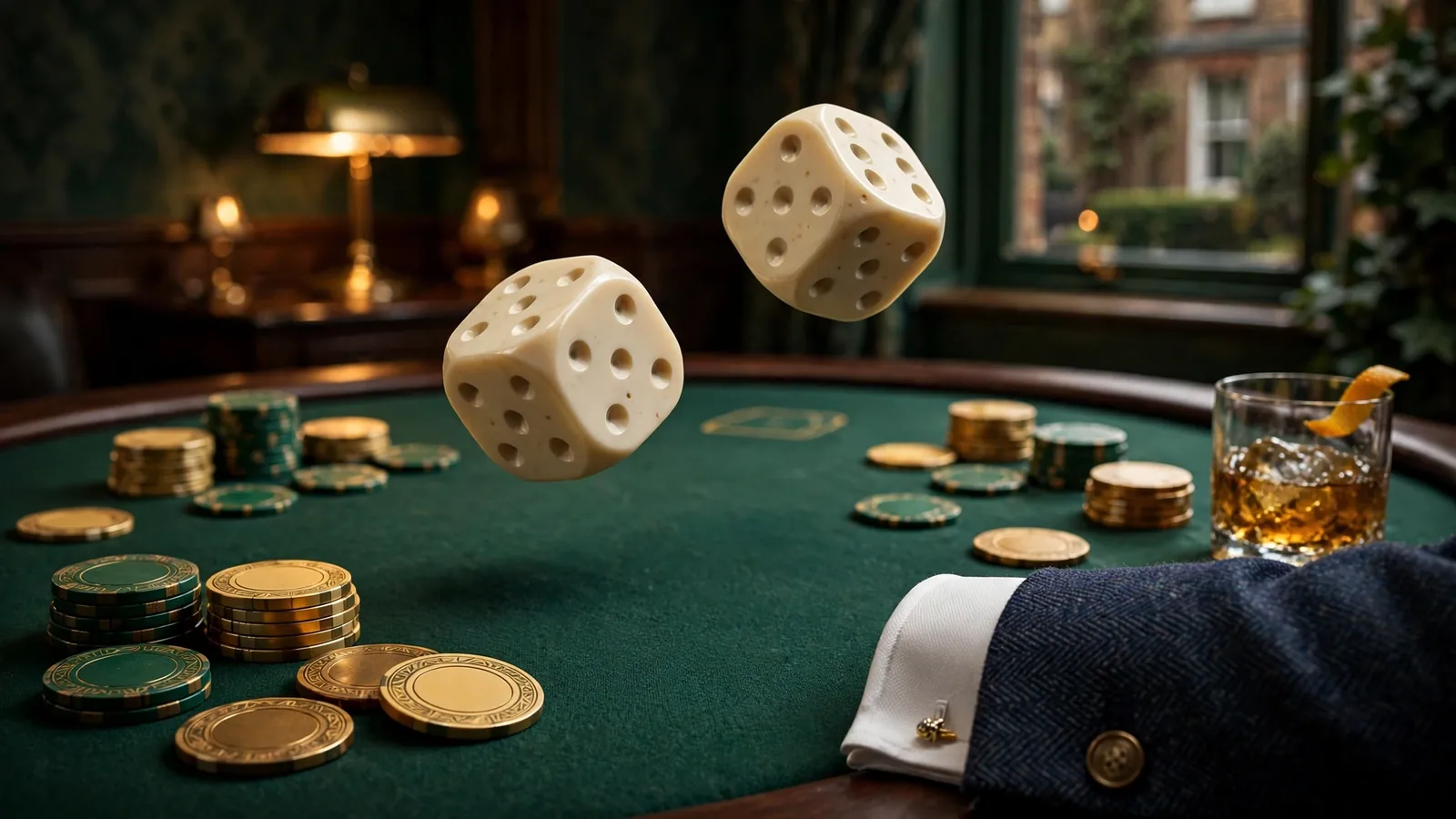
An online casino is a digital setting for casino games, available where gambling is permitted by law. You use a screen rather than a casino floor, but the word “casino” still covers different kinds of games and ways of presenting them. A dice-themed game can sit within that wider mix without necessarily being a physical pair of dice thrown in front of you.
That distinction matters when you look for an online dice casino. The pictures might show dice tumbling, a table, or a changing set of symbols, but the animation is not the same thing as the process that determines the result. In a random-number game, selected numbers are generated by a computer or other gaming equipment. What appears on screen is the game’s way of showing an outcome; the visual effect alone does not tell you how that outcome was produced.
I used to read the moving graphics as if they were part of the action: a die seemed to bounce longer, a result appeared to come from a particular side, and the whole thing felt a bit like watching a real throw. That impression is easy to get. It is also just an impression. In a digital casino, the game’s presentation and its random-number process are two different parts of the experience.
The online format changes where you encounter a game, not what the broad category means. Instead of walking between machines or tables, you view games through a website or an app. The screen brings the game’s instructions, controls and result into one place. That can make the experience feel immediate, but it does not make every game work in the same way.
“Dice game” can describe the look or theme of a title, as well as games built around dice-style outcomes. So the label by itself does not tell you whether you are looking at a traditional dice game, a digital game that borrows dice imagery, or another casino format dressed in that theme. The useful first step is to look at the game’s own explanation of its rules and outcomes, rather than assuming that familiar pictures mean familiar mechanics.
 Chicken Road Casino UK: Game Type, Bonuses and AccessLearn why “slot” may be a loose label for Chicken Road, and what to check around casino grouping, bonus terms, UK access…
 3-Reel Slots in the UK: What to CheckLearn how to check a casino’s licence on the UK Gambling Commission register, compare free play with real-money slots, and understand what…
This is why the phrase “online casino dice games” can cover a broader range of screen experiences than it first suggests. Two games may both display dice yet differ in what the player sees and how the game presents a result. The shared point is that online casino play happens through digital equipment, and random-number games use selected numbers generated by a computer or other gaming equipment.
No mystery in the graphics. Just a digital game.
A result may be displayed with animation, sound or a pause before it appears. Those touches can make a round feel dramatic, but they should not be mistaken for clues about what will happen next. A number generator supplies selected random numbers; the screen then communicates the game’s result in its chosen style. Watching an animation closely does not, by itself, reveal a pattern or make the next result predictable.
That does not mean the presentation is irrelevant. Clear instructions and readable results help you understand what the game is showing. If the rules are hard to follow, or the displayed result leaves you unsure what counted, it is reasonable to stop and read the explanation again. I have rushed past instructions because the game looked obvious, then found that I had misunderstood what the screen was telling me. It is a small mistake, but an avoidable one.
A dice casino online can also feel different from a physical casino because the interface removes much of the surrounding room: there may be no table in front of you, no physical equipment to inspect and no other activity in view. You are dealing with the game as it is presented on screen. That makes it especially useful to separate what you can actually observe—the rules, controls and displayed result—from what the animation merely suggests.
When you come across online dice casinos in the UK, think of them as part of online casino play rather than assuming every title recreates a real-world dice table. The setting is digital; the game may use a dice theme; and, where it is a random-number game, selected numbers are generated by a computer or other gaming equipment. Keeping those ideas separate gives you a clearer starting point.
I would not treat “realistic” graphics as proof that a game works like a physical throw, or treat a familiar design as a complete explanation of its rules. The game information is the better guide to what you are being shown. The visual style is there to present the experience, not to serve as evidence of the process behind each outcome.
That is the basic frame for online casino dice: a casino game delivered through a screen, with random-number outcomes generated by equipment and represented through the game’s interface. Once that distinction is clear, the different formats are easier to recognise without reading too much into the look of the dice.
The word “dice” can point to the theme on the screen, while “slot” describes the format of the game. That distinction matters. A slot with dice imagery is still a machine-style game, not automatically a table game with a dealer, physical dice and other players around it. The picture may suggest one kind of casino experience; the format gives you another.
I find that easy to miss when a title is described as a casino dice slot. The phrase sounds as if you might be joining a dice table, but it does not tell you that. It may simply mean a slot-style game built around dice symbols or dice-themed presentation. The label alone cannot establish what happens in the game, so it is better to separate the theme from the way you take part.
 Mines Casino Game in the UK: What to KnowLearn what a Mines search can establish, how demos differ from bonuses, and why general casino descriptions cannot verify a game's rules…
 5-Reel Slots in the UK: How the Format WorksLearn how five-reel layouts shape a spin and differ from three-reel games. Five reels mean five vertical columns, not a set number…
Gambling machines are generally played by one person at a time, without a casino employee needing to run each turn. That makes the experience self-contained: you interact with the game rather than waiting for a croupier to deal or roll. There is no need for a table of opponents to make the format work.
That can change the feel more than the artwork does. At a table, the dealer is part of the event, and other people may be present as players. In a slot format, you are typically playing on your own. The game does not need a dealer to manage the action. For me, that makes it feel less like taking a seat in a casino and more like opening a standalone game.
It also means that a dice motif should not be mistaken for a social dice game. A screen showing dice does not, by itself, mean you are playing against another person or that anyone is physically rolling them. It is the slot format that sets the broad structure: one player interacting with a machine-style game. The presentation can borrow from dice without changing that basic distinction.
A table game has a different arrangement. Players compete against the casino, not against one another, and table games are usually conducted by a croupier or dealer. That person is part of the way the game is run. Even when the player is not talking or interacting much, the table format still has a human role that a gambling machine does not require.
A machine-style game for an individual player that uses dice imagery but does not require a dealer.
A dealer-led experience where players compete against the casino in a shared table setting.
I used to lump games together based on what I saw on the screen or table. That is a poor shortcut. A dice-themed slot and a casino table game involving dice may share visual language, but they do not necessarily share the same format. One is presented as a machine game for an individual player; the other belongs to the dealer-led table category. Similar symbols, different setup.
This is useful when you are browsing UK casino sites with dice games. The phrase can cover more than one sort of experience, so look at the game’s stated format rather than relying on a thumbnail or title. “Dice” tells you something about the theme or subject. “Slot” tells you that it is being offered in the machine-style format. Neither word, on its own, tells you every detail of how a particular title works.
If you want the feel of a table, a slot may not give you that, even if its design borrows dice imagery. There may be no dealer-led turn or shared table atmosphere. If what you want is a solo game that does not depend on a casino employee being involved, the machine format is closer to that description. Neither is inherently better; they are simply different ways of arranging casino play.
I have made the mistake of treating a familiar theme as a promise about the experience. It is not. A dice graphic can make a slot look like a dice game at first glance, but that does not turn the machine into a table or make it a contest with other players. The format is the useful clue.
So when you come across phrases such as “dice slots” or “slots with dice”, read them as descriptions of a slot-style game using dice in its presentation, unless the game information says otherwise. A casino game with dice can refer more broadly to a table format, too. Keeping those categories apart saves a bit of confusion before you decide what kind of game you are looking at.
Same theme. Different setup.
If you’re looking for a UK casino dice game, payout information is one practical detail to check when reviewing your options. Use this list as a reference point while deciding what matters to you.
EvoSpin
EvoSpin lists a payout speed of 1–3 business days, giving you a stated timeframe to consider.
Revery Play
Revery Play lists a payout speed of 1–3 business days, a useful detail for your review.
WinBeast
WinBeast lists a payout speed of 1–3 business days, so you have a stated timeframe to take into account.
Amunbet
Amunbet lists a payout speed of 1–3 business days, which gives you one concrete point to assess.
Britsino
Britsino lists a payout speed of 1–3 business days, a practical detail to consider as you compare your options.
NightWin
NightWin lists a payout speed of 1–3 business days, providing you with a stated payout timeframe.
x3bet
x3bet lists a payout speed of 1–3 business days, which you can factor into your choice.
Jetsetspins
Jetsetspins lists a payout speed of 1–3 business days, giving you a clear detail to keep in mind.
NightLuck
NightLuck lists a payout speed of 1–3 business days, a stated timeframe you can consider.
Dieselwin
Dieselwin lists a payout speed of 1–3 business days, providing you with one concrete detail for your review.
“Best” sounds like a verdict, but it only means something once you decide what you are comparing. A dice title, a dice slot and the casino offering it are different things. I used to blur those together: a game caught my eye, so I assumed the place hosting it must be worth trusting. That was a lazy shortcut.
For a UK player, the first distinction is regulatory status. A specialist review describes the 2026 online casino market as having two broad sides: the UKGC-regulated market and offshore platforms outside that system. That is a useful description of the landscape, not a claim that the two sides offer equivalent protections. Offshore casinos may accept players from the UK, but they do not hold a UKGC licence. Remote operators selling into the British market are required to hold a Gambling Commission licence, wherever they are based.
So when I compare dice casinos for a UK audience, I do not treat a familiar-looking site or a polished page as proof that it is a legal UK option. The word “best” cannot erase the difference between a UKGC-licensed operator and a non GamStop site operating beyond UKGC oversight. A player can encounter both, but their regulatory standing is not the same. That matters more than a splashy welcome banner.
Only then would I look at what “best” means for the game itself. Are you after a conventional casino dice game, or a dice slot with a slot-machine format? Those are not interchangeable experiences. A site might offer one kind and not the other, and a favourable impression of one game does not tell you much about the operator’s standards. I would keep the game and the casino as separate parts of the comparison.
Bonuses complicate things further. “Generous” can mean a large headline offer; what matters in practice is the conditions attached to it. A specialist review reports that, from 19 January 2026, wagering attached to gambling incentives is capped at ten times the bonus funds. It also describes a rule against combining different gambling products in one incentive, such as requiring casino play and betting activity for the same reward. Those rules may narrow what a promotion can demand, but they do not make every offer equally useful. Read the eligibility, wagering conditions and withdrawal terms before treating bonus value as cash.
I learned that the annoying way. A bonus can look like extra room to play while still tying up your attention in conditions you would never choose on their own. If the offer only makes sense when you ignore its terms, it is not a good comparison point. No headline number fixes that.
 JetX Casino Game in the UK: What Is Verified?This guide separates casino and slot labels from confirmed facts about JetX, and explains why its mechanics and demo status cannot be…
 Online casino without ID in the UK: what to expectLearn how “no ID” claims differ from later checks: UK-licensed operators must verify customers are 18 or older before allowing deposits.
The same caution applies to phrases such as “best Bitcoin dice casino” or “BTC casino dice.” A payment label does not settle whether a platform is suitable for a UK player, and it says nothing by itself about the quality of a dice game. I would not let a crypto option stand in for a proper look at regulatory status or offer terms. Different question.
In the end, “best dice casino UK” is not a promise that one operator suits everyone, nor a reason to accept an unsupported ranking. It is a comparison across distinct questions: whether the operator is licensed for the British market, whether it offers the kind of dice game you want, and whether its terms are understandable without wishful reading. That is less exciting than a winner’s badge. It is also more useful.
A dice roll slot can make its result look like a pair of dice tumbling across a screen, but the animation is not what decides the outcome. Random-number games use selected numbers generated by a computer or other gaming equipment. The display presents the result; it does not reveal a hidden pattern you can read or influence.
That distinction matters because dice imagery invites you to think in familiar terms: a roll, a combination, perhaps a lucky streak. In a dice-themed slot, those images are part of the game’s presentation. They do not, by themselves, tell you how the result was generated or whether the next spin is more likely to land a particular symbol. A lively animation is still just an animation.
I used to watch the symbols as if a near miss meant the game was “warming up”. It felt persuasive in the moment: two matching dice, then one symbol just off, then another spin. But a previous result is not a clue to the next one. A sequence can look meaningful without giving you a reliable way to predict what follows. That’s the uncomfortable bit.
The game’s outcome comes from the random-number process, not from the speed of the animation or the point at which you press a button. The roll may be shown in a dramatic way, but the visual sequence is a presentation of the result rather than a live physical throw that you can steer. Treating the animation as a signal can make an ordinary random outcome feel like a message.
The same goes for a dice and roll slot that adds familiar dice symbols to a reel-based game. The theme may borrow the language of chance, yet each result still belongs to the game’s random-number process. There is no dependable “due” symbol that appears because you have watched a run of other symbols. Randomness does not promise that every short stretch will look evenly distributed.
That can be hard to accept while playing. A few wins in a row can feel like evidence that you have found the rhythm; a string of losses can feel like the game must soon turn. Neither feeling establishes what the next result will be. The screen gives you a story to follow. It does not give you a forecast.
Casino games typically give the casino a predictable advantage over the long term, while leaving players the possibility of short-term gains. Both parts are true at once. You can come away ahead from a brief session, but that possibility does not cancel the casino’s longer-run edge. Nor does a bad run prove that a win is now owed.
I have found it useful to keep those two time scales separate. A win is a real result, but it is not proof that the game has become favourable. A loss is also a real result, but it does not make the next spin a recovery opportunity. The long-term advantage is about how the game is structured across play, not a promise about the order in which outcomes will arrive.
That is why the phrase “hot streak” can be misleading. It describes what a run looks like after it has happened; it does not explain why the next spin should repeat it. The same applies to “cold”: it can describe recent results, not predict a reversal. Nothing to chase.
If you enjoy the dice visuals, that is a preference about presentation. If you are judging the underlying chance, focus on the fact that the result is generated randomly and that short-term wins remain possible inside a game that generally favours the casino over time. Keep those ideas together. The bright roll may make each spin feel like a fresh little event, but it does not change the basic trade-off behind it.
At its simplest, casino dice play is a wager on an outcome. You put cash or chips at stake, and the game settles that stake according to whether the result matches the outcome or combination you backed. The dice are the theme; the wager is the important part.
That sounds obvious, but I’ve found it easy to focus on the roll and forget what I actually agreed to risk. A result can look like a small event on screen, while the money attached to it is real. Keeping those two things separate makes the format easier to understand: the game produces an outcome, and your stake is tied to a prediction about it.
“Simple” is not the same as uniform. Casino dice games can differ in how they define the possible outcomes and combinations, and in what a winning selection pays. The title alone does not tell you those details. Before placing any wager, the rules need to explain what counts as a result, which selections are available and how the stake is settled. If that explanation is hard to follow, the game is hard to assess.
A dice casino game may present the wager in a way that feels direct: choose an outcome, commit a stake, then see what happens. But the interface is only the surface. What matters is the relationship between your selection and the result, plus the conditions attached to the stake. A roll that appears dramatic does not change that structure.
I used to treat a quick round as if it were barely a decision. That was a mistake. Each wager is still a choice about where your money goes, even when the game makes the choice feel brief or repetitive. You do not need to turn that into a complicated system; you just need to know what you are backing and what happens to the stake if the result goes against you.
The word “dice” can also make different games sound more alike than they are. One may ask you to back a particular result, while another may involve a combination of outcomes. Those are not interchangeable bets. Read the game’s own explanation rather than assuming the rules from another title carry over.
For anyone looking at casino dice in the UK, the useful starting point is not a promise of excitement or a claim that one format is easy to beat. It is the basic exchange: money or chips are put at risk against possible random outcomes. The details determine how that exchange works. No clever label replaces the rules.
A dice casino demo can be useful when you want to see how a game presents its choices and results without treating each session as a money-making test. I used to open a game, click through quickly, and decide I had “worked it out” after a few turns. I hadn’t. I’d only learned where the controls were.
A demo is a first look at the format. You can notice how the game displays its possible outcomes, what information stays on screen and how it signals a result. In a dice slot demo, for instance, the slot-style interface may make the experience feel different from a digital version of craps. An online casino craps table can have its own layout and terminology, so a practice session may help you get your bearings before deciding whether you even like that style of game.
The result itself is another matter. Random-number games use selected numbers generated by a computer or other gaming equipment. A demo can show how a game operates, but a run of outcomes there is not evidence of what you would see with real money. Nor does a lucky sequence establish a pattern you can carry into another session. That was an easy mistake for me to make: I remembered the striking results and treated them as a signal. They weren’t.
Use the free-play setting to inspect the interface, not to predict future results. You might check whether the game explains its options clearly, whether the pace suits you and whether you can follow what happened after a result appears. If the rules or displays leave you confused, that is useful information too. You can close it. No stake required.
“Free” can also mean something different in casino promotions. Free spins are promotional rounds, not the same thing as a dice casino game demo; their terms may determine how any winnings can be used. Don’t assume that seeing a free-play button means a real-money offer is attached, or that a promotional feature tells you how the underlying game will behave.
Availability varies by game and platform, so a search for a demo does not guarantee one will be offered. If you find one, keep the purpose modest: learn the presentation and decide whether the format makes sense to you. Leave questions about real-money staking for later. A demo is a preview, not proof.
A site offering dice games for cryptocurrency can look like just another corner of online casino play. The label tells you about the payment option or theme; it does not tell you whether the operator is authorised to serve people in the UK. I learned to separate those questions. They are not interchangeable.
The UK market has a UKGC-regulated space and a separate group of offshore platforms operating outside it. Some offshore casinos accept UK players, but that does not put them under UKGC oversight or make an overseas licence a UK licence. Non-traditional gaming platforms may operate under licences from Curaçao, Malta or Gibraltar. The country named in a licence is worth noticing, but it does not change the platform’s UK status.
That distinction matters whether the page advertises a crypto dice game, a craps table or a casino dice game built around craps. The title does not establish where the operator is regulated, and I would not assume a named game or feature has been checked just because it appears in promotional copy. Start with the operator’s status, not the game’s branding.
A specialist review describes some alternative platforms as accepting Bitcoin, Ethereum and Litecoin alongside conventional cards and e-wallets. Treat that as a report about the platforms it covers, not a promise that every crypto casino accepts those coins or that a particular site still does. Payment methods can differ by operator, and they do not establish that the operator holds a UKGC licence.
“Licensed” can sound reassuring; the useful question is licensed by whom, and for which market? A foreign licence and UKGC regulation are different things. If a platform operates outside the UKGC system, it does not provide the same regulatory status as a UK-licensed casino, even if UK players can reach it.
I would not let the presence of cryptocurrency, familiar dice rules or a polished site blur that point. A crypto dice casino and a UKGC-regulated casino are not automatically the same kind of service. Check the platform’s position in the UK before treating its game catalogue as the main issue. Short version: branding isn’t regulation.
When I look at a dice game that takes Bitcoin, I try to separate the game from the cashier. A crypto option tells you how a platform may let you move funds; it does not tell you whether the operator is authorised to serve people in Britain. That distinction matters more than a tidy-looking deposit page.
A specialist review describes some alternative platforms as accepting Bitcoin, Ethereum and Litecoin alongside conventional cards and e-wallets. Treat that as a report about the platforms it covers, not a promise that every bitcoin dice casino offers the same menu. Payment methods can differ between operators, and an option shown on a page may still have conditions attached. Read the cashier information and the terms before sending money.
There is also a clear UK rule to keep in mind: a casino licensed for British customers cannot take credit-card payments for gambling. So if a site presents a credit card as a way to fund real-money play, don’t assume that it belongs to the UK-licensed market. For operators serving customers in England, Scotland and Wales, a Gambling Commission licence is required. A cryptocurrency payment does not replace that licence or make an operator part of the UKGC system.
I used to treat the payment logo as a shortcut: Bitcoin in, game on. That tells you almost nothing about what happens if a payment is delayed, a withdrawal is queried or you need to raise a complaint. Check the operator’s terms, the payment-specific rules and its regulatory status separately. Less flashy, more useful.
The same goes for a dice casino bonus. A promotion may have its own deposit method rules, and the advertised value is not the whole deal; read the conditions before you count it as part of your balance. Don’t infer that a bonus applies to every game, either. If you’re looking at a Sic Bo game, confirm that the promotion’s terms cover it rather than assuming all casino games qualify.
My simple check is to ask what the payment option means, and what it does not mean. Bitcoin may be one way to fund a gambling account on some platforms. It is not proof of UK licensing, a guarantee of a withdrawal, or a substitute for reading the small print. Small detail. Big difference.
When you play dice in a casino, the basic decision is what to stake and which possible outcome, or combination of outcomes, to back. That might involve cash or chips. The exact choices depend on the game, so there is no single set of rules that covers every casino dice game. Before putting anything down, I’d want to know what each available bet means and what happens if it wins or loses.
That sounds obvious. I’ve still rushed past it before, focused on a possible payout and only half-understood the bet. A payout is not a promise of profit: it describes what a winning stake returns under that game’s rules. And a win on one wager says nothing certain about the next result.
The same applies if you are learning how to play craps at a casino. Don’t assume that knowing the name of a game tells you how its bets work. Take the time to understand the options on the table and what outcome each one depends on. If the rules are unclear, stepping away is better than guessing with money at stake.
What game is played with dice? There are casino games built around dice, but the important point for a player is not the label. It is the relationship between the stake, the possible result and the game’s payout rules. I keep those separate in my head now: a bet is a choice, an outcome is uncertain, and a payout applies only if the relevant condition is met.
Casino games can produce short-term gains for players. They also typically give the casino a predictable advantage over the long term. That doesn’t mean every individual session ends in a loss, or that a win is impossible. It does mean a run of wins cannot turn the game into a reliable way to make money.
I used to treat a good result as evidence that I’d found a method. It wasn’t. Set a stake you can afford to lose, and don’t raise it just because earlier bets went your way. The house edge is still there.
Keep the aim modest: understand the bet, accept that the result is random, and treat any win as uncertain rather than owed. No system makes a casino dice game a sure thing.
When I look at a dice casino site, I start with the legal boundary, not a “top” label. A polished page, familiar game format or confident promise does not tell you whether the operator is allowed to take bets from people in Britain.
Since the Gambling (Licensing and Advertising) Act 2014, an operator that wants to accept bets from British residents must hold a licence. For real-money gambling offered to customers in England, Scotland and Wales, that means a licence from the UK Gambling Commission, or UKGC. The rule applies whether the operator is based in Britain or elsewhere.
That is the useful distinction behind lists of top dice casino sites in the UK: a site being reachable is not the same as being licensed to serve British players. Offshore casinos may be accessible, but they operate outside the UKGC system. I used to treat a working sign-up page as a sort of approval. It isn’t.
Look for the operator’s legal name and its UKGC licence information, then check that information against the Commission’s own register. Make sure the licence belongs to the company actually providing the gambling service, rather than assuming a brand name or a footer badge settles it. If you cannot establish that link, pause before creating an account or depositing.
This check matters whether the site offers dice games at casinos as a standalone game or as part of a broader casino catalogue. The game itself does not change the operator’s licensing obligation. A dice title cannot make an unlicensed service legal.
I would not use “top” as a substitute for this check. It is a promotional label, not a regulatory status. Compare sites only after confirming that the operator is authorised to serve the relevant British market. For players in England, Scotland and Wales, the UKGC licence is the basic test for real-money play.
Simple, but easy to skip.