Live roulette uses a streamed dealer and physical wheel, while digital roulette generates outcomes with an RNG.
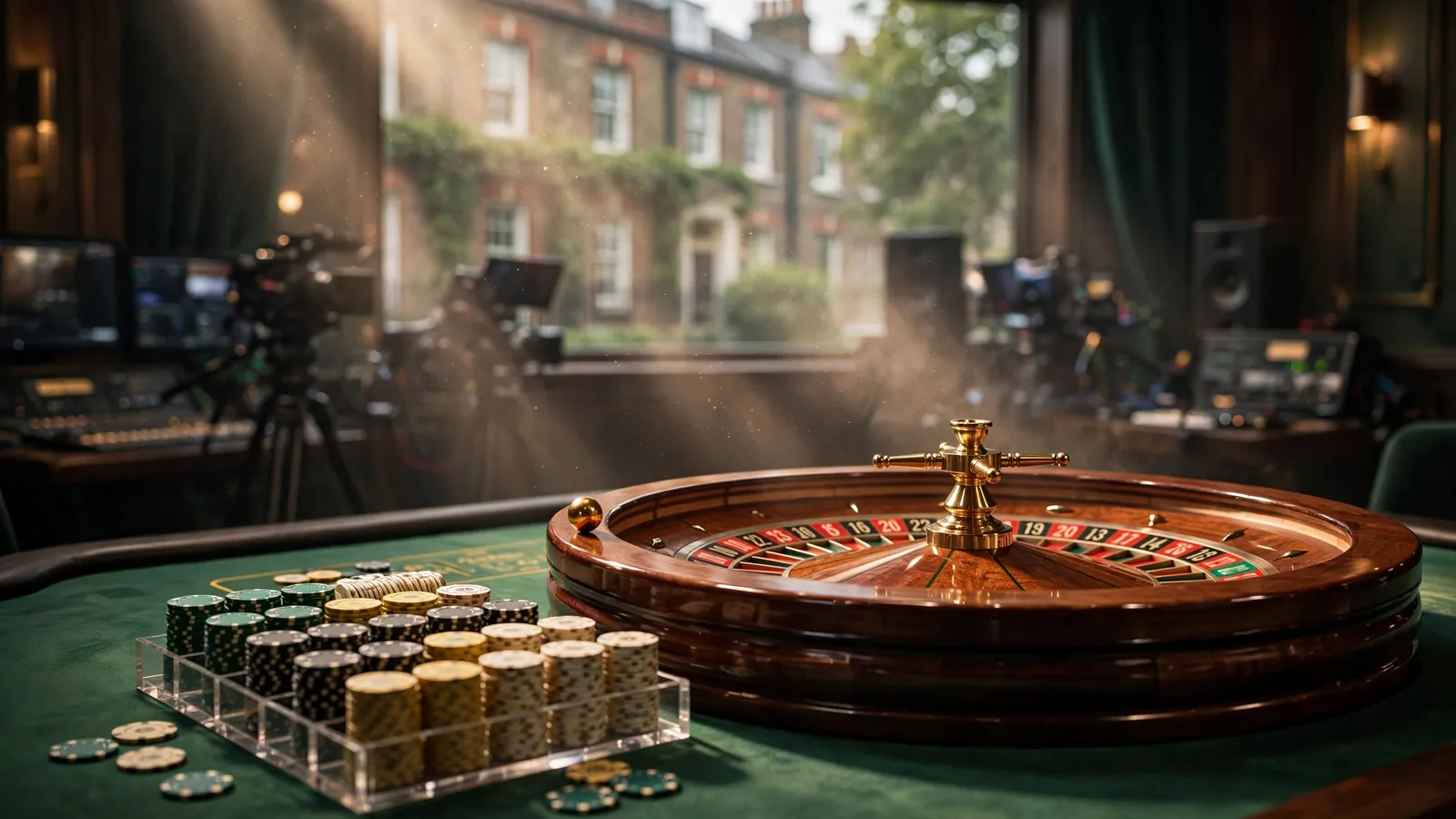
The word “roulette” can describe two different things online. In live dealer roulette, a human dealer spins a physical wheel, and the game is streamed in real time from a studio. In computerised roulette, software uses a Random Number Generator, or RNG, to produce the result. Both are played through a screen, but the screen is showing a different kind of game.
I used to lump the two together because I was sitting in front of the same laptop either way. That was a lazy shortcut. With a live table, the stream shows an actual dealer and wheel; with a computerised game, the result comes from the RNG rather than a filmed spin. The difference is about how the result is produced, not whether you happen to be playing online.
A live dealer game brings the physical table into a digital setting. The dealer spins the wheel, while players use an on-screen interface to place their bets. The video is real-time gameplay from a studio, rather than an animation standing in for a wheel. You are still interacting through the interface, but the game itself is being dealt and spun by a person.
When choosing where to play live Lightning Roulette in the UK, payout timing is one practical detail to check alongside whether the game suits you. The notes below stick to the information available for each operator.
EvoSpin
EvoSpin lists a payout speed of 1–3 business days. This is the available detail to consider when checking the operator.
Revery Play
Revery Play lists a payout speed of 1–3 business days. You can use this as one practical point when assessing the operator.
WinBeast
WinBeast lists a payout speed of 1–3 business days. The supplied information provides this payout detail for your consideration.
Amunbet
Amunbet lists a payout speed of 1–3 business days. This is the only specific operator detail provided here.
Britsino
Britsino lists a payout speed of 1–3 business days. Consider this detail as part of your checks before playing.
NightWin
NightWin lists a payout speed of 1–3 business days. This is the concrete information available to help inform your choice.
x3bet
x3bet lists a payout speed of 1–3 business days. The available notes offer no further operator-specific details.
Jetsetspins
Jetsetspins lists a payout speed of 1–3 business days. You can factor this into your assessment of the operator.
NightLuck
NightLuck lists a payout speed of 1–3 business days. This is the specific payout information provided.
Dieselwin
Dieselwin lists a payout speed of 1–3 business days. The supplied information is limited to this payout detail.
Computerised roulette works differently behind the scenes. There is no physical wheel being spun for the result shown on screen: the RNG generates it. The presentation may still look like roulette, with a wheel and ball represented visually, but that image is not evidence of a live spin. The important distinction is the mechanism producing the outcome.
That matters if you are comparing options labelled as online casino Lightning Roulette. The name alone does not tell you whether the version in front of you is live dealer roulette or computerised roulette. Look at how the game is described and presented: a real-time studio stream with a human dealer points to a live format; an RNG-based game is computerised. I would not assume that every game with “roulette” in its name has the same format.
The same goes when you are browsing online casinos with Lightning Roulette. A page or lobby can group games under familiar labels, but the practical difference is not the label; it is whether you are watching a real dealer operate a physical wheel or playing a computer-generated version. If what you want is a live table, check that it is identified as a live dealer game rather than relying on the title alone.
Neither format becomes more predictable because it looks more convincing. A streamed wheel is a physical object, and the dealer is real, but that does not make the next result knowable. An RNG is a different way of generating an outcome; seeing a wheel animation does not turn it into a physical spin. I had to stop reading atmosphere as information. A camera, a dealer and a table can make the game feel more tangible, but they do not tell you what will happen next.
Likewise, a computerised presentation can look polished without being a live game. The graphics are there to show the game, while the RNG is responsible for producing its result. In live dealer roulette, the camera shows the wheel and dealer as the play happens. In both cases you use an online interface, so it is easy to focus on the screen and miss what sits behind the display.
That distinction is useful before you decide what kind of experience you want. Some people prefer the visible action of a dealer spinning a real wheel; others would rather play a computerised version. I have made the mistake of choosing by title and appearance, then finding that the format was not what I had in mind. A quick check of the game description would have saved me that mismatch.
For anyone considering Lightning Roulette at an online casino in the UK, the safe assumption is not that the name guarantees a particular format. Establish whether the specific game is live dealer or computerised. Live means a dealer and physical wheel streamed from a studio, with bets entered on screen. Computerised means the result is generated by an RNG. That is the basic distinction. The rest is presentation.
When I look at a roulette table, I start with the green pockets. They are easy to overlook beside all the red and black numbers, but they matter because they give the house its edge. The wheel’s layout tells you which version you are playing, and that changes the stated chance of winning.
Features a single green pocket (zero), providing a 1 in 37 stated chance of winning.
Features two green pockets (zero and double zero), resulting in a 1 in 38 stated chance of winning.
European Roulette has a single green pocket: zero. American Roulette has two: zero and double zero, marked 0 and 00. That extra pocket is the important difference. It gives the American wheel an additional outcome that can beat a bet on red or black, for example, and changes the odds attached to a selection.
The stated chance of winning in American Roulette is 1 in 38. For European Roulette, it is 1 in 37. Those figures describe the wheel’s possible outcomes, not a promise about what will happen over a run of spins. A player can win or lose several times in a row; neither pattern changes the next spin.
That distinction is worth keeping in mind if you are comparing tables, including one presented as a Lightning Roulette casino game. The name or presentation does not, by itself, tell you which wheel is in use. Check the table information and rules rather than assuming that every roulette version uses the same layout. The green pockets are a quick clue: one indicates a European wheel, while 0 and 00 indicate an American one.
The house edge is a way of describing the mathematical advantage built into a game. It is not a forecast of what you will lose on a particular visit, and it does not tell you what the next result will be. It helps explain why two bets on the same table can have different long-run costs.
In roulette, the stated house edge is 2.9% for a straight-up bet and 2.7% for other bets. A straight-up bet means selecting a single number. The comparison matters because it is tempting to think that a bet covering more possibilities must automatically be the better-value choice. The edge figures show that the category of bet can make a difference, even before you think about the individual result.
I used to focus on what a bet might pay if it landed, then treat the rest as background noise. That is an easy way to miss the bigger picture. A larger possible return is not the same thing as a better chance of winning, and the house edge is not a guide to what you should stake. It is a measure of the game’s built-in advantage, not a personal betting plan.
The figures should also be read alongside the wheel. The stated odds differ between American and European Roulette because their green-pocket arrangements differ. If you are comparing a live casino Lightning Roulette table with another roulette table, do not rely on the game title alone to tell you how the mathematics works. Look at the displayed rules, identify the wheel, and note the edge information provided for the bets. Small detail. Real difference.
Zero is not simply another colour on the layout. It is a green outcome, separate from red and black, and it is part of the reason roulette has a house edge. American Roulette adds the double zero, so there are two green pockets to account for rather than one. That is why its stated chance of winning is lower than European Roulette’s.
It can be tempting to treat a long run of red or black as evidence that the other colour is due. It is not. Previous results do not change the wheel’s pockets or make a particular outcome more likely on the next spin. A run can look meaningful when you are watching it unfold, but it does not alter the stated odds.
The same goes for number histories or stats displays. They may show what has happened, but they do not make future spins predictable. I have stared at past results as if a pattern might give me an edge. It didn’t. The useful information is the table’s actual rules and the wheel type, not a story built from recent outcomes.
For anyone comparing Lightning Roulette casinos in the UK, the practical takeaway is modest: establish whether the table uses a European or American wheel and read its published rules before playing. The difference between one green pocket and two is not decorative. It affects the stated odds, while the house-edge figures distinguish a straight-up bet from other bet types.
None of this makes roulette a way to earn money. It is a game with a house advantage, and results remain uncertain. I find it clearer to think of the edge as a cost built into the game, rather than as something that can be overcome by choosing a lucky number or following a streak. This article is for entertainment purposes only, not gambling advice.
When I compare live casino options, I try to ignore labels such as “best” and look for things I can actually check. A polished page or a familiar game title tells me little about whether an operator is suitable for playing in the UK. The first check is regulatory: a live casino serving British players must hold a current operating licence from the UK Gambling Commission. If I cannot establish which operator runs the site and whether it has the required licence, I do not treat the site as a safe option.
That is a more useful starting point than a ranking. A list can make several casinos look interchangeable, but the rules and conditions at a particular table still matter. I look for the table information before I deposit or join a game, rather than assuming that every version of Lightning Roulette works in the same way.
A game may be presented prominently while the operator behind it is much less obvious. I look for the legal business name and licensing information, then check that these details match the company offering the gambling service. The relevant licence is the UK Gambling Commission’s operating licence; a general claim that a site is “licensed” is not enough on its own to tell me that it is authorised for the British market.
I also keep the operator and the game separate in my mind. A recognised game name does not establish that the casino is licensed, and a convincing-looking live table does not prove that the wider site is suitable. If the operator’s identity or licensing status is unclear, I leave rather than trying to fill in the blanks.
Once the operator checks out, I move to the table itself. I review its rules and paytable before placing a bet, and I check the minimum stake shown for that specific table. Live games can have higher minimum bets than digital versions, so a table that looks appealing may still not fit what I planned to spend. I do not assume the lowest available table is the one currently displayed.
I check the betting options and any game-specific conditions in the information provided for that table. If something is unclear, I do not rely on a promotional description to explain it. The rules are what matter when you are deciding whether to play.
“Lightning” can sound like a promise of a better deal. It is a label, not a reason to skip the small print. I focus on what the table actually says, not on energetic graphics or claims that make the game sound exceptional.
A live table also has practical demands. Play moves more slowly than a digital version, and you need a stable internet connection to follow it properly. I take that into account before joining: if I have little time or a patchy connection, a live game is unlikely to suit that moment.
I set a spending limit before I start and stick to it. That keeps the choice of table tied to what I can afford, rather than to the feeling that I should move up or keep playing. I do not use a credit card to gamble.
There is no universal “best” choice for every player. I would rather find a licensed operator, understand the specific table rules and know the minimum stake than trust a headline or a glossy recommendation. If any of those checks leave me guessing, I move on.
When I open a live dealer roulette game, the first thing I notice is that I’m watching a real table, not a cartoon wheel spinning on its own. The dealer is there on camera, the wheel is in view, and the stream shows the round as it happens. My part takes place through the on-screen controls: I choose where to place a bet, then watch the dealer run the game.
That split between watching and acting is what makes the experience feel different from a standard computerised game. The dealer handles the physical wheel and ball; I’m not reaching across a table or handing over chips. I use the interface to make my selection. Then I follow the live picture while the ball moves around the wheel and eventually settles.
The basic aim is easy to grasp: choose a number, and you win if the ball lands on the number you selected. In the moment, though, the important thing is not to mistake the drama of the spin for extra control. I’ve caught myself staring at the ball as if concentration could steer it. It cannot. Once my selection is made, all I can do is watch the result arrive.
“Immersive” is the kind of word that makes this sound like a guaranteed thrill. What it really means is that the studio feed gives you a visible dealer and a real-time round to follow. You can see the action unfold rather than being shown only a computer-generated result. That can make each spin feel more present, but it doesn’t change the simple win condition or turn a bet into a prediction.
With a title such as Lightning Roulette, it’s worth separating what the name suggests from what you can actually confirm on screen. The title alone does not tell you every rule or feature. I’d look at the game information and table display before placing anything, then make sure I understand what my selected bet means. If a screen or promotional phrase makes a feature sound obvious, I don’t assume; I check.
The dealer-led format also changes the rhythm of a session. There is a visible sequence to follow: the table is shown, bets are placed through the interface, the wheel is spun, and the outcome is revealed. You’re not simply tapping through instant results. I find that easier to follow, but the extra theatre can also make me want to stay for “one more” round. That’s where I need to keep my own limits in front of me.
If you decide to play, set a budget before joining and treat it as the amount you can afford to lose, not money you expect to get back. Don’t chase a result or raise your stakes because the previous spin felt close. A ball landing beside your chosen number is still a loss on that selection. It’s a blunt distinction, but a useful one.
Before pressing the betting controls, take a moment to read the table information and paytable. Check that the game is what you intended to open and that you understand the bet you’re making. Then watch the round for what it is: a live dealer, a physical wheel, and a result you don’t control. This is entertainment, not gambling advice.
A welcome offer can look like a shortcut to trying a live table, but the headline rarely tells you whether the bonus works there. I’ve made that mistake: I saw a tempting offer, opted in, then found the game I wanted barely counted towards the conditions. “Generous” can mean generous on the banner, not generous for the way you play.
A specialist review describes most UK welcome offers as free spins for slots, which cannot be used at live tables. That makes the first check simple: is the offer actually usable on live casino games, or is it tied to slot play? If it is the latter, don’t assume that opting in will give you bonus funds for Lightning Roulette.
The next thing I check is game weighting. When an offer has wagering requirements, different games may contribute different amounts towards clearing them. Live games can count for only a small share; one stated example is a 10% weighting. In practical terms, a small contribution means more qualifying play is needed before the requirement is met. The exact rules depend on the offer, so read its terms rather than assuming roulette counts like slots.
I also look for the maximum bet permitted while a bonus is active, which games are excluded, and whether the offer expires under stated conditions. Those details can change what you are allowed to do while opted in. If the terms are unclear, I’d rather leave the offer alone than guess and risk invalidating it.
If you’re comparing UK casinos that offer Lightning Roulette, a bonus should be a side issue, not the reason you choose one. Check whether the live game is included in the offer terms and what weighting applies to it. A welcome promotion can be irrelevant to your plans even if it looks substantial on the front page.
There’s a useful distinction between playing with your own money and playing under bonus conditions. An offer may restrict which games count, how much you can stake, or when the requirements must be completed. I read those rules before opting in, because once you accept, the terms can shape the session. No banner can make that a good deal by itself.
I set a budget before I play and keep it separate from any bonus balance. That stops me treating promotional funds as a reason to spend more than I planned. If the offer only works for slots, or live roulette contributes very little, I can simply decline it and play without the bonus—or walk away.
“Free” has conditions. Read them first.
Roulette has a simple winning condition: the ball comes to rest on a number, and your bet wins if you selected that number. The choice you make can be narrow, such as backing one number, or broader, covering other outcomes offered on the table. Before placing anything, check the table rules and paytable so you know exactly what each bet covers and how a win is paid.
A straight-up bet is a selection of one individual number. It is the most direct way to try to match the result, but the stated house edge is 2.9%. Other roulette bets have a stated house edge of 2.7%. That difference is small, but it is worth understanding before you decide how to stake. A broader bet does not change the basic aim: your selected outcome still has to match the result for you to win.
The house edge is not a prediction of what will happen on your next spin. It describes the built-in advantage for the game across play, not a promise that a particular bet will lose or win. I used to read a lower figure as a reason to keep going. That was the wrong takeaway: it does not make a session safe, and it cannot tell you when to stop.
That matters when you are looking at a Lightning Roulette table in a UK casino. The name can make the game sound like the bet itself behaves differently, but the basic decision remains: know what you have selected, what result would win, and what the displayed payout says. Do not assume a special feature changes every bet or improves its odds. Read the rules shown for that particular table before you play.
I also learned not to treat a run of results as a signal to change my stake or recover what I had lost. Past spins do not determine the next one. Set a budget before you start, stick to it, and do not chase losses or winnings beyond that limit. If the rules or payout are unclear, leave the bet alone until you understand them.
You may see “easy win” language around a game; in practice, no bet removes the house edge. This is entertainment, not gambling advice. Check the rules first. Then decide whether the bet fits your budget.
A free-play version can sound like a harmless way to get a feel for Lightning Roulette. The first thing I’d check is whether the operator actually offers a demo. Don’t take a game’s name, a preview image or a “try now” button as proof that you can practise without depositing; follow the link and see what opens.
Follow the link or click the "try now" button to see if a practice environment actually opens, as a preview image or game name is not proof of demo availability.
If a demo is available, read the short explanation on its screen before you start. Check whether it is clearly marked as practice play, what controls are available and whether the displayed balance is virtual. Free play does not pay real winnings, and a result shown in a demo is not money you can withdraw. That distinction is easy to gloss over when the interface looks much like a real-money game.
I’d also avoid assuming that a practice mode works in exactly the same way as the real-money version. Look for an explanation of the rules and any features shown on screen, then check the real-money table’s own rules separately before staking anything. A demo may be useful for learning where buttons are, but it is not evidence that you will get a particular result or that the same conditions apply at a paid table.
If there is no demo option, that’s the answer: don’t treat a promotional description or a video as interactive practice. You can decide whether you want to use the real-money version, but there is no need to deposit just to find out what a demo button might have offered. I’ve learned not to let a bright “free” label hurry that decision.
For a UK player considering real-money play, check that the operator holds a current UK Gambling Commission licence. Before opting in to anything, read the relevant terms; and before playing, set a budget you can stick to. A practice screen doesn’t change those choices.
The plain version: demo access may vary, and free play is not a route to cash winnings. Treat it as a way to inspect the interface only if the operator makes a genuine practice mode available and explains it clearly. If the details are vague, leave it there. This is entertainment, not gambling advice.
A live dealer gives the game a human presence, but the experience is still delivered through a screen. The action is streamed in real time from a studio, with a dealer running the table while you place bets through the on-screen controls. You can follow what is happening as it unfolds rather than watching a result appear instantly. That small difference changes the feel of a session.
It also changes the pace. Live games take longer than digital versions, because the dealer has to run each round and allow time for bets and results. I used to treat that pause as dead time and keep looking for something else to do. It is better to expect a steadier rhythm: you have time to follow the table, but fewer rounds pass in the same stretch.
There is a practical trade-off too. Live tables can have higher minimum bets than digital games. A specialist review has reported roulette and baccarat tables starting at around 20p, with blackjack starting limits often higher; that is one review’s observation, not a promise about every table. Check the displayed minimum before joining, and set a budget you can stick to. No need to let the pace—or the table—set it for you.
A stable internet connection matters. If the stream keeps freezing or dropping, it becomes harder to follow the dealer and use the betting controls calmly. I would not start a live session while relying on a connection I already know is unreliable. That is not a technicality; it is part of whether the format will suit you.
For someone looking at Lightning Roulette through a UK live dealer casino, the human dealer is part of the presentation, not a shortcut to better results. The game still takes time, and the table’s own minimum and rules still matter. I have made the mistake of joining first and checking later. Boring lesson. Check first.
Set your budget before play, and stop when you reach it rather than trying to recover losses or extend a winning run. This is entertainment, not gambling advice.
I’ve found that the main adjustment with live roulette is not learning a new trick; it’s accepting that the game won’t move at the pace of a quick digital spin. There is a real-time table to follow, so decisions and spins take longer. If you’re used to tapping through a fast sequence, that pause can feel like a “feature” until you’re sitting there impatiently. It is simply part of the format.
That slower rhythm is worth considering before you play Lightning Roulette online in the UK. If you have only a short window, or you’re likely to get distracted while waiting, a live table may not suit that moment. I’ve played when I was half-watching something else and ended up paying less attention than I meant to. Not ideal.
Connection matters, too. Live play depends on a stable internet connection to keep the stream and the betting interface usable. If your signal is cutting out, wait until it settles rather than trying to play through interruptions. A frozen picture or lag can make the experience frustrating, and there is little point starting when you already know your connection is unreliable.
The pace can affect your spending as well. Live tables have higher minimum bets than digital versions, so check the table’s minimum before joining and decide whether it fits the budget you set beforehand. Don’t raise that budget just because the game is moving slowly or a session is not going your way. I’ve made that mistake; it did not make the experience better.
I’d also choose a time when I can give the table my attention, rather than treating it as background noise. You do not need to make a night of it. You do need enough patience for the live pace, a connection you trust, and a clear stopping point.
If those conditions are not there, leave it for another time. Live roulette is entertainment, not a way to make money, and this is not gambling advice.
The word “live” can sound like decoration, so I check what it means before I settle in. In live roulette, a human dealer spins a physical wheel, and the game is shown as it happens. In computerised roulette, there is no physical wheel in the game: a Random Number Generator (RNG) determines the result.
That is the distinction I care about when I’m looking at an online Lightning Roulette casino game. The name alone does not tell me whether I’m watching a real wheel or playing a computer-generated version. I look at the game description and the screen itself. If there is a dealer and a physical wheel in the live feed, it is the live format. If the result comes from computer software, it is the computerised format.
Neither label tells you what will happen on the next spin. A real wheel is not a way to read the future, and an RNG is not a pattern waiting to be cracked. I used to spend too much time looking for meaning in a run of results. It did not make my next choice any better.
So make the format check first, then decide whether you actually want that experience. Live means a real wheel and dealer; computerised means an RNG. Simple distinction. No magic.