A practical guide to the 37-pocket wheel, bet payouts, table formats, free play and roulette bonus terms.
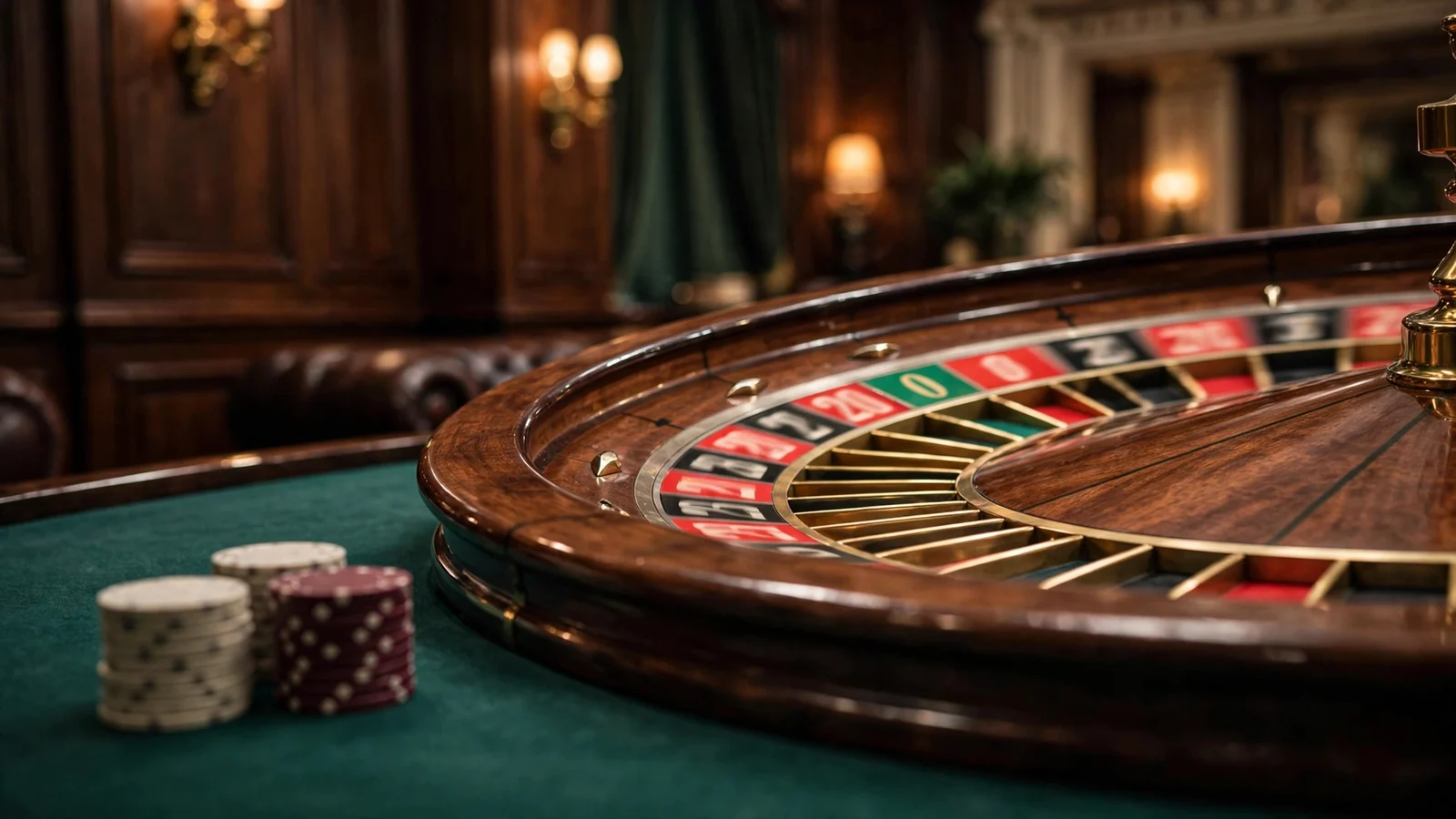
The defining detail of European roulette is easy to miss when the screen is busy: its wheel has one green zero, alongside the numbered pockets from 1 to 36. That makes 37 possible pockets in total. When the ball is released, any one of them can be the result; the zero is not a pause, a replay or a special outcome that can be ignored.
That single pocket matters. Compared with a wheel carrying an extra zero, it leaves fewer outcomes that work against a player’s wager. It does not make a spin predictable, and it does not turn roulette into a game of skill. It changes the underlying odds, not the nature of the game.
I used to treat the green pocket as a tiny detail because it appeared only once on the wheel. That was backwards. A single pocket can affect every wager whose result depends on where the ball lands. In European roulette, the house edge is 2.70%. That figure describes the casino’s mathematical advantage over time, not a fee taken from every spin and not a promise about what will happen during a short session.
When choosing an online casino for European roulette in the UK in 2026, you may want to consider how quickly payouts are stated to arrive. The verdicts below stick to the information available for each operator.
EvoSpin
EvoSpin lists a payout speed of 1–3 business days. This gives you a stated timeframe to consider when choosing where to play European roulette.
Revery Play
Revery Play lists a payout speed of 1–3 business days. You can use this stated timeframe as one practical consideration for European roulette.
WinBeast
WinBeast lists a payout speed of 1–3 business days. That is the available detail to consider when reviewing it for European roulette.
Amunbet
Amunbet lists a payout speed of 1–3 business days. You can factor in this stated timeframe when considering it for European roulette.
Britsino
Britsino lists a payout speed of 1–3 business days. This gives you a stated payout timeframe to weigh when choosing an online roulette option.
NightWin
NightWin lists a payout speed of 1–3 business days. The stated timeframe is the available practical detail for your European roulette shortlist.
x3bet
x3bet lists a payout speed of 1–3 business days. You can take this stated timeframe into account when considering it for European roulette.
Jetsetspins
Jetsetspins lists a payout speed of 1–3 business days. This is the stated payout detail available to help inform your choice.
NightLuck
NightLuck lists a payout speed of 1–3 business days. You can consider this stated timeframe when reviewing it as an online European roulette option.
Dieselwin
Dieselwin lists a payout speed of 1–3 business days. This gives you a stated timeframe to consider when choosing a casino for European roulette.
The distinction is worth holding onto. A house edge is a long-run measure: it describes how the rules are weighted across repeated play. It does not say that a casino will keep exactly that share of your money, or that you will lose a predictable amount by a particular point. A run of results can move either way. The wheel has no memory, and a previous result does not make a different pocket more likely on the next spin.
That is the part I found easiest to talk myself around. After a few results that seemed to form a pattern, I would feel as though the wheel was due to correct itself. It was not. Each spin remained a chance event. Looking for a pattern can make a session feel more readable, but it cannot give you reliable information about the next landing.
European roulette is often described as a more favourable roulette version because of its single-zero design. That comparison has a real mathematical basis, but “more favourable” is not the same as favourable to the player overall. The casino still has an edge. The useful takeaway is narrower: if you are comparing standard roulette formats, the number of pockets and the payout rules help determine the odds. A European roulette casino is not offering a different law of probability just because its graphics or presentation look more polished.
The same applies when you play online. The wheel may be shown on a screen, but the essential question remains which version of roulette is being offered and what rules apply to it. A game labelled European roulette should have the single-zero structure that defines the variant. The presentation can change; the underlying uncertainty does not. It is sensible to check the game information rather than assume every roulette tile in an online casino refers to the same version.
I would also keep the house edge separate from the idea of “good luck”. Luck describes the outcome you happen to get. The edge describes the rules across repeated play. A lucky session does not erase the edge, just as a losing session does not prove that the wheel was behaving unusually. Mixing those ideas is how I used to convince myself that a bad run meant I should keep going until things turned around.
They might. They might not.
A single-zero wheel is a useful starting point because it gives you a clear basis for understanding European roulette online: 37 pockets, with one zero, and a house edge of 2.70%. Those details are more meaningful than claims that a particular casino or game is “hot”, “generous” or due to pay. Those are sales words, not properties of the wheel.
If you are looking at European roulette casinos in the UK, begin by confirming that the game is actually the single-zero variant. Then treat the edge as context, not as a forecast for your own session. No description of the wheel can tell you which pocket the ball will reach, and a confident streak of guesses does not change the odds.
I still find roulette compelling because the result is simple to watch and impossible to know in advance. But that simplicity can make it tempting to read meaning into every spin. The wheel offers no signal to decode. Its one zero is a small green pocket with a large mathematical role—and the honest way to approach it is to understand that role without pretending it gives you control.
“Best” is a sales word, not a useful test. When I’m comparing places to play European roulette, I ignore the badge and look for things I can verify: who regulates the operator, whether the game’s RTP information is easy to find, and whether the account gives me meaningful ways to control my gambling. A polished page can make a casino look reassuring. The details matter more.
For online casino activity in Great Britain, the regulator is the UK Gambling Commission (UKGC). An operator taking British customers for real-money gambling needs the relevant UKGC operating licence, even if the company is based elsewhere. A site without a valid UKGC licence cannot legally offer real-money live roulette to British residents.
Before depositing, find the operator’s licence details and check its number against the UKGC public register. Don’t rely on a logo or a sentence in the footer: they are easy to display, but the register is where you can verify the licence. If you cannot establish that the operator is authorised, stop there. A familiar game name does not make an unlicensed site a safe choice.
Age checks belong in the same basic due diligence. Operators must verify a customer’s age before allowing a deposit, and online gambling is for people aged 18 and over. If the site lets you put money in before it has checked your age, that is not a reassuring shortcut.
A casino should make the return-to-player information for its roulette games accessible. Look in the game’s help panel, rules or information screen, and check that the figure relates to the specific version you intend to play. If you have to hunt through vague promotional copy, or cannot tell which game the information covers, that is a practical reason to be cautious.
RTP is useful for understanding a game’s stated long-run return; it is not a forecast for your session or a promise about what will happen on your next spin. I used to treat a clear percentage as if it made a game predictable. It doesn’t. It is a disclosure to help you compare, not a way to take uncertainty out of roulette.
Also make sure you are looking at roulette rather than a roulette-themed slot. The names can blur together on casino menus, but they are different kinds of games, with different rules and information to check. Read the game panel before you stake anything.
UKGC-licensed operators must provide account tools that let you set limits and take a break. New customers must be prompted to set a financial limit before their first deposit, and account-level limit controls must remain accessible. Look for deposit limits and loss limits, plus session time reminders and reality checks. You should also be able to use a cool-off period or self-exclusion through GamStop.
These are not decorative settings. A limit is more useful when you can find it without digging through several menus, and a reminder only helps if it is clear enough to notice while you are playing. I would check the account area before depositing, not after a long session when I’m already trying to talk myself into carrying on. Small detail. Big difference.
Payment options are another part of the check. UKGC licensees cannot accept credit cards for gambling, including credit-card funds routed through a money service business. They also cannot accept wallet payments where the wallet allows credit-card funds to be used for gambling. A payment method appearing on a page does not mean every way of funding it is permitted.
If something goes wrong, the operator should have an internal complaints process and access to an approved Alternative Dispute Resolution service. UKGC licensees must also contribute to the Research, Education and Treatment levy. Neither point tells you whether a particular roulette table will suit you, but both form part of the wider accountability expected of a regulated operator.
I don’t treat any single feature as proof that a casino is “the best”. I check the licence, find the game information, and make sure the controls are real and accessible. If any of those basics are hard to verify, there are other places to look.
The first thing I look for on a European roulette table is the green zero. It sits apart from the numbered grid, which holds the numbers from 1 to 36. That separation reflects the wheel: there is one zero pocket, and it does not belong to any of the numbered groups printed around the grid.
The numbers run across the layout in three columns, arranged in horizontal rows. The sequence is not a wheel diagram; it is a betting surface that lets you find numbers and marked groups at a glance. Once I understood that, the table stopped looking like a jumble of boxes. The wheel and the layout are two views of the same game, but their arrangements are different.
The numbered squares are the most compact area. Each square corresponds to one number, while the zero has its own space at the end of the grid. Around the grid, the European roulette casino table layout has larger areas for bets covering groups of numbers. Labels such as red and black, odd and even, and low and high sit outside the numbered squares. They are categories printed on the table, not extra pockets on the wheel.
I used to scan the outside labels first, then wonder why the green zero seemed to interrupt everything. It is not an interruption added by the software or the dealer. It is a pocket in its own right, shown separately because it is neither red nor black, odd nor even, nor part of the low or high numbered groups. That is the small detail that makes the table easier to read.
Some digital tables draw the grid more tightly than a physical layout, and the labels can shift around the edges of the screen. The basic map stays recognisable: a single zero, numbered squares, and outside areas for broader groups. Before placing anything, I take a moment to locate the zero and check which labels sit beside the grid. It saves me from clicking the wrong patch of felt.
A table layout is not a strategy. It tells you where the game groups numbers and where those groups appear on screen; it cannot tell you where the ball will land. I once treated knowing the map as if it gave me an edge. It only stopped me getting lost.
Read the grid first. Then the wheel makes more sense.
Once you know how to read the European roulette table, the next decision is what to cover with your chips. The choices are usually grouped as inside bets, placed on or among the numbered spaces, and outside bets, placed on broader outcomes. The difference is not just where the chip goes: it changes how many numbers a bet covers and what the displayed payout means.
I used to look at the biggest payout and think it must be the cleverest choice. That is an easy mistake to make. A large payout is attached to a less frequently winning selection; it is not a sign that the bet has an advantage. The useful thing is to understand what you have actually selected before the wheel spins.
A straight-up bet covers one number. Put a chip directly on a numbered space and, if that number wins, the payout is 35:1. In plain terms, the stated odds describe winnings relative to the stake; they do not mean that the bet is likely to win. A single-number selection is precise, but it gives you only one winning result.
A split bet covers two neighbouring numbers. The chip sits on the line between them, and the payout is 17:1 if either number comes up. That is still a narrow selection, just less narrow than a straight-up bet.
A street bet covers the three numbers in a horizontal row and pays 11:1. The chip is placed at the end of that row. You are covering more results than with a split, so the payout is lower. That relationship is the part worth remembering: the payout changes with the bet’s coverage, not with a prediction about where the ball is going.
There are other ways to cover groups of numbers on the layout, but do not assume that a bet covering more spaces automatically makes a session safer or profitable. It can change how often you see a return and how large that return is. It cannot make the next result knowable. Each spin is chance, not a message from the previous one.
Outside bets sit away from the individual numbered spaces and cover wider categories. Red or black, odd or even, and low or high are the familiar even-money choices. Each pays 1:1: a winning bet returns winnings equal to the stake, alongside the stake itself under the usual payout convention.
Those categories can feel more comfortable because they cover many numbers. But the zero matters. It is not red or black, odd or even, or high or low, so it can defeat an even-money selection. The broad coverage does not make the bet a guaranteed return; it simply gives it a different shape from a bet on one number.
I once treated “even money” as if it meant “almost certain.” That wording describes the payout, not a promise about the result. The green zero is still on the European wheel, and a bet that does not cover it can lose when it lands.
La Partage is a rule for even-money bets when the ball lands on zero. Instead of losing the whole stake, a player gets half of it back. That changes the outcome of that particular spin, not the selection itself: your red, black, odd, even, high or low bet still does not include zero.
On a European roulette table with La Partage, the house edge on even-money bets falls to 1.35%. Without the rule, the European game’s house edge is 2.70%. That reduction applies to the relevant even-money bets under La Partage; it does not turn every bet on the table into a lower-edge bet.
The distinction is easy to miss when you are scanning a table quickly. Check whether La Partage is actually listed in the rules for that game, rather than assuming every European roulette table applies it. If the rule is present, it affects what happens to an even-money stake on zero. If it is not, do not count on receiving half back.
Before you play European roulette online, take a moment to confirm both the bet and its displayed payout. On a single-zero table, a straight-up selection pays 35:1; a split pays 17:1; a street pays 11:1; and the listed even-money outside bets pay 1:1. These are different trade-offs between coverage and payout, not different ways to control the wheel.
If you are practising for free, use that time to learn where each chip placement goes and how the game labels the return. It can help with the mechanics. It cannot show you what the next real-money spin will do, or remove the risk of losing your stake.
No system makes those outcomes predictable. Doubling a bet after a loss, for instance, does not change the wheel’s odds, and a losing streak can hit a bankroll hard. I have found it more useful to understand the bet in front of me than to dress a guess up as a plan. The payout is a description, not a forecast.
Short version: know the coverage, read the rule, and do not confuse a bigger number on the screen with a better chance.
The first thing I notice when switching between European roulette formats is not the green zero; it is how quickly the next spin arrives. With RNG roulette, software uses a random number generator to produce each result rather than spinning a physical wheel. The screen still presents a European roulette wheel and its familiar single-zero game, but the pace is set by the interface: you place a stake, the result appears, and another round can begin without waiting for a wheel to be reset.
That quicker rhythm can suit a short session, though it also makes it easy to lose track of how many rounds you have played. I have done that. When spins come one after another, “just a few more” can turn into a longer stretch than you intended. Faster is a description of the format, not a reason to raise your stake.
RNG games can also have low entry points. Some UK casino listings put the minimum at 10p, which makes it possible to try the controls with a small stake. A low minimum does not change the odds or make a losing run less real; it only changes how much you put at risk on each spin.
Auto-roulette and speed roulette are related options, but the labels do not always mean precisely the same thing from one casino to another. Auto-roulette automates parts of the round, while speed roulette is built around getting through rounds more quickly. A specialist review reports speed roulette at more than 150 spins in an hour, against 80 to 100 for a standard table. Treat that as a comparison of formats, not a promise that every game will run at that exact rate.
The difference in minimum stakes can be just as noticeable. A specialist review reports that some UK live roulette tables begin at 10p, while auto-roulette and speed options can be available from 5p. Those are starting points, not a claim that every table has them; the game’s own information shows the amount you need to place before you join.
A fast game can make a small stake feel harmless, but the number of decisions adds up. If you prefer to pause between rounds, a standard table may feel less hurried. If you want a quicker, software-run session, RNG or an automated format may fit better. I check both the pace and the minimum before opening a game, rather than assuming that every European roulette option behaves alike.
The screen can look familiar. The rhythm isn’t.
A free European roulette game is useful for learning the controls without putting your own money at risk. You can get used to where the bets go, how to clear a selection and what happens when a round settles. I’ve found that useful: fumbling with the interface is less distracting when there’s nothing at stake.
A European roulette demo can also help you check whether the game is the one you meant to open. That matters when a title or lobby tile is unclear. But practice is limited to the parts you can see and repeat. It cannot show you how you’ll react when a losing result costs you money.
That is the gap between free play and European roulette for real money. In a demo, the balance is not your rent, food shop or savings. With real stakes, a run of losses can eat into your bankroll and make it tempting to chase what has gone. I’ve made that mistake: treating the next spin as if it owed me something. It doesn’t.
No system changes that. A betting plan can tell you how much you intend to stake or when you will stop; it cannot tell you where the ball will land. Roulette outcomes are determined by chance, so no strategy can predict the final result. A demo may make the game feel familiar, but familiarity is not an edge.
If you try free online European roulette, use it to practise the mechanics, not to prove that a sequence works. A run of wins in play mode does not mean the same pattern will continue when you switch to real money. Nor does a losing demo session predict what comes next. Each result is uncertain.
Before playing for real, decide what you can afford to lose and set a stopping point you can stick to. If you notice yourself raising stakes to recover losses, pause rather than trying to repair the session with another spin. I used to think discipline meant staying at the table until I was even. I now see it can mean closing the game.
An online European roulette demo can answer practical questions: Can you find the controls? Do you understand what you have selected? Is the game comfortable to use? It cannot answer whether real-money play will feel manageable for you, or promise a particular result. Keep those limits clear. Free play is rehearsal, not a forecast.
A search for European roulette slots can lead you to two very different things. One is a roulette game: a numbered wheel, a ball and bets placed against the result. The other is a slot game borrowing roulette’s look or language. A 3D European roulette slot may sound like a wheel game brought to life, but the word “roulette” in a title does not tell you how the game works.
I’ve made that mistake myself: I saw a familiar game name and assumed I knew what I was opening. With a slot, you’re playing its own reel-based game, not placing a bet on a roulette wheel. So the European roulette odds do not automatically apply. Check the game’s rules and paytable instead; the label alone cannot tell you its mechanics or returns.
Names such as “European Roulette Gold” or “European Roulette Platinum” can create the same blur. They may describe a particular product or simply be words someone uses to find one. Don’t treat “gold” or “platinum” as proof that a game follows standard European roulette rules. Read the game information before staking anything. Names are not rules.
Lightning Roulette is different: it is a roulette variant, not a roulette-themed slot. Its special feature can affect the payout on a straight-up number bet. A specialist review reports that a straight-up bet without a lightning multiplier pays 29:1, rather than the standard 35:1. That detail matters if you’re comparing the variant with a standard wheel game: a familiar bet name does not guarantee a familiar return.
The distinction is narrower for outside bets. The same specialist review states that Lightning Roulette leaves their standard roulette payouts unchanged. So the variant changes a specific part of the game, not every bet across the table. Check the rules displayed for the version you’re opening; don’t infer the payout from the word “Lightning” or from another roulette game.
That’s the useful split: a slot with roulette in its name is still a slot, while Lightning Roulette is a roulette variant with a stated change to one particular payout. I now check the game type first, then the rules. Less guesswork.
A live European roulette table brings a physical wheel into the game. The stream comes from a studio, where a human dealer sets the wheel in motion and releases the ball; you watch the drop on screen rather than waiting for a random number generator to simulate a spin. That changes the feel of the session, even though the result is still uncertain.
I find the pauses part of the format. There is time for the dealer to prepare the next round, for betting to open and close, and for the ball to settle. You are following a shared table rather than pressing straight into another simulated spin. It can feel more like watching a game unfold, but the extra ceremony does not make outcomes easier to read. A ball that landed in one place before offers no clue about where it will land next.
The pace is slower than many RNG games. One stated comparison puts live dealer play at 50 to 60 spins an hour, against 150 to 200 or more for RNG American roulette. Treat that as a format comparison, not a promise about every table: dealer speed, the game’s rules and the studio’s rhythm can all affect how quickly rounds move. If you want fewer decisions packed into a session, that slower cadence may suit you. If you are expecting rapid spins, it may feel like a long wait.
The minimum stake is not automatically high just because there is a dealer and a studio. A specialist review reports UK live roulette minimums starting at 10p, though the figure is a reported table example, not a guarantee across operators or games. Check the limit shown on the table before joining; it can differ from one live European roulette table to another.
There is a practical trade-off: you get the real wheel and dealer-led presentation, but not the pace of an automated game. I would choose the table for that experience, not because a live stream changes the odds or gives me a better read on the next spin. It doesn’t.
The clearest difference between European and American roulette is not the colour of the felt or the look of the interface. It is the number of pockets on the wheel. European roulette has 37: numbers 1 to 36 and one zero. American roulette adds a double zero, bringing the total to 38.
That extra pocket changes the odds for every standard wager. The house edge is 2.70% on European roulette, compared with 5.26% on American roulette. The gap can look small when you are looking at a single spin. Across repeated play, though, it is a meaningful difference in the game’s built-in advantage. I used to focus on whether a table looked familiar; the pocket count is a better place to start.
A useful way to compare an online European roulette casino game with an American one is to check the rules shown for that specific table, rather than relying on the game title alone. “American” tells you to expect a double zero, but a table’s displayed rules are what matter if its wheel has an unusual feature.
One specialist review reports that some American roulette tables offered by UK online casinos have a third green pocket, marked 000. For those tables, the stated house edge is 7.69%. That is a reported variation, not a feature to assume is present across the market. Check the on-screen rules before you play.
For a straightforward choice between the two standard versions, the single-zero wheel has the lower house edge. It does not make a spin predictable or turn roulette into a reliable way to win; it simply means the house advantage is lower than on the standard American wheel. The extra zero matters. Quite a bit.
Roulette can count differently towards wagering requirements depending on the operator and game format. Most UK operators count roulette wagers at 10% to 20%; a specialist review reports live roulette at 10% or 20%, while RNG roulette may count at 100%. The terms for the specific bonus matter.
Since January 2026, the maximum wagering requirement for bonuses at UK-licensed operators is 10x. That cap does not make every bonus worthwhile: check which roulette games qualify and how their game weighting is applied before accepting bonus funds.
European roulette has the lower house edge: 2.70%, compared with 5.26% for standard American roulette. Check the game rules to confirm which version you’re choosing.
It means playing roulette online with real money rather than just for fun. In Great Britain, the operator needs a relevant UK Gambling Commission licence to offer real-money play.
European roulette has a 2.70% house edge, while standard American roulette has a 5.26% edge. Some American tables with a third green pocket marked 000 have a 7.69% edge.
Since January 2026, UK-licensed operators cannot set bonus wagering requirements above 10 times the bonus. Roulette’s contribution still varies: live roulette commonly counts for 10–20%, while RNG roulette often counts for 100%.
You place a bet on an outcome, then a ball is released onto a spinning wheel and lands in one pocket. European roulette has 37 pockets, including one zero, and each spin is a chance event.