A listed £5 minimum may depend on the cashier method, so compare payment limits and review bonus conditions before depositing.
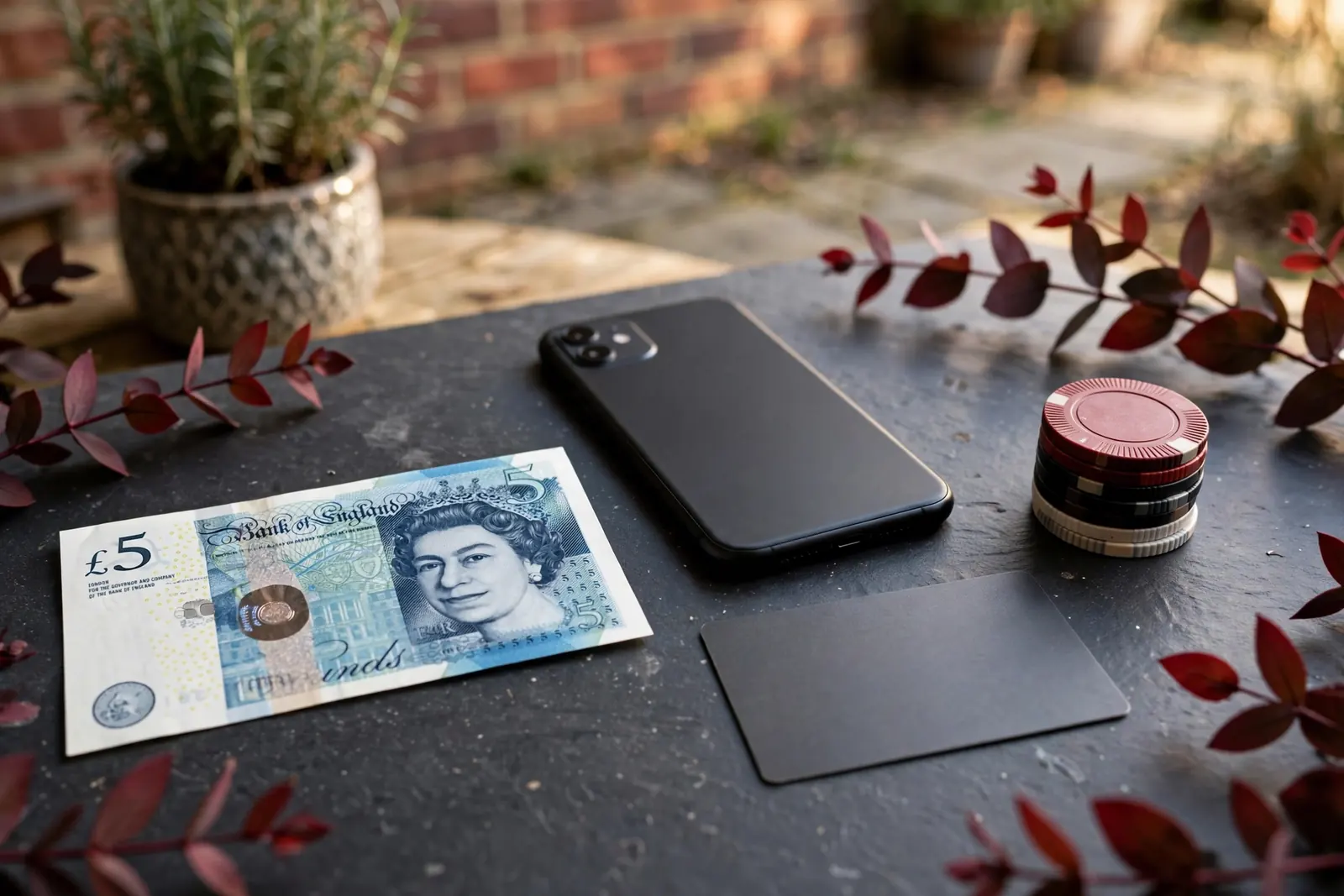
A £5 cashier minimum is a starting point for funding an account, not a promise that every payment option will accept that amount. I used to read the number beside “minimum deposit” as if it applied everywhere on a site. It can be more conditional than that: the cashier may show different limits depending on how you plan to pay.
For a point of comparison, a specialist review puts the typical minimum for UK casinos accepting direct banking at £10, while noting that some operators set it at £5 and others at £20. That is a useful snapshot, not a rule for every casino. A £5 option sits below the threshold described as typical in that review, but it does not mean every operator offering a £5 cashier minimum will apply it to every available method.
The difference between a £5 and a £10 minimum is simple on the screen but worth understanding before you choose. If your budget for the first payment is £5, a cashier that starts at £10 does not meet your requirement, even if the casino’s advertising or another page makes a small deposit sound possible. Conversely, seeing a £5 minimum does not tell you that a different route through the cashier will have the same floor.
If you’re looking for a casino with a £5 minimum deposit, check the current deposit terms before you sign up. The available detail here is each operator’s stated payout speed, which may help you assess withdrawal timing.
EvoSpin
EvoSpin has a stated payout speed of 1–3 business days. You can use that as a withdrawal-timing detail when considering the casino.
Revery Play
Revery Play has a stated payout speed of 1–3 business days. You can use that as a withdrawal-timing detail when considering the casino.
WinBeast
WinBeast has a stated payout speed of 1–3 business days. You can use that as a withdrawal-timing detail when considering the casino.
Amunbet
Amunbet has a stated payout speed of 1–3 business days. You can use that as a withdrawal-timing detail when considering the casino.
Britsino
Britsino has a stated payout speed of 1–3 business days. You can use that as a withdrawal-timing detail when considering the casino.
NightWin
NightWin has a stated payout speed of 1–3 business days. You can use that as a withdrawal-timing detail when considering the casino.
x3bet
x3bet has a stated payout speed of 1–3 business days. You can use that as a withdrawal-timing detail when considering the casino.
Jetsetspins
Jetsetspins has a stated payout speed of 1–3 business days. You can use that as a withdrawal-timing detail when considering the casino.
NightLuck
NightLuck has a stated payout speed of 1–3 business days. You can use that as a withdrawal-timing detail when considering the casino.
Dieselwin
Dieselwin has a stated payout speed of 1–3 business days. You can use that as a withdrawal-timing detail when considering the casino.
At a given UK operator, the minimum is generally the same across payment methods. There are exceptions: some casinos set a higher floor for bank transfers than for cards or e-wallets. So the method can matter, but it is not safe to assume that every casino has a separate limit for each option.
I’d treat the cashier itself as the useful reference point. Choose the payment route you actually intend to use and check the amount it allows before confirming anything. If one option accepts £5 and another starts higher, that is a difference in the operator’s terms for those routes—not evidence that the headline minimum applies to them all.
This distinction also cuts both ways. A casino may show the same minimum across its methods, in which case switching from one option to another will not get around that threshold. Or the bank-transfer minimum may be higher than the card or e-wallet minimum. The only safe reading is the one attached to the selected method in that cashier.
I have made the mistake of deciding that a site fit my budget before checking the actual payment screen. It is an easy assumption to make when the amount is prominent and the method-specific detail is not. But a minimum is only useful if it applies to the route you can and want to use.
The figure tells you the smallest amount accepted under the stated conditions. It does not, on its own, explain why another payment option might have a different threshold, or whether a displayed minimum applies to all routes. Those details belong to the cashier’s individual method terms.
That is why I would not compare two casinos using only the number in a short description. One may state a £5 minimum for direct banking; another may show a different floor for that route. Even where the numbers match, the available payment methods may not. The deposit threshold is one part of the comparison, not a complete description of the cashier.
If your aim is specifically to make a £5 payment, check the method first and the amount second. Some readers will be able to use the lowest displayed option; others may find that their preferred route has a higher minimum. Neither situation changes what the headline number means: it describes an accepted entry point, not a universal promise covering every payment method.
I’d also separate the cashier minimum from assumptions about what a casino “normally” allows. The review’s comparison is helpful context, but it cannot settle the terms at an individual operator. Limits can differ between operators, and the stated exception for bank transfers shows why it is worth looking at the route-level detail rather than relying on one general figure.
A £5 minimum can therefore be a meaningful fit if that is the amount you intend to deposit and the method you select accepts it. If the cashier shows a higher threshold for that method, the lower figure elsewhere on the page does not change that. Check before you commit. Small detail, real difference.
A £5 cashier minimum tells me what the site will accept, not whether I should trust it with my details or money. I used to see a small entry amount and treat it as proof that a casino was easy to deal with. It proves no such thing. Before depositing, I’d check who runs the site, whether it is properly licensed for the UK, and whether its basic safeguards are visible before I’m asked to pay.
For a casino serving players in Great Britain, a current operating licence from the UK Gambling Commission is a basic requirement. I’d look up the operator on the Commission’s public register and compare the business name there with the company identified on the casino site. A familiar logo or a polished page is not a substitute for that check. If the operator’s identity is hard to find, or the details don’t match, I’d stop rather than trying to explain the discrepancy away.
This matters just as much when a site calls itself “new”. That word describes a launch claim; it does not tell me whether the business is accountable or whether the cashier follows UK rules. I would apply the same checks to a new arrival as to a site I had seen before. No special trust for a fresh design.
The licence check is a starting point, not a promise that every part of the experience will suit you. I’d also look for clear information about customer support and complaints. UK-licensed operators must provide an internal complaints process and access to an approved Alternative Dispute Resolution service. If I couldn’t find a route for raising a problem, I’d take that as a reason to pause and investigate before opening an account.
You must be at least 18 to gamble online in the UK. Operators must verify a customer’s age before allowing a deposit, so expect an identity check rather than assuming you can pay first and sort everything out later. I’d use my real details and make sure they are entered consistently. A mismatch between account information and identity documents can create avoidable friction when an operator needs to confirm who is using the account.
That is a practical check, not a challenge to get around. If a site appears willing to take money before carrying out the required age verification, I would not treat that as a perk. It is a warning sign. The same goes for anyone asking you to use someone else’s account or payment details: I wouldn’t proceed.
Before depositing, I’d also set a financial limit. UK operators must prompt new customers to set one before their first deposit and provide accessible account-level controls. I prefer to decide what I can afford while I’m calm, not after a run of wins or losses has started to shape my judgement. If the prompt is absent, difficult to understand, or the controls are buried, I’d slow down and find out why.
The UK ban on credit-card gambling took effect in 2020. For a UK-licensed casino, a gambling deposit should come from a debit card, an e-wallet funded by debit, or a bank account. I would not use a credit card, including through a payment route that disguises credit-card funding. Operators are also not allowed to accept wallet payments where credit-card funds can be used for gambling.
That is why I’d check the actual funding source, not just the payment brand displayed at the cashier. If the route involves a wallet, I’d confirm that it is funded in a way permitted for gambling. If a payment page suggests borrowing, cash advances, or another workaround for the credit-card ban, I’d leave it alone. A small deposit does not make a non-compliant route harmless.
I’d also make sure I understand what I’m authorising before confirming a payment: which account or card is being used, and whether the amount shown is the amount I intend to deposit. That sounds obvious. It is also the sort of check I have skipped when I wanted to get through registration quickly.
I wouldn’t call a site the best £5 casino just because it accepts the amount I have in mind. Suitability depends on whether the operator is licensed, whether I can meet its age and identity checks, whether the payment route is allowed, and whether its limits and complaint information are clear. Those checks are more useful than a ranking that treats every player as if they want the same thing.
My own rule is simple: if I can’t verify who runs the casino, understand how it handles safeguards, or identify a compliant way to pay, I don’t deposit. A low cashier minimum is only a price of entry. It isn’t a trust mark.
Once a £5 deposit has cleared, it appears as a balance in your casino account. That is the simple part. The more useful question is what that balance can actually do, and whether the amount you see is the amount you can later withdraw. Those are not always the same thing.
I used to treat the number in the account like cash already in my pocket. It isn’t. It is money available to use on that site, subject to the casino’s rules and the result of whatever you choose to play. If you spend the balance, it is gone; if it grows, you still need to follow the operator’s withdrawal process before money reaches your bank or payment account. No magic shortcut.
Before paying in, I’d set a financial limit and stick to it. UK-licensed remote operators must prompt new customers to set a limit before their first deposit and make account-level controls accessible. Use that moment rather than clicking through automatically. A small deposit can still become a bigger spend if you keep adding money after the first balance runs down. I’ve made that mistake. The cashier does not know when you have had enough.
The account also has to belong to an eligible customer. UK players must be at least eighteen, and operators must verify a customer’s age before allowing a deposit. For real-money play in the UK, use a casino holding the relevant UK Gambling Commission operating licence. That is the basic legal framework, not a badge to admire and forget. You are handing over payment details and relying on the operator to process both deposits and withdrawals properly.
After the deposit, check the account balance and transaction history. Make sure the payment is shown as completed, not merely started or pending, and check that the amount credited matches what you intended to send. If the balance has not updated, I would not immediately try another payment. First check the account’s transaction record and the operator’s help or complaints route; a second attempt can make it harder to understand what happened.
Then keep an eye on the distinction between money in the account and money available to withdraw. A balance can change through play, and a displayed figure is not a promise of a particular payout. If you decide to stop, the cashier or account pages should explain how to request a withdrawal and which payment details the operator needs. Follow the instructions there, and keep a record of the request. If something does not match what the account shows, contact the operator through its own support channel rather than guessing or sending another deposit.
The awkward part of a £5 starting balance is that a withdrawal may have a higher minimum than the amount you put in. A specialist casino review reported minimum withdrawal thresholds of £10 to £20 at many UK casinos; that is a report, not a rule that applies to every operator. Check the current cashier terms for the particular account before treating any balance as cash you can take out. If the threshold is above your balance, you may not be able to request a payout yet. That can leave you choosing whether to keep playing, add funds, or leave the balance where it is. I would not deposit more just to reach a withdrawal threshold unless I had already decided that extra amount was affordable to lose.
Also read the operator’s conditions for withdrawals before you need them. The payment route, account details and any checks required can affect the steps involved. Do not assume that a successful deposit means a withdrawal will be immediate or automatic; a request still has to be submitted and handled by the casino. If your payment method or personal details have changed, make sure your account information is accurate and ask support what to do before making another payment.
A £5 deposit is therefore best understood as a small amount of playable account money, not a guaranteed trial that ends with a cash-out. Some UK casinos accept deposits as low as £1, but the cashier minimum and the withdrawal threshold are separate things. The number that matters after you deposit is not only what went in; it is also what remains, what the operator allows you to withdraw, and whether you are comfortable with the conditions.
I’d treat the balance as spent the moment I choose to play with it. If it remains untouched, fine; if it disappears, I do not chase it with another deposit. That sounds obvious until the account page is open and the money looks close enough to win back. Keep the limit visible, check the withdrawal terms, and stop when the amount you set aside is gone. No heroic recovery plan.
A £5 balance can feel different on a phone because the screen makes it easy to keep tapping without noticing how quickly the session is moving. I’ve done that: started with a small amount, lost track of the stake, and watched the balance shrink faster than I expected. Now I decide what I’m willing to lose before I open a game, then treat that as a hard limit rather than a target to spend.
On a real-money mobile casino, the amount you stake matters more than the size of the screen. Some slots let you play for 10p or 20p a spin, so a £5 balance can cover more turns at those stakes than it would at a higher stake. That does not make the money last a set amount of time or guarantee a return. A run of losing spins can still use it up quickly. Small stakes just give you more control over the pace.
Before playing, check that the casino is licensed by the UK Gambling Commission and that your age has been verified. You must be at least 18 to gamble online in the UK, and operators must verify a customer’s age before allowing a deposit. A licensed casino should also prompt new customers to set a financial limit before their first deposit, with account controls available for changing limits. Set yours while you’re thinking clearly. It is harder to make a sensible decision once you’re chasing a loss.
The mobile experience is not just the desktop site squeezed onto a smaller screen. Menus, game controls and account pages may be arranged differently, so take a moment to find the balance and limit settings before you play. I also avoid making a stake change while distracted. On a phone, a small control can be easy to miss, and the next spin can cost more than you intended.
There are rules around how online slots work in Britain, including a minimum duration for each spin and a ban on autoplay. That means you cannot set a slot to keep spinning automatically while you look away. It also means a session has a deliberate pace, even if repeated taps make it feel quick. If you’re tired, annoyed or doing something else at the same time, closing the game is a better move than trying to squeeze in one more round.
Think about withdrawals before you start, too. A small balance may be playable but still fall below the amount an operator allows you to cash out. One specialist review reported minimum withdrawal thresholds between £1 and £5; treat that as a reported range, not a rule that applies to every casino. The cashier terms for your account are what matter. Check whether a minimum applies, whether any conditions affect the balance, and whether you need to complete identity checks before a withdrawal can be processed.
That detail changes how a small session feels. If you win a little, it may not be available to withdraw immediately if it falls short of the operator’s threshold. And if you keep playing simply to reach that threshold, you could lose the balance instead. I’ve made that mistake. Don’t turn a cash-out minimum into a reason to keep gambling.
A £5 minimum deposit mobile casino can be a way to start with a defined budget, not a promise of a long session or an easy cash-out. Keep the stakes low if you want to stretch the play, use the account limit tools, and stop when your planned amount is gone. Small balance. Real money.
A cashier accepting £5 does not mean every promotion will accept that deposit. The deposit floor and the bonus’s qualifying amount are separate rules. A specialist review has reported that some bonuses set a £10 qualifying deposit, even where the account can be funded with £5. Another specialist review has noted that some UK casinos exclude their lowest deposit bracket from welcome promotions. Those are operator-specific conditions, not a promise that every £5 deposit will miss out.
I used to treat the banner as the offer and the small print as an afterthought. That is backwards. Before opting in, find the exact minimum deposit for that promotion and check whether it applies to the payment method you intend to use. Also look for any requirement to opt in before depositing, and whether the offer is restricted to new customers. Don’t assume that a cashier minimum makes you eligible.
“Welcome bonus” sounds simple. The real offer may combine bonus funds, free spins or both, each with its own conditions. Check what counts as qualifying play, which games contribute, whether there is a maximum withdrawal from bonus winnings, and when the promotion expires. These details can decide whether a small deposit is worth making at all.
There is a date-sensitive rule in 2026. Since 19 January 2026, the UK Gambling Commission has capped wagering requirements for gambling incentives at 10 times the bonus funds. That is the ceiling, not a target and not a claim that every promotion uses the maximum. If terms still describe a requirement above that cap, don’t treat the wording as an ordinary condition; check the operator’s current terms and the Commission’s information.
Wagering is the amount of qualifying play required before bonus funds or associated winnings can be withdrawn. Read what the multiplier applies to: the bonus amount, rather than automatically to your deposit. Then check game restrictions and any withdrawal cap attached to the promotion. A headline can make a modest bonus look generous, while the rules determine what you can actually do with it.
Expiry matters too. Bonus funds must expire within the permitted window of 7 to 30 days, so note the specific deadline shown in the terms and whether it starts when the offer is claimed or credited. A bonus you cannot use in time may be less useful than playing with your own balance. No rush. Read first.
While wagering bonus funds, don’t place a slot bet above £5 per spin. The stake limit is a practical condition to keep in mind, not a reason to increase your normal stake. I’d set a financial limit before depositing, then decide whether the promotion fits inside it. If the bonus changes how much you planned to spend, leave it.
“£5 minimum deposit casino with bonus” can describe a site whose cashier accepts that amount, but it does not establish that a particular bonus is available or that £5 qualifies. Likewise, a “no deposit bonus” is a different promotion label; check its own eligibility and terms rather than assuming a deposit-based offer applies. Avoid treating “not on GamStop” as a shortcut to better terms: operators serving Great Britain must hold a UK Gambling Commission licence. A promotion should be judged by its written conditions, not by the wording of a banner.
A £5 balance can look more substantial on the screen than it feels once you start spinning. The stake you choose is what sets the pace: many slots let you play for between 10p and 20p a spin. At that level, five pounds represents a limited run of spins, not an evening’s-worth of guaranteed entertainment. A few wins can stretch it; a losing run can use it quickly.
I used to focus on how many spins a balance might buy and treat that as a plan. It isn’t one. Each spin is a separate gamble, and a low stake doesn’t make a result more likely or protect the money already spent. Decide what you’re comfortable losing before you open a game, then stop when that amount is gone. No chasing it back.
The cashier figure and the game stake are different things. A site can accept a five-pound deposit, while the slot you choose has its own range of permitted stakes. Check the stake control before playing rather than assuming every game starts at the same point. If the lowest setting is more than you intended to spend per spin, pick another game or leave the balance alone.
When I want to see how a small balance behaves, I pay attention to the stake, the pace of play and how clearly the game displays what has been wagered. Titles such as Gates of Olympus and Mega Moolah can serve as examples to look at, not as recommendations or a promise that either will suit a particular budget. The practical point is to inspect the settings in the game itself. A familiar title doesn’t tell you what its lowest stake is.
There’s also the rhythm to consider. Online slot spins in Britain must take at least two and a half seconds, and autoplay is not allowed. So you cannot set a long run of spins going unattended. I find that a useful prompt to stay aware of what each spin costs, rather than letting a small balance disappear while my attention is elsewhere. It still doesn’t make the outcome predictable. Just slower.
Keep the session simple: choose a stake you can afford, check it has not changed when you switch games, and take a break if you feel pulled into raising it after a loss. A £5 deposit is a spending limit only if you treat it that way; it is not a target you need to use up. That distinction matters more than the title on the screen.
And don’t read a run of wins as proof that a game is “due” to keep paying. It isn’t. A small balance makes each decision more visible, which can be helpful, but it also leaves less room for a long losing stretch. Set your limit first. Then keep the stakes consistent—or call it there.
PayPal can look like the neat answer when you want to put £5 into a casino account, but seeing its logo on a site is not enough. I check two separate things: whether the operator accepts PayPal for deposits, and what minimum the cashier sets for that method. A casino may support PayPal without letting you use it for a deposit at the amount you had in mind.
At a given UK operator, the cashier minimum is generally shared across payment methods. There can be exceptions: some casinos set a higher minimum for direct banking than for cards or e-wallets. So if PayPal appears beside a £5 option, check that the amount applies to PayPal itself rather than only to another route. The cashier’s own payment screen is the useful place to confirm it.
I used to treat a payment logo as a promise that the method would work on my terms. It isn’t. Read the displayed minimum before confirming anything, and make sure you are choosing a debit-funded PayPal balance or another permitted source. UK-licensed casinos cannot accept credit cards for gambling, including through a wallet that allows credit-card funds to be used. That restriction matters even if the payment button looks familiar.
The operator must hold a UK Gambling Commission licence to serve British players legally. Before depositing, you should also be prompted to set a financial limit; use that moment rather than rushing past it. PayPal does not change the casino’s rules or make a £5 cashier minimum universal.
If the amount shown is higher than you planned, pause. You can check whether another supported payment method has a different minimum, but don’t assume that switching will solve it: the cashier minimum is often the same across methods. I’d rather leave the payment unfinished than add more money just to get past a threshold I hadn’t checked.
Small detail. Big difference.
“New” is a slippery word in casino advertising. It might mean a recently opened site, a familiar brand with a refreshed design, or simply an operator pushing a new £5 cashier option. Those are different claims, and none tells you by itself whether the site is suitable.
The date that matters for offers is 19 January 2026. Since then, the UK Gambling Commission has capped bonus wagering at 10x. If a promotion linked to a supposedly new casino still advertises a higher wagering requirement, pause and check the operator’s current terms rather than treating the claim as a harmless marketing flourish. The cap is a rule about bonus wagering, not proof that an offer is available to every player or that a £5 deposit qualifies.
I’ve learned not to let a launch badge do the thinking for me. A fresh-looking page can still leave basic questions unanswered: is the operator licensed to serve British customers, does its cashier actually accept £5, and do the published promotion terms match the headline? A current UK Gambling Commission operating licence is essential for a legal online casino serving UK players. A name that sounds new is no substitute for that check.
Also look at when the information was updated. Payment options, cashier thresholds and promotions can change, so an old review may describe a previous setup even if the site itself is still operating. Check the operator’s own cashier and terms before registering or depositing; if they contradict the promotional wording, trust the terms you can read, not the banner.
The 2026 label can be useful when it points to a real rule change. It is not evidence that a casino has just launched, that its £5 minimum is available through every payment route, or that you will qualify for a welcome offer. Separate those claims. Then decide whether the actual site and terms make sense for you. A new badge is just a badge.
Paying by SMS sounds simple: the cost is charged through your mobile account rather than taken directly from a debit card or e-wallet. In practice, “pay by SMS” can cover specific mobile-billing services, so check which one the casino actually offers. Boku and Payforit are examples associated with this kind of payment.
The lowest cashier tier is not something I’d assume is available just because mobile billing appears in the payment menu. A specialist review describes £1 deposits as rare in UK casinos and linked to particular methods, including Boku or Payforit. That is a different claim from saying every casino using either service accepts £1. The cashier’s displayed minimum is what matters.
If you’re looking for a £5 minimum deposit casino that accepts payment through your phone bill, check the payment page before registering. Confirm that the method is available to you, that the cashier accepts your intended amount, and that you understand how the charge will appear on your mobile account. Don’t treat a logo or a general “mobile payments” label as confirmation.
I’d also check that the operator is licensed for the UK market and that the payment route follows the UK rules. Gambling deposits cannot be made with a credit card; compliant options include debit cards, bank accounts and e-wallets funded by debit. Mobile billing is not a shortcut around those safeguards.
Before your first deposit, the operator must verify your age and prompt you to set a financial limit. I used to rush past the cashier details because the payment sounded easy. That’s where small-print surprises start.
NetBet is the only UKGC-listed casino identified with a £1 cashier minimum. That makes it a £1 option, but the minimum alone does not establish which casino is best for you.
Check the operator against the UK Gambling Commission’s public register, then confirm that your chosen payment method accepts the amount you want to deposit. Also review withdrawal limits, promotion terms and the available complaints process.
A low minimum does not by itself show that a casino is safe. Check that its operator holds a current UK Gambling Commission licence and that the operator details match the public register.
The lowest deposit tier is £1, but it is rare and may be limited to particular payment methods. Direct-banking minimums are typically £10, though some operators set them at £5 or £20; check the cashier for your chosen method.