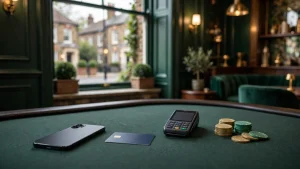
Citadel may refer to a payment method or a game-related name, so casino listings and cashier details need separate checks.

The word “Citadel” can point to two different things in a casino discussion: a way of paying, or a name attached to a game. Those are separate questions. A payment label in a cashier would not establish that the casino offers Citadel-branded slots, and a game title would not tell you which deposit methods are available.
I would keep those searches apart. When I’m checking a casino, it’s easy to let a familiar word do too much work: a page mentions Citadel, so it starts to feel as though the games, bonuses and payment route all belong together. They don’t necessarily. For slot play, the useful detail is the game’s actual title and provider in the casino lobby. For a payment, it is the method shown for your account at the point of deposit. One does not confirm the other.
There is no Citadel slot title or Citadel-specific slot product to name here. That does not tell you whether any particular casino might accept a payment associated with Citadel; it simply keeps the game question distinct from the payment question. Search for games by their listed names, not by assuming a payment brand has its own slot range.
If you’re looking for casinos that accept Citadel in the UK, check that your chosen payment method is available to you before signing up. The payout-speed detail below can help you consider how withdrawals may fit your needs.
EvoSpin
EvoSpin has a stated payout speed of 1–3 business days. Check whether Citadel is available for your account.
Revery Play
Revery Play lists payouts as taking 1–3 business days. Confirm Citadel availability before you deposit.
WinBeast
WinBeast’s stated payout speed is 1–3 business days. Check directly whether you can use Citadel.
Amunbet
Amunbet lists a payout speed of 1–3 business days. Verify Citadel availability for your account before choosing it.
Britsino
Britsino’s stated payout speed is 1–3 business days. Check whether Citadel is offered to you.
NightWin
NightWin lists payouts as taking 1–3 business days. Confirm directly whether Citadel is available.
x3bet
x3bet has a stated payout speed of 1–3 business days. Check Citadel availability before using the site.
Jetsetspins
Jetsetspins lists a payout speed of 1–3 business days. Verify whether you can use Citadel with your account.
NightLuck
NightLuck’s stated payout speed is 1–3 business days. Check directly whether Citadel is available to you.
Dieselwin
Dieselwin lists payouts as taking 1–3 business days. Confirm Citadel availability before making a deposit.
The UK rules around online slots are more concrete. Operators offering real-money gambling to customers in England, Scotland and Wales need a UK Gambling Commission licence. For online slots, the maximum stake per game cycle is £5 for customers aged 25 and over, and £2 for those aged 18 to 24. The £5 cap for adults came into effect on 9 April 2025. These are rules about how slot games can be played, not clues about which payment methods a casino accepts.
There are practical limits on how a spin works, too. Online slot autoplay is banned in Britain, and each spin must last at least 2.5 seconds. So if a page sells a slot as “instant” or suggests you can let it run unattended, I’d look closely at what it actually means. A catchy label is not a rulebook.
I’ve found it helps to check the game lobby and the payment screen as separate parts of the same account. The lobby can show whether a particular slot is available; the cashier can show which payment routes are presented to you. Neither screen should be treated as proof of what the other contains. Keep the categories straight.
That matters whether you’re looking for Citadel games on mobile, a new casino, or a site that accepts a Citadel deposit. “Citadel casino” can blur those ideas into one phrase, but the phrase alone does not establish that a casino offers a matching game catalogue or payment option. For slot play, start with the listed games and the UK rules that govern them. For payment acceptance, look at the cashier. Different checks.
A payment method can work for a deposit and still be a poor choice if you want to claim a promotion. That distinction is easy to miss when a bonus banner makes the offer look simple. Before you opt in, look for the promotion’s payment-method rules, not just the cashier’s list of ways to pay.
I’ve learned not to treat “welcome bonus” as a complete description. It is a headline; the terms explain who qualifies and what can disqualify a claim. The relevant detail may be tucked under headings such as eligible deposits, excluded payment methods or bonus restrictions. Read that wording before making a deposit, because the method you select can matter even when the promotion itself appears open to new customers.
A specialist review has reported that PayPal can be excluded from bonus eligibility, despite its appeal for speed and convenience. That is a report about a promotion condition, not a rule that applies to every casino or every offer. The terms attached to the specific promotion are the useful authority. If they say a particular method is excluded, using it may mean the deposit does not qualify; if they do not make the position clear, do not assume the banner settles it.
The same caution applies to e-wallets. One specialist review reported that Skrill and Neteller are offered at some sites but may be ruled out of promotions. That does not tell you what another operator’s terms say, or whether the restriction applies to every bonus. It does give you a reason to look for the payment exclusions before you choose how to fund an account.
I would check these as two separate questions:
A “yes” to the first does not answer the second. Nor does seeing a payment method mentioned in a casino’s general information establish that a particular bonus accepts deposits made with it. The offer terms need to connect the two.
Look for any wording that names payment methods or categories of methods. If the terms say certain e-wallets are excluded, check whether the names match the method you plan to use. If they refer broadly to “wallets” or “alternative payment methods”, do not guess at the intended scope. Ask the operator for clarification and keep its response. That is more useful than relying on a short promotional message.
Also check whether the offer requires you to opt in, and whether it applies to the deposit you are about to make. Those are questions for the promotion’s own terms; they should not be inferred from a general claim that a casino has bonuses. I would rather spend a minute reading the conditions than discover after depositing that I misunderstood what qualified.
A bonus can look valuable while its conditions make it unsuitable for you. Read the full terms, including any restrictions on payment method and any requirements attached to the offer. If you do not understand a condition, pause before opting in. A promotion is optional; a deposit made under a mistaken assumption is harder to undo.
This matters when you are looking for a Citadel-related offer too. A search for a bonus linked to Citadel does not prove that a casino offers one, and a general bonus page does not establish that Citadel is an eligible way to deposit. Keep those claims separate. First, determine whether the offer actually exists and applies; then read its payment rules. A phrase on a promotional page is not a substitute for explicit terms.
I would not choose a payment route solely to chase a bonus. The offer may exclude that method, and the method’s availability for deposits does not itself grant promotion eligibility. Check the conditions before you commit, and do not treat a bonus banner as a promise that every payment option qualifies.
Small print first.
A payment method mentioned on a casino’s homepage is not the same thing as a payment route available to you when you are ready to deposit. I’ve learned to treat broad claims as a starting point, not a green light. The useful check is the live cashier for the account you intend to use.
That distinction matters with Citadel. A general reference to banking, cards or “instant payments” does not confirm that Citadel is supported. Nor does a page about casinos accepting Citadel establish that the route will appear for every customer. I can’t verify any casino’s current Citadel acceptance from those kinds of general claims alone.
If you are considering a site, first make sure you are looking at its current UK-facing service and the correct cashier. Payment options can be presented differently before and after you sign in, and a method shown in an old review may no longer be offered. Even a current-looking list may describe the operator’s general payment options rather than the choices enabled for your account.
Once logged in, open the deposit area and inspect the options displayed there. If Citadel is not clearly named, don’t assume that a similarly described route is Citadel under another label. Ask customer support to identify the provider and explain whether it is available to your account. A vague reply such as “we accept instant banking” doesn’t answer the specific question.
I’d also check the terms attached to the payment option, not just its logo. Look for any conditions about account eligibility, country, currency or verification. If the cashier gives you a route that differs from the one described in the support reply, pause and ask for clarification before submitting payment details. Small mismatch, big headache.
A specialist review may list Visa and Mastercard, but that is not proof that every UK customer can use every card product at that site. The current cashier is the place to check whether those options are available and whether your particular card is eligible. I would not treat a logo on a review page as confirmation for my account.
The same caution applies to currency. Specialist pages may state that GBP is supported, but check the currency shown in your account before the first transaction. If the account is set to a different currency, conversion may apply. It is easier to spot that before paying than to work out afterwards why the amount credited does not match what you expected.
A practical check is to compare three things: the payment method named in the cashier, the provider or route identified by support, and the currency and conditions shown before confirmation. If those details do not line up, don’t fill the gaps with assumptions. Ask again, and keep a record of the answer if the wording is unclear.
For me, “available” needs to mean more than appearing somewhere on a page. The route should be visible in the live cashier, clearly identified, and usable for the account in question. If you are relying on a particular method, ask support directly: is Citadel itself supported for UK customers, and will it appear in my cashier? That keeps the answer focused instead of inviting a generic list of payment options.
If the response only confirms that the casino accepts bank transfers or online banking, that still does not confirm Citadel. Likewise, seeing a familiar payment brand tells you only what the cashier names; it does not prove that every account or product qualifies. Be precise when asking, and expect a precise answer.
I would not deposit just to test an uncertain route. Check first, and stop if the cashier or support team cannot explain what you are authorising. Payment pages are where broad wording meets your actual account. That’s the bit worth trusting.
The plain answer is that Citadel cannot currently be treated as a confirmed way to pay at UK online casinos. I would not name a site as accepting it, or call any operator a “Citadel casino”, without clear evidence that the payment route is available to its customers. That is different from saying it could never work: payment options can change, and a name on a general payment page does not prove that every customer can use it.
I’ve learned not to turn a plausible-sounding payment claim into a plan. A brand name can refer to a service, a card or another part of a payment setup; those are not automatically interchangeable at a casino. Even if a route works for one person or account, that does not establish broad availability across UK sites. A confident headline is not the same as a confirmed payment.
So, can you use Citadel at an online casino in the UK? Naming casinos anyway would make an uncertain claim look settled. That helps nobody. Especially not at the deposit screen.
There is also a difference between using a payment route to fund an account and receiving money through it. A site might support one transaction direction but not the other, or apply conditions tied to the account and payment route. For that reason, claims about Citadel deposits should not be read as proof of Citadel withdrawals. The two need separate confirmation.
The simplest way to reduce avoidable snags is to make sure the casino account details and the payment route belong to you and match. If the names or ownership details do not line up, basic checks can create friction before a transaction is completed. That point applies to payment methods generally; it does not establish that Citadel itself is accepted.
For UK players, the wider legal context matters too. Remote gambling operators serving customers in Great Britain must hold the relevant Gambling Commission licence. A payment brand does not tell you whether an operator is licensed, and a casino advertising a particular method is not proof of regulatory status. Keep those questions separate.
I would therefore treat Citadel as unconfirmed for online casino use, rather than assume that a site accepts it because a third-party page says so. If you find a specific claim, look for a clear statement from the operator about Citadel itself and whether it covers deposits, withdrawals or both. If that detail is absent, don’t build your payment plan around it. A familiar name is not confirmation.
A search for casinos accepting a Citadel card in the UK can make it sound as though “Citadel” is a card type with a standard acceptance pattern. That is not something I’d assume. A payment name appearing beside a card option does not prove that a casino supports a particular Citadel-branded product, or that every card carrying that name will work.
Debit cards are a familiar way to pay at UK casinos. Visa and Mastercard are commonly accepted, but the logo alone is not a guarantee for your particular card. A specialist review lists those card networks, yet that is a snapshot rather than confirmation of current UK availability or eligibility for every product. Check the casino’s cashier and its payment terms for the actual card you hold.
The distinction matters because “debit card” covers products issued under different arrangements. A casino may support a network but still reject a particular card, issuer, or transaction. If you are looking for Citadel debit-card payments, check whether Citadel identifies the card’s payment network and whether the casino accepts that specific product. Don’t treat a general Visa or Mastercard logo as proof.
I’ve learned not to read a logo as a promise. Small detail, real difference.
Credit cards are a separate issue. The UK regulator banned credit-card gambling on 14 April 2020, and the restriction remains in force. UK-licensed casinos cannot accept credit-card payments for gambling; routing credit-card funds through a money service business does not make them acceptable either. That rule does not mean every debit card is blocked. It means the card must be an eligible payment product, and the casino must support it.
Wallets have a related restriction: a UK-licensed casino cannot accept a wallet payment where the wallet allows credit-card funds to be used for gambling. So it is worth checking how the payment is funded, not just which card or wallet logo appears on screen. The funding route matters.
For a Citadel card, the practical check is narrow: identify whether it is a debit or credit product, confirm its network and issuer details, then see whether that exact card is available in the casino’s cashier for your account. If it is a credit card, the UK gambling restriction settles the question. If it is a debit card, acceptance still depends on the casino’s current support and the card’s eligibility.
That is less satisfying than a simple list of Citadel-accepting casinos, but it is safer than guessing from a payment logo or a broad claim about cards. A familiar network is not the same as confirmation for your card.
If Citadel is not shown as an option, it helps to compare payment routes by what they actually do, not by which one sounds like the closest substitute. A method that lets you fund an account may not let you receive a payout through the same route. I learned to check both ends before treating a payment option as a proper alternative.
Paysafecard is a prepaid voucher and is deposit-only. That makes it different from a bank-linked route or an e-wallet: you can use it to add funds, but it is not a withdrawal method. If you choose a deposit-only option, check how the casino handles payouts before you pay in. The cashier or payment terms should explain the available route for receiving money.
Open banking and bank transfers are another category you may come across. A specialist payment review reports that these can support instant deposits and fast withdrawals at many sites, but that is not a promise about every casino or account. The option shown to you, and its stated use, matter more than a general description. Bank transfer availability can differ between operators.
Skrill and Neteller are e-wallets listed at some sites. A specialist review also reports that these methods are often excluded from promotions; that is a separate question from whether a casino accepts them. Before choosing one, read the relevant payment and promotion terms rather than assuming a deposit will qualify for an offer. I have made that assumption before. It is an easy detail to miss.
The word “alternative” can make payment methods sound interchangeable. They are not. One might be available for deposits but not payouts; another might be offered only to certain customers or under particular account conditions. And an option listed on a general payment page is not necessarily available to you in the live cashier.
My practical shortlist is really a set of checks: does the method appear in your account, is it explicitly available for withdrawals as well as deposits, and do the terms explain any conditions that affect its use? Keep the account and payment details in your own name, too. Matching ownership details can reduce avoidable friction.
There is no need to pick a supposed “best” replacement before you know those details. Compare the routes the casino actually offers, and do not treat a deposit button as proof that the same method can bring your balance back out. That distinction matters.
I can’t give you a confirmed list of UK casinos that accept Citadel in 2026. A casino page, an old review or a payment logo can look reassuring, but none proves that Citadel will work for your account today. I’ve learned not to treat a payment claim as settled until the operator’s own payment screen backs it up.
Before making a deposit, sign in and open the cashier. Check whether Citadel is actually offered as a payment choice, not just mentioned in general text. If it is not displayed, don’t assume that selecting a similarly named option or entering your details will make it work. Ask the casino’s support team whether Citadel is supported for UK customers and for your account specifically. Save the answer if you may need to refer back to it.
The wording matters. “Accepted” can mean a method is named somewhere on a site; it does not necessarily mean it is available to every customer or usable for every kind of payment. If support confirms availability, check that the cashier lets you choose the method and shows the terms before you authorise anything. Don’t send money first and hope the payment route will be recognised afterwards.
A specialist review I checked lists Visa and Mastercard, but that does not confirm Citadel acceptance. It also reports GBP support; still, check the account currency shown before your first transaction. If your account is set to another currency, conversion may affect what is charged or credited. Small detail. Worth checking.
I’d also avoid relying on a page that says a casino “takes Citadel” without showing when that was checked or whether the claim applies to UK accounts. Payment options can change, and a generic statement may not match the live cashier. If you cannot get a clear answer from the operator, treat acceptance as unconfirmed and use a route the cashier explicitly presents instead.
That’s the honest answer to the 2026 question: I can’t verify a casino where Citadel is confirmed to work for UK deposits. The useful test is not a broad claim but a current, account-specific confirmation from the casino, followed by the method appearing in your cashier before you pay. No guesswork.
A Citadel deposit and a Citadel withdrawal are separate steps. A payment route shown when you add funds does not, by itself, tell you where a casino will send winnings. For a Citadel payout, the useful detail is the cashier’s withdrawal information for your account—not a general claim that a site supports the card or payment service.
UK anti-money laundering rules generally mean a payout should go back to the original payment source. That is part of closed-loop handling: the casino checks how funds entered the account before deciding how they can leave it. If the original route cannot receive a payout, the operator may explain what alternative is available and request further checks. Do not assume another card or bank account can simply be substituted.
I once treated “fast withdrawal” as if it described the whole journey. It didn’t. A casino first has to review the request internally; after approval, the payment provider and receiving account also affect when funds arrive. First withdrawals can take longer if KYC is still needed, and an account that is not fully verified can hold things up. Fast is not instant.
Before requesting a Citadel withdrawal, check the cashier’s rules for the payment method attached to your account. Look for whether payouts to that route are supported, whether the casino requires the original deposit source, and what to do if that source cannot accept funds. If the wording is unclear, ask support to confirm the procedure for your account before you deposit. Keep the answer; it is easier to resolve a mismatch before a withdrawal is pending.
Use payment details that belong to you and match your casino account. That reduces avoidable ownership questions, though it does not remove the operator’s checks. A payout estimate should also be read as conditional on internal approval and completed verification, not as a promise that money will arrive by a particular time.
The practical point is simple: don’t judge a payment route by deposit access alone. Confirm the payout path, the account requirements and the verification status first. No guesswork.
When you are checking whether a deposit is practical, look beyond the payment button. The cashier’s minimum, your account’s limits and the total cost can all affect what reaches your casino balance.
A specialist casino review describes minimum deposits in the £10–£20 range, with the exact threshold depending on the payment method. Treat that as a guide, not a promise: the amount shown for your chosen route in the live cashier is the one to check before confirming. A low minimum does not tell you what the maximum will be. Casinos can set different maximum deposits per transaction, day or month, and those limits may also depend on your account status.
There is another limit to consider before you pay. UKGC rules require remote gambling licensees to prompt new customers to set a financial limit before their first deposit and to make account-level limit controls accessible. If you set a limit, check how it applies to your deposits rather than assuming the cashier’s maximum is the only restriction.
Costs can be less obvious than the amount entered. A specialist review identifies possible charges from the casino, payment provider, card issuer or bank, as well as currency-conversion spreads and network fees. Not every route carries every charge, so there is no universal cheapest method. Compare the total cost for the amount you intend to deposit, including any exchange rate applied if your account is not in pounds. A conversion spread can be harder to spot than a stated fee.
I used to focus on the number beside the deposit button and call it the cost. That missed the charges elsewhere in the chain. Check the casino’s fee terms, then the provider or bank’s own terms, before approving the transaction. Small print matters.
For a Citadel-linked deposit, the same practical checks apply: confirm the amount, applicable limits and any charges displayed before authorising payment. A suggested bonus or advertised deposit figure does not override the cashier’s minimum or your account controls. If the final amount looks different from what you expected, stop and check the breakdown first. No need to guess.
A casino’s payment options cannot tell you whether it is connected to GamStop. The two questions concern different things: one is how money can be paid in; the other is the operator’s relationship with a self-exclusion scheme. Seeing Citadel mentioned beside a casino name does not establish either its current payment support or its GamStop status.
I used to treat labels as if they answered more than they did. They don’t. A payment reference is not evidence that a site is “not on GamStop”, and it does not show that the operator is outside UK safeguards. The same goes for claims about Citadel slots or casinos supposedly unaffected by GamStop: the payment name alone proves nothing about those claims.
If you are checking a casino, look for its own clear information about self-exclusion and account controls, rather than trying to infer status from a cashier option. For UK-licensed remote gambling operators, customers must be prompted to set a financial limit before making their first deposit, and account-level limit controls must be accessible. Those controls are a separate matter from which payment methods appear in the cashier.
Nor does the absence of a familiar payment option settle the question. A cashier can change, and payment availability can differ between accounts; neither circumstance tells you whether GamStop applies. Likewise, a claim that a casino accepts Citadel should not be read as a promise that the site is outside the scheme.
Keep the checks separate: confirm payment details with the operator, and assess GamStop status through information about the operator and its safeguards. If a site uses vague wording to make Citadel sound like a route around self-exclusion, I would treat that as a reason to pause, not as proof. Two different checks.
PayPal, open banking services and debit cards connected to fast payout systems are generally among the quickest options. The casino’s approval process and your verification status also affect how soon you receive the money.
Returning funds to the original payment source is a common anti-fraud and anti-money-laundering control. An alternative route may require extra verification.
No. Visa and Mastercard are commonly accepted for debit-card deposits, but you should check that your specific card product is eligible in the casino cashier. Credit-card gambling is banned in the UK.
The casino must approve the withdrawal, and first payouts may take longer while it completes verification. An account that is not fully verified can also slow payment.
No. A card deposit may be instant while its withdrawal takes several business days; payout speed depends on the casino’s approval process and your verification status.
Common options include debit cards such as Visa and Mastercard, PayPal, bank transfers and open banking. Some sites also offer Skrill, Neteller, Apple Pay, Jeton or Paysafecard for deposits; check the cashier because availability varies.
Yes, GBP is supported, but confirm your account currency before your first transaction to avoid conversion.