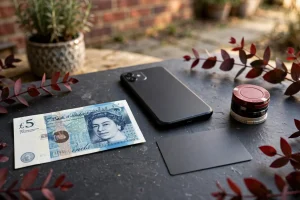
A £1 cashier minimum is only an entry point; payment methods, bonus qualifying amounts and withdrawals may follow different terms.

A £1 minimum deposit sounds wonderfully simple: put a pound into a casino account and you can start. The important word is *deposit*. That figure describes the lowest amount the cashier will accept under the conditions shown; it does not promise a bonus, a particular way to pay, or an easy route to taking money back out.
I used to read small-print headline figures as if they described the whole experience. They don’t. A £1 minimum is an entry point, not a guarantee that every part of the account works around that amount. The distinction matters before you decide whether a £1 minimum deposit casino in the UK is actually suitable for what you want to do.
Some UK casinos do accept a deposit of £1. That makes the claim real, but narrow. It tells you that the operator allows at least one qualifying deposit at that level, subject to its current cashier terms. It does not tell you that every payment option has the same floor, or that the minimum will apply to every customer and every transaction. The cashier is where the practical terms live.
When you’re looking for a £1 minimum deposit casino in the UK, it’s worth checking the stated payout speed as well as the deposit threshold. Use the details below as a quick reference when deciding what to look into further.
EvoSpin
EvoSpin lists a payout speed of 1–3 business days, giving you a stated timeframe to consider.
Revery Play
Revery Play lists a payout speed of 1–3 business days, which gives you a clear point to check when reviewing its terms.
WinBeast
WinBeast’s stated payout speed is 1–3 business days, a useful detail for you to factor into your choice.
Amunbet
Amunbet lists payouts as taking 1–3 business days, giving you an indication of the stated processing timeframe.
Britsino
Britsino’s stated payout speed is 1–3 business days. You can use this as one point of reference when checking the casino’s terms.
NightWin
NightWin lists a payout speed of 1–3 business days, giving you a stated timeframe to keep in mind.
x3bet
x3bet’s listed payout speed is 1–3 business days, a practical detail for you to consider.
Jetsetspins
Jetsetspins lists payouts as taking 1–3 business days, so you have a stated timeframe to refer to.
NightLuck
NightLuck gives a payout speed of 1–3 business days, which you can factor into your review.
Dieselwin
Dieselwin lists a payout speed of 1–3 business days, giving you a clear detail to check alongside its other terms.
There is another wrinkle: a figure quoted in a review may not describe every UK account, or remain current. One specialist review’s comparison identified NetBet as the only UK Gambling Commission-listed casino on its list with a £1 cashier minimum. That is a statement about that review’s checked list, not proof that the same operator is the only one across the market today. A list can be narrower or older than its headline suggests. Check the operator’s own cashier terms before treating a name as confirmation.
That’s the bit I’d want to know before getting excited. The phrase “from £1” sounds broad; the actual terms may be specific. A minimum can depend on the payment route, and a promotional page may be talking about an offer rather than the amount the cashier will accept. Those are different claims. Look for the minimum deposit stated for the UK account itself, not just a banner or a general description.
The £1 figure also says nothing by itself about what happens after the money arrives. A deposit is not a bonus, and a low cashier minimum does not establish that an offer will be available. Nor does it tell you whether a small balance can be withdrawn under the operator’s rules. Those are separate terms, and a headline about depositing cannot answer them. Treating the entry amount as a promise about the rest is how a tidy-looking claim turns into an unpleasant surprise.
 £2 Minimum Deposit Casinos in the UK: What to KnowLearn what a £2 minimum actually covers, why it may not unlock bonuses or withdrawals, and how cashier limits vary; some UK…
 Same-Day Payout Casinos in the UK: What to ExpectLearn how payment methods, cashier processing, withdrawal limits and bonus wagering affect payout speed. Bank wires typically take three to five business…
For me, the useful question is not simply, “Can I put in a pound?” It is, “What exactly does that pound let me do under this account’s terms?” If all you need to establish is whether the cashier accepts a small deposit, the minimum answers that limited question. If you expect the figure to unlock something else, read the relevant terms separately. One number cannot carry all those meanings.
A genuine £1 minimum deposit casino should make the cashier minimum clear for the account and payment route you intend to use. If you cannot find that detail, don’t fill the gap with assumptions drawn from an advert or a review. A UK-facing casino offering real-money gambling must hold the relevant Gambling Commission licence; the licence requirement and the cashier minimum are separate matters. One is about whether the operator may serve the market, the other about the amount it accepts.
I’m wary of “tiny deposit” as a selling phrase because it can make the whole experience sound smaller and simpler than it is. The deposit may be small. The terms are still the terms. Read the cashier figure as a door, not as a promise about what is behind it. And if the wording is unclear, stop there rather than relying on the most generous interpretation.
So, yes: £1 minimum deposit casinos exist in the UK. But the number only earns its keep when it matches the current terms for your account. It is not shorthand for a no-strings offer, and it cannot tell you whether the rest of the account fits your plans. Small entry. Separate conditions.
A £1 cashier minimum is the lowest tier, but it is not the only figure worth comparing. A specialist review of UK casinos accepting direct banking places the typical minimum for that route at £10, with some operators setting it at £5 and others at £20. Those figures describe a different question from whether a casino accepts a £1 deposit at all: the answer can depend on the payment method selected.
At the £1 end, the entry point is unusually low. Some UK casinos accept a deposit of that size, but it is a narrow option rather than a safe assumption about every cashier. At £5, the threshold is higher but still below the £10 direct-banking figure reported by that review. A £10 minimum is the central comparison for direct banking in the same account, while £20 is a stricter floor some operators apply.
The practical difference is simple: a minimum is a gate, not a recommendation. If the cashier says £20, choosing a £1 amount will not make the transaction go through. If it accepts £1, that does not mean every other payment route on the same account will accept it too. I used to read the smallest number on a page as though it applied everywhere. It may not.
Casinos commonly keep the minimum the same across the payment methods they offer. But some set a higher floor for bank transfers than for cards or e-wallets. So an operator can have one advertised minimum and still show a different required amount after you choose a particular route in the cashier.
That distinction matters when you compare a £1, £5, £10 or £20 figure. Ask what the number refers to: the account’s general cashier minimum, or the minimum for the payment method you intend to use? A headline that says “£1 minimum deposit” can be technically accurate while telling you little about other routes. The amount displayed at the point of payment is the one that applies to that transaction.
 £3 Minimum Deposit Casinos in the UK: What to CheckSee how £3 compares with casino deposit tiers, why the cashier’s minimum can differ by operator, and what to check before relying…
 Instant Withdrawal Casinos UK: How Payouts WorkLearn why an “instant” badge may not mean immediate funds, and how wagering requirements, UK checks and payment routes can affect casino…
Direct banking gives a useful contrast because its minimum may sit above the lowest cashier tier. In the specialist review’s comparison, £10 is the typical direct-banking minimum, with £5 and £20 as operator-set alternatives. That does not mean every casino follows those exact settings, nor that each setting is offered by every operator. It shows why the method-specific terms matter.
A £1 floor signals that the operator permits a very small initial transaction through at least one route. It does not tell you that the same amount works by direct banking. The cashier may set a higher threshold there.
A £5 floor can be the operator’s minimum for direct banking, according to the same review, or it may be a threshold that applies more broadly. Check which. The difference between a general floor and a route-specific one is easy to miss when you are comparing offers or reading a short description.
At £10, the direct-banking figure reported by that review is a useful reference point, but not a universal rule. An operator may ask for more or less. At £20, the minimum is a higher barrier to opening play with that route; it does not, by itself, tell you anything about the quality or legitimacy of the casino.
The lowest entry point, permitting a very small initial transaction through at least one route.
A higher threshold that may serve as the operator's minimum for direct banking or apply more broadly.
A typical reference point for direct-banking minimums, though it varies by operator.
A stricter barrier to opening play via direct banking; it does not indicate the quality of the casino.
That last point matters when you are looking for a trusted or legitimate £1 minimum-deposit casino. A low number is not proof of trustworthiness, and a higher number is not proof of the opposite. For a UK player, the legal baseline is that an online casino serving the market must hold the relevant Gambling Commission licence. The cashier minimum is a separate account term.
I would compare the tiers in this order: first, confirm the operator is licensed for the UK; then check the minimum shown for the payment route you plan to use; finally, compare it with the amount you are actually willing to deposit. That prevents the £1 label from doing too much work in your decision. It also avoids treating £5, £10 or £20 as if the number alone settles whether an account suits you.
The useful comparison is not “Which minimum is best?” in isolation. It is whether the cashier’s floor applies to your chosen method and whether you are comfortable with that amount. A £1 tier is the lowest entry point, while £5, £10 and £20 mark higher thresholds that may appear depending on the operator and route. Read the exact cashier terms, not just the biggest type on a promotional page. That is the bit I once skipped.
A genuine £1 minimum is something you confirm in the account’s cashier, not something you can safely infer from a banner. I used to read “low minimum” as “I can start with a pound”. That is not what the words necessarily mean. The phrase might describe a promotion, a particular route into the site or an amount available only under certain account conditions. The cashier is where the operator shows what it will actually accept from your account.
 £4 Minimum Deposit Casinos in the UK: What to CheckLearn how a £4 cashier minimum differs from bonus qualifying deposits and how to check current terms; a review verified six UK…
 Casino no ID verification in the UK: what it meansLearn when casinos may request documents, how electronic checks can work and why withdrawals may still require proof. UK-licensed casinos must check…
Start by checking that the casino is licensed to serve players in Great Britain. A remote operator taking real-money customers there must hold the relevant UK Gambling Commission licence; a familiar-looking site or an advert is not proof of that. Then read the operator’s account terms and open its registration form. You will be asked for personal details so the casino can create an account and carry out its checks.
Age verification is not an optional box to click past. You must be at least 18 to gamble in the UK, and an operator must verify your age before allowing you to deposit. It may also ask for information to confirm that the account details are yours. If a check is still pending, pause rather than trying to work around it. A page that appears to let you register is not the same as permission to fund the account.
Before you make your first deposit, the site must prompt you to set a financial limit. Take that prompt seriously. I know the temptation to click through just to get to the games; I have made that kind of impatient choice and then had to go back and sort out the controls later. Decide what amount you can afford to lose, set the limit in the account tools, and make sure you understand what period it covers. The point is to make the boundary part of the setup, not an afterthought once money is already in play.
After registration and the required checks, go to the cashier and look for the deposit option. Enter £1 and continue only if the screen accepts that amount and presents a clear confirmation of what will be credited. If the cashier changes the amount, rejects it or displays a higher required minimum, then that account does not currently offer a genuine £1 deposit through that route. A headline elsewhere on the site does not override what the transaction screen says.
Making a Deposit
Registration and Verification
Create an account with your personal details and complete the mandatory age verification to prove you are at least 18.
Setting Financial Limits
Use the account tools to decide on an amount you can afford to lose and set a financial limit before funding.
Cashier Confirmation
Go to the cashier, enter £1, and proceed only if the screen accepts the amount and shows clear confirmation.
That distinction matters because “minimum deposit” can be used loosely in promotional copy. It may refer to a general starting point rather than the cashier minimum for your particular account. It might also describe an offer’s qualifying amount instead of the amount needed simply to put money into the casino balance. Those are separate conditions. I would not treat a low figure in an advert as settled until I saw the account’s own terms and the cashier agree.
Once you submit the deposit, check the confirmation and account balance before doing anything else. Make sure the amount shown is the amount you intended to add. If the page reports an error or leaves the transaction status unclear, do not repeatedly submit it in the hope that one attempt will work. Check the account history or contact the operator through its support channel, keeping any confirmation details. It is dull admin. Better than guessing.
A useful way to judge an online casino with a £1 minimum deposit is to separate three things: what the advert says, what the account terms allow and what the live cashier accepts. The first attracts attention; the other two tell you whether the claim applies to you. An operator can have a low figure in general wording while placing conditions on how an account may be funded. Read the relevant terms rather than assuming every customer sees the same option.
I also check that I am on the casino’s real site and logged into the account I just created before entering anything. A copied page or a vague button can make a simple transaction harder to verify. Keep the process plain: register, complete the age check, set the financial limit, inspect the terms, then confirm the amount in the cashier. If any step contradicts the advertised £1 figure, stop and resolve that mismatch first. No need to rush.
A £1 deposit can get money into a casino account on your phone, but that does not mean you can take £1 straight back out. I used to treat the cashier’s minimum as the whole story. It isn’t. The withdrawal rules sit separately, and they can make a tiny balance awkward to cash out.
Before depositing, open the withdrawal section of the account terms, not just the mobile cashier. Look for the minimum cash-out amount and whether it differs by payment method. A specialist review has reported withdrawal thresholds of £10 to £20 at many UK casinos; that is a report about the operators it covered, not a fixed rule for every account. If the threshold is higher than your balance, the money may remain in the account until you meet it.
That’s the catch. A real-money £1 minimum deposit casino in the UK may accept your small payment while setting a much higher withdrawal floor. You could end up needing to add more money or keep playing before the balance reaches the amount you can request. Neither is a great surprise to discover after you have already deposited.
Some accounts do have lower withdrawal thresholds. A specialist review has described minimum cash-outs ranging from £1 to £5, while also noting that debit cards and some e-wallets can handle £1 transactions. Those details do not establish what your chosen casino will allow: the operator’s own terms and the options shown in your account are what matter. A low minimum on one payment route does not prove that every route has the same cash-out rule.
On mobile, it is easy to focus on the button that adds funds and miss the withdrawal details tucked elsewhere in the account. I’d check the rules before putting money in: what is the minimum withdrawal, which payment methods are available for cashing out, and does the operator require you to use the same route for deposits and withdrawals? If the answer is unclear, ask customer support before you pay. Small print matters.
Also check what happens if your balance is below the stated threshold. The terms may explain whether it can stay in your account or whether another condition applies. Do not assume that a small balance will be sent automatically, or that making another deposit is the only way to resolve it. Read the operator’s wording rather than relying on what another player says happened on a different account.
A £1 minimum deposit online casino can still suit someone who wants to keep the initial amount small, provided they understand the limits of that choice. But “withdraw at any time” and “withdraw any amount” are not the same thing. A site can let you play with a small balance and still require a larger sum before a cash-out request is available.
I now check the exit before the entrance. On a phone, that means opening the cashier’s withdrawal area and the account terms before making a deposit, not after a win. If the minimum cash-out is beyond the amount you are prepared to leave in play, the account may not fit your plan. Better to know that first.
A cashier accepting £1 does not mean its welcome offer starts at £1. The deposit floor and the promotion’s qualifying amount are separate rules. I’ve made that mistake myself: money appeared in the account, but the offer I expected did not. A specialist review of UK casino offers reports welcome promotions with qualifying deposits of £5 to £10, and some operators exclude their lowest deposit bracket altogether. Treat those figures as a guide to what may be written in an offer, not a promise that every casino uses the same threshold.
Before opting in, open the promotion’s full terms and find the minimum qualifying deposit. Check whether it applies to the first deposit only, whether you must opt in before paying, and whether the payment method you intend to use qualifies. A £1 payment can be accepted as cash to play with while remaining ineligible for the bonus. That distinction is the whole catch.
“No deposit bonus” means something different: it describes an offer that does not require a deposit to claim, subject to its own eligibility and terms. It is not another name for a casino with a £1 cashier minimum. If an offer asks you to deposit money, check the qualifying amount rather than assuming £1 will unlock it. And if you are considering a site advertised as not on GamStop, that label is no substitute for checking whether the operator holds a UK Gambling Commission licence. UK players should use licensed sites.
The date matters here. Since 19 January 2026, the UK Gambling Commission has capped wagering requirements on gambling incentives at 10x the bonus funds. Older pages may quote higher multiples; those figures should not be treated as the current permitted cap for UK incentives.
Still, “10x” does not mean the bonus is cash you can withdraw straight away. The terms explain how much qualifying play is required before bonus funds or related winnings become withdrawable. Look for which balance the requirement applies to, which games count, and whether any maximum withdrawal condition is attached. A headline offer can sound generous while the conditions make it less useful than it first appears. Read the small print.
Free spins need their own check. A specialist review of offers tied to £1 deposits reports packages ranging from 10 to 100 spins, but the number alone tells you little. Check which game the spins apply to, when they expire, whether you must opt in, and what happens to any winnings. The wagering cap applies to incentive terms, including wagering attached to bonus-spin winnings; do not assume a win is immediately withdrawable.
I now treat the cashier minimum as a way into the account, not a shortcut to a promotion. Confirm the qualifying deposit and the current bonus conditions first. If the offer only works at a higher deposit, decide whether you still want to deposit £1 without it. That is a cleaner decision than paying in and hoping the bonus appears.
A £1 balance sounds like enough to have a go, but the stake per spin decides how much play it represents. Many slots accept bets of 10p to 20p per spin. At the lower end, £1 covers ten spins if you spend the full balance; at the higher end, it covers five. That is the simple arithmetic, before any win changes the balance.
I used to look at a small deposit as a way to stretch a session. It is better to think of it as a short run of chances. A losing spin takes its stake from the balance, and a win may add money back, but there is no set number of spins you are owed. A few outcomes can leave you with less to play; a win can extend the run. Neither result is promised.
The displayed stake matters more than the slot’s name or theme. Check the total bet shown before spinning, rather than assuming the smallest coin or line value is the amount you will spend. If the game’s available stake is above what you planned, leave it and choose another option. The £1 figure is a balance, not a reason to raise your stake to make the session feel longer.
There is another small catch: a spin is not just a quick tap that can be repeated without thought. Online slots in Britain must take at least 2.5 seconds per spin, and autoplay is banned. That gives you a moment to notice the balance moving, but it does not make the money last longer. If you find yourself increasing the stake after a loss, pause rather than chasing the amount back.
A practical way to approach a small balance is to decide beforehand what you are comfortable losing and treat that as the full cost of the session. Do not count a possible win as part of your budget, and do not add more just because the balance has run down. I have made that mistake: a tiny starting amount can turn into repeated deposits if you keep trying to recover it.
This is also why “a few spins” is a more honest expectation than a long session. At 10p to 20p a spin, the basic calculation is five to ten spins from £1, assuming no returns. A winning result can alter that count, but it cannot be built into a plan. Small stake. Small margin for error.
A casino showing PayPal in its cashier has not necessarily confirmed that you can deposit £1 with it. The payment logo tells you the method is available; the cashier minimum tells you the smallest amount that operator will accept through it. Those are different details, and I’ve learned not to treat one as proof of the other.
At a given UK casino, the minimum is generally shared across payment methods. Some operators set a higher floor for direct banking than for cards or e-wallets, though, so the payment route can matter. That still does not establish that PayPal itself will work for a £1 transaction at a particular casino. Check the amount displayed after choosing PayPal in the cashier, and read the operator’s payment terms if the figure is unclear.
There can be another gap: the casino’s minimum and the payment account’s own rules are separate. A casino might accept a small deposit through an e-wallet while your account or transaction cannot send that amount. Do not assume every PayPal account, or every casino that lists PayPal, handles £1 deposits the same way.
UK gambling deposits must follow the country’s payment rules. A wallet used for gambling must not allow credit-card funds to be used for the payment. Before you fund an account, make sure the wallet is being used in a permitted way; a payment option appearing on screen is not a reason to ignore its funding source.
If you are opening a new account, the operator must verify that you are at least 18 before you can deposit, and must prompt you to set a financial limit before your first deposit. I’d check those steps alongside the cashier amount rather than relying on a “PayPal accepted” label. Small print matters.
A low cashier minimum can look attractive until a payment fee enters the picture. A specialist review reports that some payment providers charge a flat fee of £1 to £3 per transaction. That is a substantial extra cost beside a £1 deposit: at the lower end, the fee matches the amount you are trying to put in; at the higher end, it exceeds it.
The detail that matters is how the charge is applied. If it is added separately, you pay it on top of the deposit. If it comes out of the transfer, less money may reach your casino balance. Either way, the headline minimum tells you what the cashier may accept, not what the whole transaction will cost.
I used to focus on whether a payment button worked and ignore the price of moving the money. That was a poor way to judge a small deposit. A fixed charge has the same weight whether you send a little or a lot, so it can make a low-value transaction disproportionately expensive. No bargain there.
Before confirming, read the payment provider’s fee information as well as the casino’s cashier terms. Check whether the charge applies to deposits, withdrawals or both, and whether the stated amount is deducted from your transfer or billed separately. Do not assume that a fee-free casino deposit means the provider will also waive its own charge.
If the fee is unclear, pause rather than testing it with a small payment. A £1 deposit may be accepted, but paying another £1 or more to move it changes the real cost immediately. The useful comparison is not just the amount entering your account; it is the total leaving your payment account for that balance.
“1016” does not identify a casino or explain a payment code on its own. I would not treat it as proof that a particular site accepts a £1 deposit, or that a new operator has launched with that cashier minimum. A number in a search result can be a typo, a fragment of a page or something unrelated.
The useful check is the UK account’s own cashier terms. A casino’s name, a general welcome offer or a page aimed at another market does not tell you the minimum deposit available to UK customers. Open the UK version of the site and look for the amount shown when you select a payment method. If that information is unclear, ask the operator before paying.
One specialist review reported that Zodiac, Luxury Casino and UK Casino Club each had a £10 minimum deposit on UK accounts and no sign-up bonus. That is a specific reported example, not a guarantee that those terms remain unchanged. It also shows why a casino being described as “low deposit” is not enough: the label does not establish that you can fund the account with £1.
I have made the mistake of trusting a headline and only checking the cashier later. Not worth it. Confirm the UK terms, the actual minimum for your chosen method and whether any offer applies to that deposit. For real-money play in Britain, the operator must hold a current UK Gambling Commission licence; a familiar name or vague code is no substitute for checking the account you are about to use.
Paying through your phone bill can look like a route to a £1 casino deposit, but it is not a standard option across UK casinos. A specialist casino review identifies Boku and Payforit as examples of mobile-billing methods associated with that lowest deposit tier. Treat that as a possibility to verify in the operator’s own cashier, not a promise that every account or network will support it.
“Pay by SMS” can also be a loose label. The payment may be charged through your mobile account rather than handled as an ordinary text message. Check the cashier’s stated minimum and whether the method is available to you before choosing it. A low advertised minimum does not prove that mobile billing accepts the same amount.
There is a legal boundary too. UK-licensed casinos cannot take credit-card payments for gambling. Deposits must use permitted funding routes, such as a debit card, a bank account or an e-wallet funded by debit; a phone-bill option must also meet the operator’s UK requirements. If the payment flow would effectively use credit-card funds, it is not an acceptable workaround.
I would check the payment details before opening the deposit screen in a hurry. Make sure you are on a UK-licensed casino’s account, confirm the carrier-billing terms, and set your financial limit before your first deposit. If the method or minimum is unclear, use a clearly described permitted option instead.
Small route. Check twice.
NetBet is identified as a UKGC-listed casino with a £1 cashier minimum. Check its current UK cashier terms and the minimum for your chosen payment method before depositing.
Debit cards are a practical option: Visa and Mastercard debit cards are widely accepted and support low deposits. Some e-wallets also allow £1 transactions, but check the cashier minimum for your chosen method.
The lowest deposit tier is £1, but it is uncommon and may be limited to particular payment methods. Direct banking typically has a £10 minimum, although some operators set it at £5 or £20.
The smallest stated deposit is £1, where the casino and payment method accept it. The cashier may set a higher minimum for other payment routes.