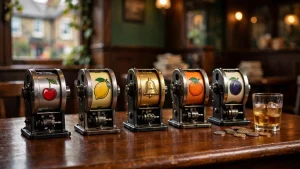
A payout percentage describes long-run returns for a specified game or group, not the outcome of an individual spin.

When I see a slot described as having a particular payout percentage, I want to know what that number is attached to. Is it a figure for one specific game, a selection of games, or an entire casino? Those are different claims, even if the wording makes them sound interchangeable.
That distinction matters because a casino is not a single slot. It can offer many games, each with its own rules and paytable. A percentage attached to one title does not automatically describe every slot at the same site. And a statement about a casino’s overall payout should not be treated as though it identifies the return on the game you are about to play. The label needs a clear subject.
I used to skim past that detail. A large percentage looked reassuring, so I took it as a sign that the casino itself was generous. That was a shortcut, not a useful comparison. Before the number can tell you anything practical, you need to know which game or group of games it describes and where the figure comes from. A headline without that context is just a headline.
When comparing online slots by payout percentage, check the RTP of the games you plan to play; cashout speed is a separate consideration. The details below give you the available withdrawal-timing information, not slot RTP figures.
EvoSpin
EvoSpin lists a payout speed of 1–3 business days, giving you a timeframe to consider separately from slot RTP.
Revery Play
Revery Play lists a payout speed of 1–3 business days. You’ll need to check individual games for their payout percentages.
WinBeast
WinBeast lists a payout speed of 1–3 business days; this is withdrawal timing, not a slot payout percentage.
Amunbet
Amunbet lists a payout speed of 1–3 business days. You can use this as a cashout-timing detail when assessing your options.
Britsino
Britsino lists a payout speed of 1–3 business days, while no slot RTP figures are provided here.
NightWin
NightWin lists a payout speed of 1–3 business days. You’ll need game-specific RTP information to assess slot payout percentages.
x3bet
x3bet lists a payout speed of 1–3 business days; that describes payouts to you, not the percentage returned by a slot.
Jetsetspins
Jetsetspins lists a payout speed of 1–3 business days. No slot payout-percentage details are available in the supplied information.
NightLuck
NightLuck lists a payout speed of 1–3 business days, a cashout detail to keep distinct from game RTP.
Dieselwin
Dieselwin lists a payout speed of 1–3 business days. Check the RTP of individual slots for payout-percentage information.
A player looking for a slot’s payout percentage is generally trying to compare the game’s stated payback with another game’s. Someone asking about an online casino’s payout percentage may instead want to compare operators. The words are similar, but the thing being measured may not be.
That is why I would not treat a site-wide claim as a substitute for checking the individual slot. If you have a particular game in mind, look for information tied to that game and read its own paytable and rules. If the claim is about a casino as a whole, find out what games or data it covers before using it to judge one slot. If that scope is unclear, the percentage cannot settle the comparison.
A casino might also promote a “high payout” selection. That sounds like a neat shortcut: pick from the highlighted games and expect a better deal. But the phrase itself does not tell you how the selection was made, whether the claim applies to every version of a game, or whether it has any bearing on the slot you actually chose. Marketing language can point you towards a claim; it does not fill in the details.
There is another trap in pages that discuss casino games together: a payout figure for one kind of game can get mistaken for a slot figure. Keno is not a slot. In keno, a player chooses spots before a random draw, and winnings depend on how many chosen spots catch. Its rules and payouts vary between platforms, so the specific game’s paytable matters.
That description does not give you a slot payout percentage. Nor does a figure described as a return for keno become evidence about online slots simply because both games are offered by casinos. I would keep those categories separate. It sounds obvious once stated, but mixed-game pages can blur the line between a game’s own numbers and broad casino language.
The practical check is simple: identify the game first, then make sure the payout claim is actually about that game. For keno, read the keno paytable and rules. For a slot, look for the slot’s own information. Don’t carry a number from one game type into another.
When a payout percentage is presented, I’d pause over a few plain questions. What does it describe? Is it linked to a named game or a broad collection? Can you find the relevant rules or paytable? Does the wording explain what is included, or does it rely on a glowing label such as “best” or “highest”?
Those questions do not require you to become a statistician. They stop a vague claim from doing more work than it can support. If the figure has no clear connection to the game you are considering, it is not a sound basis for choosing that game. If the page discusses several kinds of casino games, check that the number belongs to slots rather than being borrowed from another section.
I’m wary of any comparison that makes the casino sound as though it has one universal payout setting. The useful unit is the game being discussed, not the shine of the operator’s slogan. Once you have the right game and its own information, you can assess that claim on its terms. If you cannot tell what the percentage refers to, don’t pretend the missing context is a small detail.
A percentage can be a starting point for checking a slot, but the words around it matter just as much. Read the scope, look at the game’s own rules, and keep other games’ figures separate. No shortcut there.
When someone asks about a slot machine’s payout percentage, they are looking for a figure attached to the machine or game—not a general statement about a casino. That distinction matters. A broad claim about a venue or operator does not, by itself, tell you what applies to a particular slot.
I used to treat a percentage in promotional copy as if it settled the question. It didn’t. The useful thing to pin down is what the figure refers to: the specific game, the version being offered, and the information displayed for it. If those details are blurred, the number can sound more precise than the claim really is.
“High payout” is marketing language. What sits behind it may be a percentage, but the words alone do not establish which slot it describes or how the figure was obtained. I would not treat a headline as a substitute for the game’s own information. Nor would I assume that a figure attached to one game tells me anything about another one, even if both appear on the same casino site.
That is the practical answer to how you find a payout figure on a slot machine: look for information tied to the particular game, rather than relying on a general casino claim. If the wording does not make clear which game the number belongs to, it is not enough to identify a machine’s payout percentage. And if you cannot tell what the percentage describes, it cannot support a reliable comparison.
There is a difference between identifying a number and knowing what it means. A percentage can look definitive while leaving important context unstated. I would want the game name and the relevant game information to be clear before using it to compare slots. Otherwise, I’m comparing loose claims, not like for like. That is how a neat-looking figure can create more confidence than it deserves.
For UK players, the legal setting is worth keeping separate from the payout claim. Remote gambling operators serving the British market must hold the relevant UK Gambling Commission licence. That requirement concerns the operator’s permission to offer gambling; it does not make an advertised payout percentage a promise about what you will receive. A licence and a game figure answer different questions.
There are also rules about online slot play that affect the experience, but they are not payout figures. In Britain, autoplay is banned, and each online slot spin must last at least two and a half seconds. The maximum stake per game cycle is £5 for customers aged 25 and over, and £2 for those aged 18 to 24. These limits describe permitted stakes, not the return associated with a particular slot.
That separation is easy to lose when several numbers appear near each other. A stake limit is not a payout percentage. A licence is not a payout percentage. A promotional phrase is not enough to establish the terms of a game. I keep those categories apart because mixing them can make an unclear claim feel properly checked when it isn’t.
I would be wary of searches for the slot machines with the “highest payout” if the result offers a ranking but does not clearly connect each figure to a named game and its own details. A list can look useful simply because it orders numbers. But ordering numbers does not fix missing context. If the basis for comparison is unclear, the ranking cannot tell you which machine is genuinely the better fit.
And a stated percentage is not a personal forecast. It should not be read as a promise that a particular session will return that share of your stake, or that a machine will pay out a certain amount when you play. Treating a published figure as a guaranteed result is the mistake I would most want to avoid. The number may describe a game claim; it cannot tell you what your next play will do.
Before wagering, focus on the specific slot’s information and make sure you understand the terms that apply to it. UK-licensed casinos must provide responsible-gambling tools, and operators must prompt new customers to set a financial limit before their first deposit. I find it sensible to decide what I can afford before I start, rather than trying to make a payout claim justify spending more. No percentage makes that decision for you.
So, when you see a payout figure beside a slot machine, slow down and ask what it is attached to and what it actually describes. If the answer is not clear, I would not use it to rank games or to plan a session. A clean number is not the same thing as a clear claim. Short version: check the game, not the gloss.
I used to read a slot’s return figure as if it told me what a session would feel like. It doesn’t. RTP and volatility describe different properties: one is about an expected return over a large number of plays; the other is about how unevenly results can arrive. They belong in the same conversation, but they are not interchangeable.
RTP is a theoretical measure calculated across repeated play. It gives a broad view of the proportion of stakes a game is designed to return over time, rather than a promise about what you will get back in one sitting. Volatility, by contrast, describes the shape of the results: whether outcomes tend to be more modest and spread out, or more uneven, with larger swings.
A theoretical measure of the proportion of stakes a game is designed to return over a large number of plays.
A description of the shape of results, indicating whether outcomes are more modest and spread out or more uneven with larger swings.
That distinction matters when a game is labelled “high RTP”. The phrase sounds like a forecast for your next session. It isn’t. A return figure alone says little about the pattern you might encounter while playing. Two games could have similar theoretical return figures and still feel very different because their rewards are distributed differently. I’ve made the mistake of treating one measure as a shortcut for the other. Bad shortcut.
Think of RTP as a long-run summary, not a timetable. Volatility is closer to the character of the ride, though even that is not a prediction of what will happen on your next spin. A more volatile game may have results that vary more sharply; a less volatile one may produce a more even-looking pattern. Neither description tells you when a particular result will arrive.
That is why “high volatility” should not be read as “better chance of a big win”, and “low volatility” should not be read as “steady profit”. Those interpretations turn a description of result distribution into a promise about personal outcomes. A label can help you understand the kind of variation a game is built around, but it cannot schedule a payout or protect a bankroll.
I find it useful to keep the two questions separate. RTP asks about the theoretical return across extensive play. Volatility asks how that return may be distributed across outcomes. If I’m trying to understand a slot, I don’t let a strong-sounding return claim answer both questions for me.
The distinction also stops a common bit of advertising language from doing too much work. “Frequent rewards” and “big potential” point towards different expectations, but neither phrase, on its own, establishes the game’s RTP or tells you how its outcomes are spread. I look for the game’s own information rather than treating promotional wording as a technical explanation.
There is a practical limit here. A theoretical measure cannot tell you whether you will finish a session ahead, and a volatility description cannot tell you how long a particular run of results will last. Combining the two still does not turn them into a personal forecast. It just gives you two different pieces of information to consider.
So when you see RTP discussed alongside volatility, resist folding them into one idea. One concerns long-run return; the other concerns variation in the way outcomes are distributed. Related, yes. The same thing, no.
A “high RTP” label sounds like a neat answer to which slot pays best. It isn’t a ranking by itself. Without a named game and a figure that can be checked against its own published information, I can’t honestly point to one title as the highest-paying online slot. A list built on guesses would look useful and tell you nothing solid.
I’ve been taken in by tidy claims before. “Best” often turns out to mean best according to the page making the claim, not best for every player or every session. A headline can catch your eye; it doesn’t show what the number refers to, where it came from, or whether it describes the exact game you’re about to play. Don’t let the adjective do the work of evidence.
When you see a percentage attached to a slot, look for the game’s own information and read the wording around the figure. Is it clearly tied to that title? Does the information explain what the percentage represents? Is the claim coming from the operator offering the game, or from someone repeating a promotional description? Those are useful checks before you treat one figure as comparable with another.
The word “highest” needs particular care. A genuine comparison would need identifiable slots and figures stated on a consistent basis. Without that, a page can name a winner without showing how the comparison was made. I’d rather leave the winner unnamed than dress an unsupported claim up as a recommendation. Less exciting. More honest.
A high percentage also doesn’t tell you that a particular visit will go well. It is not a promise about what you will get back from a session, and it cannot tell you what will happen on your next spin. If you’re weighing up a slot, treat the published figure as one piece of information, not a forecast or a reason to increase a stake.
There’s another easy trap: assuming that because two pages use the same phrase, they are making the same claim. Check the actual game details rather than relying on a banner, a short description, or a ranking label. If the figure is not clearly connected to the slot you’re considering, you have no sound basis for using it to compare that game with another.
So, do online slots have higher payout percentages, or which one pays the most? Those questions need specific, comparable slot information before they can be answered responsibly. A confident-sounding claim isn’t enough. I’d check the game’s own published details, take care not to read a long-run measure as a personal promise, and walk away from rankings that won’t show their working. A big number can still leave you guessing.
When you narrow a slot payout question to the UK, the location matters for the rules around gambling. It does not, by itself, tell you what a particular game returns. A UK label is no substitute for a game’s own information, and it does not make a payout figure comparable with another game’s.
For real-money online gambling offered to customers in Great Britain, the operator must hold the relevant UK Gambling Commission licence. Online gambling is legal for people aged eighteen and over when they use a UKGC-licensed operator. That tells you something important about the operator’s regulatory status; it is not a promise about what you will win. I’ve learnt not to read a compliance badge as a prediction.
The rules also set limits on online slot stakes per game cycle: £5 for customers aged twenty-five and over, and £2 for those aged eighteen to twenty-four. Those are maximum stake limits, not payout percentages. A stake cap cannot tell you whether a slot has a particular return, how its results will unfold, or what your session will leave you with. Different question. Different figure.
UK rules shape how online slots are played, too. Autoplay is banned, and each spin must last at least two and a half seconds. These are safeguards and product rules, not clues to a game’s payout. A slower spin is not evidence of a better return, just as a legal stake limit is not evidence that a game is generous.
So when you see a claim about the best slot payout in the UK, separate what it actually establishes from what its wording suggests. Is it about a named game, and does the game’s own information support the figure? Is the claim describing a specific version available to you, rather than treating all slots as interchangeable? If those details are unclear, the headline alone cannot settle the matter. “Best” is a sales word until its basis is clear.
Keno sometimes appears beside casino-slot material, but it is a different game, not evidence about slot payouts. A specialist review has reported keno house edges ranging from 5% to 40%, so keno should not be mistaken for a low-edge alternative. Keno payouts vary between platforms; check the particular game’s paytable, rules and odds before wagering. That caveat belongs to keno, not to slots.
The useful UK-specific takeaway is narrower than a ranking: licensing and stake rules tell you about the conditions under which gambling is offered. They do not establish a universal UK slot payout percentage, or show that one game will pay you more. I’d keep those questions separate. No headline can promise your result.
A slot’s payout percentage and its hit frequency answer different questions. The first describes a return measure; the second concerns how often a spin produces a result the game classifies as a win. Mixing them up can make a game sound more generous than it is.
A “win” can be a small payout, not necessarily a return that covers the stake. So a slot could produce winning results relatively often while those results are modest. Another game might produce fewer wins, with a different pattern of payouts. The frequency alone does not tell you how much you will get back, and the payout percentage does not tell you how often you will see a winning result.
I used to read a high-sounding percentage as though it meant I would regularly leave a spin ahead. That was the wrong shortcut. A return figure is not a promise about what happens in your session, and a run of small wins can still leave you down overall. Different measures.
When you see a claim about how often a slot hits, check what the game counts as a hit. Does it mean any prize, including one smaller than the stake, or only a result that returns more than was wagered? Without a clear definition, the figure is hard to interpret. The game’s rules and paytable are the sensible places to check how its outcomes are described.
Payout percentage describes the theoretical return measure, while hit frequency describes how often a spin produces a result classified as a win (which may be smaller than the original stake).
The same caution applies to a claimed winning percentage. It cannot be converted into your personal chance of ending a session in profit. Your result depends on the sequence of spins and the size of any prizes, while the label may count outcomes in a broader way. A number without its definition is mostly decoration.
Nor does a single session tell you whether a published payout claim is accurate. A short run can be unusually kind or unusually rough; neither establishes what the game’s stated return means. I try not to treat a lucky patch as proof that I have found a pattern. The next spin is not obliged to follow it.
If you are comparing games, keep the questions separate: what does the payout figure describe, and what does the game mean by a hit? If the second point is unclear, do not guess from a headline. Check the specific rules before staking money. No hit-frequency label can tell you when a win will arrive or guarantee that you will come out ahead.
For play in Britain, online slots must be offered by operators holding the relevant UK Gambling Commission licence. Autoplay is not permitted, and each online slot spin must last at least the required minimum. Those rules do not turn either measure into a forecast. Set a spending limit before you start, and stop when you reach it.
An RTP label is easy to treat as a promise about what a slot will pay you. I wouldn’t read it that way. The label presents a percentage as a feature of the game; it does not tell you what will happen when you play, or establish what you will get back.
The wording around the figure matters. “RTP”, “return to player” and “payout percentage” may be used to describe a return measure, but don’t assume two figures are directly comparable just because both are percentages. Check what each label actually refers to and whether the game information explains how the figure is defined. If that explanation is missing or unclear, the number tells you less than it appears to.
I used to see a percentage and think I’d found a reliable way to compare games. That was too quick. A figure without clear context is just a claim on a screen. It is not enough to judge how a particular slot will play, and it cannot predict the result of your session.
Be wary of wording that turns a published percentage into a promise. “High return” sounds reassuring; it does not mean a slot is likely to pay you during the time or with the money you choose to play. Nor does a label by itself show how the game’s results will feel in practice. The number is one piece of information, not a personal forecast.
When checking an online slot, look for the RTP information alongside the game’s own details. Make sure you know which game the figure applies to, and don’t carry it over to another version or assume a figure shown elsewhere means the same thing. If the wording leaves you unsure what is being measured, treat the comparison with caution rather than filling in the gaps yourself.
There’s a difference between reading a stated measure and knowing what your play will return. The label can help describe a game, but it cannot settle that second question for you. I’ve learned not to let a neat percentage do more work than it can.
A number is not a promise.
RTP and house edge describe opposite sides of a theoretical calculation. RTP expresses the share of stakes a game is designed to return over extended play; house edge expresses the share it is designed to retain. When both figures refer to the same game and the same calculation, one is the complement of the other. They are not two independent promises about what will happen to your money.
That distinction matters when you see a slot described as having a particular edge or “hold”. The wording can sound like a report of what the casino has actually kept from players. It may instead refer to the game’s theoretical design. A label on its own does not tell you which meaning is intended, so I look for an explanation of the basis behind it rather than treating the terms as interchangeable in every context.
There is another trap: a theoretical relationship does not predict the result of a session. You can finish ahead or behind the game’s long-run calculation. I used to read a percentage as if it said what would happen to my own balance. It doesn’t. The arithmetic describes the model, not your next spin.
“Low house edge” is also a comparison, not a personal safety net. It does not make a session predictable, and it does not turn the stated return into a sum you can expect to receive. If an advert gives only one attractive figure, check whether it is describing RTP, the house edge, or a measured hold over some period. Those are different claims unless their context makes clear that they refer to the same theoretical basis.
For a simple illustration without relying on a particular slot figure, imagine a game’s stated return and edge are calculated from the same underlying model. A larger return corresponds to a smaller edge; a smaller return corresponds to a larger edge. That is the relationship people mean by “RTP versus house edge”. It is a way to express the same theoretical balance from the player’s side or the operator’s side.
I now treat “house edge” as a description of the game’s design, not a forecast. Check what the wording means, then keep it separate from the outcome of any one session. Two sides. One calculation.
An “average” sounds like a tidy answer, but it can hide what has actually been averaged. A figure might refer to one slot, a selection of games, or a wider group of machines. Without a clear description of the group and how the figure was worked out, it is hard to know what the number tells you.
I’ve learned not to treat a percentage in promotional copy as a promise about my own play. Even if a published figure is accurate for the thing it describes, it does not tell you what will happen in a particular session. That distinction gets lost when a headline presents an average as though it were a personal forecast.
When checking a slot’s stated RTP, look for the game’s own information and see whether the figure is clearly attached to that specific title. If a site gives an average across several games, check what it includes and whether it explains its method. A broad average may be mathematically correct and still be a poor guide to the particular slot you want to play.
The same caution applies to claims that online slots have a single average payout. Different games can have different stated figures, so combining them into one number may conceal the differences that matter when choosing a game. I would want to know which titles are included before putting much weight on that average.
“Accurate” also needs a context. A published percentage can describe a stated game figure without predicting a short run of results. If the wording is vague, the figure is not automatically false, but it is difficult to assess. Treat unclear claims as unclear—not as proof that a game will return a particular amount.
Before wagering, check the specific slot’s information and rules, and make sure you understand what any published percentage refers to. If the explanation does not say, I would not fill in the gaps with an assumption. Marketing can make a number look more personal than it is.
That’s the useful distinction: an average may summarise a defined group, while your result belongs to one session. Don’t confuse them.
I used to see a percentage beside a slot and read it as the chance that my next spin would pay. That is an easy mistake to make, but the figure does not tell you whether a particular spin will win, or how often spins produce a win.
Those are different questions. A payout percentage describes one kind of return measure; a chance of winning would need to describe how frequently a win occurs. You cannot turn one into the other by treating the percentage as a prediction for your session. It does not say that a certain share of your spins will pay, nor that you will get a stated amount back after playing.
There is another snag: “win” can mean different things in ordinary play. A spin might return some of your stake without leaving you ahead, while a larger payout might put you in profit. Unless the game’s information clearly defines what it counts, a headline about a winning percentage can sound more useful than it is.
So when you see a claim about how often an online slot wins, check what the wording actually measures. Is it talking about any payout, or a net gain? Is it a figure for the game, or an outcome someone is implying for an individual player? If that distinction is missing, the claim cannot tell you what you are likely to experience.
I learned not to treat a payout percentage as a forecast. It is not a promise that your next spin will pay, and it is not a personal probability. A number can look reassuring while answering a different question entirely.
Keep those ideas separate when comparing games: a return figure cannot, by itself, tell you how often you will win. No shortcut there.
The house edge can range from 5% to 40%, depending on the game and casino. Check the specific game’s rules and paytable before playing.
No. Keno draws are random, and no strategy guarantees a win.
Yes. Keno rules and payouts vary between games, and some versions draw fewer numbers.
Choose numbers on a card numbered from 1 to 80 before the draw. Your winnings depend on how many of your numbers match the randomly drawn numbers.
Games can have different rules, payouts and betting structures, so check the specific game’s paytable and choose one with bets that fit your budget.
The number varies by game; players commonly can choose up to 10–15 numbers, while some versions allow more or fewer.
Minimum stakes are £1. You can choose your bet size, so check the game’s available stakes and set a budget before playing.