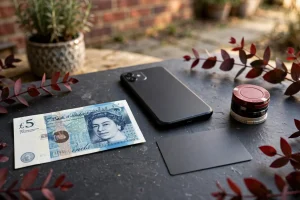
A low advertised entry point may not match the cashier minimum or the deposit required to qualify for a welcome offer.

A £4 deposit sits between the lowest advertised entry points and the higher amounts that can appear in a casino’s cashier or promotion terms. It is not a magic threshold shared by every UK casino. One site may accept it; another may ask you to deposit more. The useful question is whether the amount you plan to pay is accepted for ordinary play, not whether the site’s headline makes a small figure sound possible.
Some UK casinos accept a deposit of just £1, but that is a narrow end of the market rather than something to assume you will find everywhere. A specialist review reported verifying six UK Gambling Commission-licensed casinos with a genuine £1 cashier minimum. That gives a sense of how unusual the lowest tier can be, but it is not a permanent directory: terms can change, and a low figure mentioned in an advert does not by itself tell you what the cashier will accept today.
At the other end, £5 and £10 matter in a different way: they can be qualifying amounts for welcome offers, even where the cashier accepts less. A specialist review described welcome promotions with qualifying deposits in that range, and noted that some offers set a £10 minimum even when the platform accepts a £5 deposit. Those are promotion conditions, not proof that every casino sets its ordinary minimum deposit at £5 or £10. Keep the two questions separate.
If you’re looking for a casino with a £4 minimum deposit, check the deposit terms before choosing: the available details here don’t confirm any operator’s minimum. The list gives you a stated payout speed to consider.
EvoSpin
EvoSpin has a stated payout speed of 1–3 business days, giving you a timeframe to consider. No minimum-deposit detail is provided here.
Revery Play
Revery Play lists a payout speed of 1–3 business days. You’ll need to check its deposit terms separately, as no minimum is specified here.
WinBeast
WinBeast’s stated payout speed is 1–3 business days. The available information doesn’t say whether it accepts a £4 minimum deposit.
Amunbet
Amunbet lists payouts at 1–3 business days. No deposit-minimum information is available here for you to verify.
Britsino
Britsino has a stated payout speed of 1–3 business days. Check its deposit terms directly if a £4 minimum is important to you.
NightWin
NightWin lists a payout speed of 1–3 business days. The details provided don’t confirm its minimum deposit.
x3bet
x3bet’s stated payout speed is 1–3 business days. You’ll need to confirm its minimum deposit separately.
Jetsetspins
Jetsetspins lists payouts at 1–3 business days. No minimum-deposit detail is provided to establish whether it suits your £4 budget.
NightLuck
NightLuck has a stated payout speed of 1–3 business days. The available information doesn’t specify its minimum deposit.
Dieselwin
Dieselwin lists a payout speed of 1–3 business days. Check the deposit terms to see whether its minimum meets your needs.
That distinction is easy to miss. I have treated “minimum deposit” as if it meant “minimum deposit to get the offer”, then wondered why the promotion did not appear. A £4 payment might be accepted and credited to your cash balance while still falling short of the offer’s qualifying amount. Deposit successful; promotion not triggered. Not the same thing.
Before committing, look for wording that says what the cashier accepts and what the offer requires. If an offer has a minimum qualifying deposit, that is the amount you need for that promotion, not necessarily the smallest amount you can put into the account. If the terms are unclear, assume nothing from a banner. Read the full offer conditions before opting in or depositing, and make sure you actually want to play without the promotion if your £4 does not qualify.
There is another small but important distinction: an advertised low deposit may describe a particular route into an account rather than a universal minimum. The cashier is where the amount you are about to enter is tested. If it rejects £4, the site’s broader claim about low deposits does not help you. If it accepts £4, that confirms only that you can fund the account at that level; it does not promise a bonus, a particular amount of play, or a particular result.
For a £4 minimum deposit casino in the UK, think of the figure as a practical entry amount, not a guarantee of value. You are paying your own money into an account. Any promotional balance is separate and conditional. A small deposit can be useful if you want to keep your starting spend low, but it can also leave you outside the terms of an offer that begins at a higher qualifying amount. Neither outcome is unusual enough to ignore.
The responsible-gambling step comes before the payment screen. UK players must be at least 18, and a UK-licensed casino should prompt new customers to set a financial limit before their first deposit. Decide what you can afford to lose before you enter payment details, then set that limit rather than relying on the small size of the first deposit to keep spending in check. Four pounds is still money spent if it is lost.
So, the short version: £4 may be enough to fund an account where the cashier accepts it, but it does not automatically unlock an offer. The rare £1 options show that very low entry points exist; the £5 and £10 figures often discussed around welcome deals belong to promotion eligibility unless the cashier separately states them as its minimum. Check which meaning applies, and don’t let a low headline do the reading for you.
A £4 cashier minimum only tells you the smallest amount the site says it will accept. It does not tell you whether that amount works with every payment option, whether it is enough to meet the rules for an offer, or whether you can withdraw a small balance conveniently. I used to see a low figure and treat it as the whole story. It isn’t.
Start with the cashier itself. The minimum shown on a review page can be out of date, or it may apply to one payment route rather than every route. Check the amount displayed after you have chosen a payment method and entered the deposit screen. At some operators the floor is shared across payment options; at others, a bank transfer has a higher minimum than a card or e-wallet. The amount you can actually submit is the useful one.
That check also helps separate a genuinely usable £4 deposit from a headline figure. If the cashier accepts £4 only through a method you do not use, or sets a higher floor for your preferred route, that advertised minimum may not help you. Payment options and their limits are a separate subject, but do not assume one number covers them all.
A deposit is only one side of the transaction. Find the casino’s withdrawal minimum and compare it with the amount you plan to put in. A specialist review reported minimum withdrawal thresholds of £10 to £20 at many UK casinos. That is a reported range, not a guarantee about any particular account, so check the operator’s current terms rather than treating it as a fixed market rule.
The practical question is what happens if your balance is below the withdrawal threshold. You may need to keep playing until the balance reaches the permitted amount, or leave funds in the account; the exact treatment depends on the operator’s rules. Neither is a detail I would leave until after depositing. Look for the withdrawal page and terms before you fund the account, and make sure you understand how a small balance can be withdrawn.
Also check whether the cashier minimum and withdrawal minimum are being presented as if they were the same thing. They are not. A site can accept a small deposit while setting a higher amount for withdrawals. That gap matters more when you are deliberately depositing a small amount.
The word “minimum” can sound like a promise that everything else works at that level. It is not. Some casinos restrict payment methods for small deposits, and some do not count the lowest deposit bracket towards a welcome offer. A specialist review has also reported cases where £1 deposits were excluded from promotions or subject to higher withdrawal thresholds. Those are examples of terms to verify, not rules that apply to every casino.
For a £4 deposit, read the promotion’s qualifying-deposit clause separately from the cashier page. If you are not interested in an offer, you can ignore its requirements; if you are, confirm that your chosen deposit amount and payment route qualify before opting in. A deposit can reach your account without activating a promotion. Don’t let a large welcome banner distract you from the qualifying conditions.
I would also check what happens to the balance if you decide not to continue. The account terms should explain how withdrawals are requested and any applicable minimums. If that information is hard to find, ask customer support before depositing and keep the reply. A vague answer is not a reason to assume the most favourable interpretation.
A polished site or a low cashier minimum does not establish that a casino is legitimate for UK players. Operators offering real-money gambling to customers in Great Britain must hold the relevant UK Gambling Commission licence. Check the operator against the Commission’s register and make sure the licence details relate to the site you intend to use. A licence is a basic eligibility check, not a promise that you will win or that every term will suit you.
Before the first deposit, set a financial limit you can afford to lose. UK-licensed operators must provide customers with a way to set a limit before depositing and make account-level controls accessible. I learned the hard way that deciding what to spend after a session has started is a poor plan. Set it first.
A sensible assessment is therefore simple: confirm the live cashier minimum for your chosen method, inspect the withdrawal rules, read any promotion’s qualifying conditions, and verify the UKGC licence. If one of those pieces does not fit your needs, a low headline number does not make the account a good option. Check the terms. Then decide.
A £4 deposit is only useful if the cashier accepts that amount through a payment method you can actually use. I’ve made the mistake of seeing a low minimum advertised and assuming every route into the account would match it. The cashier can tell a different story.
At a UK-licensed casino, the listed minimum may apply across payment methods, but there are exceptions. Some operators set a higher threshold for direct banking than for debit cards or e-wallets. So if £4 is your budget, check the amount beside the method you plan to select, not just the general minimum shown elsewhere on the site.
Visa and Mastercard debit cards are widely accepted by UK casinos and can support low deposits. They are often the first option worth checking when you want to put a small amount into an account. That does not mean every casino accepts every card, or that a £4 transaction will be available at every cashier. The operator’s own payment screen is the useful check.
 £2 Minimum Deposit Casinos in the UK: What to KnowLearn what a £2 minimum actually covers, why it may not unlock bonuses or withdrawals, and how cashier limits vary; some UK…
 £20 Minimum Deposit Casinos in the UK: What to KnowLearn how a £20 minimum compares with casinos accepting deposits from £1, and what cashier, payment, bonus and withdrawal terms can change.
 Casino not on GamStop instant withdrawals: what to knowExplore how withdrawal methods, account checks and casino processing affect payout speed, and why a fast-payout claim does not mean checks are…
Make sure it is a debit card, not a credit card. The UK’s credit-card gambling ban dates from 2020, and licensed casinos cannot accept credit-card payments for gambling. That restriction also matters if a payment route is being funded by a credit card: an e-wallet is not a workaround if it lets credit-card funds be used for gambling.
I’ve found it’s easy to focus on whether a logo appears in the cashier and miss the funding source behind it. Keep the route simple: use a debit card, a bank account, or an e-wallet funded from a debit card. No credit-card detours.
An e-wallet can be a practical route if it is funded in a way permitted for gambling. But the presence of an e-wallet option does not prove that it accepts a £4 payment; the casino may apply a method-specific minimum, and the wallet itself may have its own rules. Read the amount shown before confirming the transaction.
Direct banking is another compliant way to fund an account. A specialist review describes £10 as the typical minimum at UK casinos offering this route, with some operators setting £5 or £20 instead. Treat that as a guide from a review, not a promise about the cashier you are using. If the screen sets a higher threshold than £4, switching to an eligible debit card or debit-funded e-wallet may be possible, but only if the casino offers that method and its own minimum suits you.
A bank transfer can also take a different path through the cashier from a card payment. Don’t assume the casino’s headline minimum overrides the amount displayed beside each route. Before confirming, check both the deposit value and the selected method. A small detail, but it can save a failed attempt.
A low deposit can be less useful if a fee takes a noticeable part of it. One specialist review reports flat transaction fees of £1 to £3 charged by some payment providers. That does not mean every provider charges a fee, or that the same charge applies to every deposit. Check the provider’s terms and the final confirmation screen rather than guessing from the deposit amount.
When the amount is small, a flat charge matters more in proportion to what you are putting in. I used to treat a payment fee as background noise. It isn’t, when the deposit itself is only a few pounds. If a charge appears, pause and decide whether you still want to proceed; don’t click through just because you have already reached the cashier.
The casino and the payment provider are separate parts of the transaction. The cashier may accept the deposit amount, while the provider applies its own charge or transaction conditions. Look for any fee before authorising payment, and check your payment account afterwards so the amount taken matches what you expected.
Before you deposit, make sure your age has been verified: UK players must be at least 18, and operators must verify age before allowing deposits. New customers must also be prompted to set a financial limit before their first deposit. Take that moment to choose a limit you are comfortable with; it is easier to decide before money is in the account.
Then confirm that the casino is licensed for the UK, select a compliant payment route, and read the cashier’s minimum for that specific method. Check for fees and make sure the displayed amount is the one you intended to pay. A £4 minimum deposit is not a promise that every payment route will accept £4, or that the transaction will cost exactly £4.
The practical rule is simple: trust the final cashier screen over a general payment label. It shows which methods are available to your account and what each one will accept. Check first. Pay second.
A £4 minimum deposit can put real money into a mobile casino account, but it doesn’t tell you how long that balance will last. Your stake, the games you choose and what happens during play all matter. I used to treat a small deposit as a harmless test. It still felt like money once I started tapping the screen.
Before depositing, decide what you can afford to lose and set that amount as your financial limit. UK-licensed casinos must prompt new customers to set a limit before their first deposit and make account-level controls accessible. Use those controls while you’re calm, not after a run of spins has changed your mood. A limit is there to help you stick to your decision; it doesn’t make gambling risk-free.
You must be at least 18 to gamble online in the UK, and the operator must verify your age before allowing a deposit. Real-money gambling should also take place on a site licensed by the UK Gambling Commission. That’s the basic ground rule, not a promise that you’ll win or that every mobile game will suit you.
On a phone, the cashier and the game are close together. That’s convenient, but it can make depositing and playing feel like one continuous action. I try to pause after the deposit and look at the balance before opening a game. If the amount is the full limit I set, that’s the whole budget—not a reason to add more when it disappears.
Many slots accept stakes of £0.10 to £0.20 per spin. With a £4 balance, that gives you a clearer sense of the scale of each bet, but it cannot predict how many spins you’ll get. Wins and losses vary, and a balance can change quickly. Don’t read a possible number of spins as a session guarantee. It isn’t one.
The phone’s small screen can also make it easier to miss details. Before playing, check the stake shown on the game screen and make sure it matches what you intend to wager. If you switch games, check again: the next title may not open at the same stake. I’ve found that a quick glance beats assuming the setting carried over.
Keep the phone from turning into an excuse to play whenever there’s a spare moment. A small deposit is still a real-money deposit, whether you’re on a sofa or out and about. If you notice yourself chasing losses, topping up after reaching your chosen limit, or playing when you meant to stop, step away rather than trying to fix the session with another spin.
A £4 minimum deposit is a way to enter with a modest balance, not a measure of value. Decide your limit first, check each stake on screen and treat the money as spent once you choose to gamble with it. Keep it simple.
A £4 cashier minimum tells you what you can put into an account. It does not tell you whether that deposit unlocks a welcome offer. I learned to separate those two things the hard way: the promotion can have its own qualifying deposit, and some UK casinos exclude their lowest deposit bracket from welcome deals. That condition can leave your £4 as ordinary cash, even when the site accepts it.
Before opting in, find the promotion’s minimum qualifying deposit and check whether it applies to your chosen offer. Also look for any requirement to claim the bonus, and whether accepting it changes the rules for your balance. “Welcome bonus” sounds like a gift; in practice, it is a package of conditions. Read those before depositing, not after the offer appears in your account.
Since 19 January 2026, the UK Gambling Commission has capped wagering requirements on bonus funds at 10x. Any promotion asking for more than this is not a valid offer for UK players.
Wagering means the amount you must stake before bonus funds, or winnings linked to them, can be withdrawn. A specialist review described bonus wagering requirements of 30x to 65x the bonus value. That range reflects older terms, not the current UK position: since 19 January 2026, the UK Gambling Commission has capped wagering requirements on bonus funds at 10x. If you see a promotion asking for more, do not treat it as a valid offer for a UK player.
The calculation still matters. A requirement is applied to the bonus amount, not simply the deposit that triggered it. So a small deposit does not automatically make a bonus easy to clear. Check what counts as eligible play, whether some games are excluded, and whether the offer sets a maximum withdrawal. These details determine what happens to bonus-linked funds; they are not determined by whether you deposited with a card or another permitted method.
There is also a difference between a deposit bonus and a no-deposit bonus. The latter does not require a qualifying deposit to activate, but that does not make its winnings unrestricted. Read the promotion’s terms for wagering, eligible games, any withdrawal cap and expiry. UK-licensed operators must set bonus funds to expire within the permitted period of 7 to 30 days, so check the stated expiry rather than assuming you can leave an offer untouched.
Free spins can sound simpler because they do not add a cash bonus to your balance. But any winnings may still be subject to wagering and other conditions. A specialist review reported requirements of 30x to 65x on free-spin winnings; since the UKGC’s 10x cap took effect, that older range should not be read as a current permitted requirement for UK bonus funds. Check how the operator defines the winnings and what has to be completed before withdrawal.
If you accept bonus funds, remember that the rules can also restrict how you play with them. Bets while wagering bonus funds must not exceed £5 per spin. That is separate from the wagering calculation, and both conditions matter.
I now check the qualifying deposit, the current wagering term and the expiry before I opt in. If the offer only makes sense after ignoring its small print, it is not much of an offer.
A £4 deposit can give you access to slots, but it doesn’t turn a small bankroll into a long session by itself. The amount you stake on each spin matters: many games allow wagers starting at 10p or 20p. At those stakes, your balance covers more spins on paper than it would at a higher stake. That is arithmetic, not a promise about how long you’ll play or what you’ll win.
I used to focus on the number of spins a balance might buy and forget that a slot can take money away quickly. A run of losing spins can shrink £4 regardless of how modest each stake looks. And a win doesn’t necessarily make the balance last: it can be followed by more losing spins. The game’s result is uncertain every time.
Before depositing, decide what you can afford to lose and set a financial limit. That’s more useful than trying to guess how many spins £4 will provide. If the balance is gone, don’t treat another deposit as a way to recover it. I’ve made that mistake; it only changes how much you can lose.
Check the game’s stake controls before you play. A slot may offer several bet settings, and it’s easy to select a higher one than you intended. Keep the stake at a level that fits the limit you set, rather than raising it because a small win makes the balance look healthier.
A £4 deposit can be a way to try slot play with a capped amount, provided the cashier accepts it and the game’s minimum stake suits you. It is not a reliable budget for a set number of spins. No neat calculation can account for how a particular sequence of results will go.
There is another practical wrinkle: a balance shown in your account is not automatically the same as an amount you can withdraw immediately. A specialist review has reported casino withdrawal thresholds ranging from £10 to £20. Treat that as a detail to verify against the operator’s current terms, not a universal rule. If a threshold applies, a small win may leave your balance below the amount required to request a payout.
That can matter as much as the slot stake. Before playing, check the withdrawal terms and consider whether you are comfortable with the possibility that a small remaining balance cannot yet be cashed out. Don’t increase your spending just to chase a threshold. The result may still be a loss.
For a £4 minimum-deposit slot site, the useful question is not simply whether the deposit button accepts £4. It is whether the available games have stakes that fit your budget and whether the withdrawal conditions make sense to you. Small balance, small expectations.
A £4 cashier minimum and PayPal’s own rules are two separate checks. The casino sets the amount it will accept; the e-wallet has to be available for gambling payments and funded in a way the rules allow. Seeing PayPal in a cashier does not, by itself, tell you that a £4 payment will go through.
I used to treat the payment logo as the answer. It isn’t. First check whether the casino accepts PayPal for deposits, then see whether its cashier allows that amount through PayPal. A casino can apply the same minimum across its payment methods, but some set a higher threshold for certain options. The amount shown beside one method is the useful detail.
There is also a funding rule behind the wallet. UK gambling deposits cannot be made with credit cards. An e-wallet used for gambling must be funded by debit, and operators cannot accept wallet payments where credit-card funds can be used for gambling. So check how the PayPal balance is funded, not just which button you press. Credit-card funding is not a workaround.
The distinction matters if you are trying to deposit exactly £4. PayPal may be listed, but the operator’s cashier minimum for that route could differ from the amount you had in mind. If the payment is rejected, do not keep retrying blindly; confirm the displayed minimum and that the chosen funding source is eligible.
PayPal Deposit Check
Verify Availability
Check if the casino explicitly lists PayPal as an accepted payment method in the cashier.
Check the Minimum
Select PayPal in the cashier to see the specific minimum deposit required for this route.
Confirm Funding
Ensure the PayPal account is funded via debit, as credit-card funding is prohibited for UK gambling.
I’d also avoid assuming that a casino accepts PayPal just because another one does. Availability is operator-specific, and the cashier is where you can verify the option for your account. The same goes for the amount: look at the figure shown when PayPal is selected, rather than relying on a general claim about a “£4 PayPal casino”.
Keep it simple: casino minimum, wallet availability, eligible funding. Three separate checks.
A casino described as “new” may be newly launched, newly covered by a review, or simply newly promoted. None of those labels tells you whether a £4 deposit will go through today. I’ve learned not to treat a headline as a cashier setting.
Start with the operator’s own cashier, rather than relying on an old comparison page or a banner. Select the payment option you intend to use and check the minimum shown before confirming anything. At a given UK casino, the minimum is generally shared across payment methods, but some operators set a higher floor for direct banking than for cards or e-wallets. So a stated £4 minimum needs to match the method you plan to use.
Then check when the information was last verified. A page can remain online after its details have changed, and a “new” badge is not a date stamp. If the page gives no clear update date, treat its claim as a lead, not proof. The cashier is the useful test.
There is another distinction worth keeping straight: a low cashier minimum is not the same as a low minimum on every payment route, nor does the label guarantee that the operator is authorised to serve British customers. Remote gambling operators serving Great Britain need the relevant UK Gambling Commission licence. Check that status independently before opening an account or depositing.
A specialist review has identified NetBet as the only UKGC-listed casino in its comparison with a £1 cashier minimum, but that is a dated snapshot, not a promise about today’s cashier. I wouldn’t use an old review to infer that a newly promoted casino accepts £4. Verify the live terms yourself.
“New” is advertising. The cashier is evidence.
Paying through your mobile account can look like a neat way to make a small casino deposit: choose the phone-billing option, confirm the charge and have it added to your account or bill. But the amount shown as the casino’s cashier minimum is only part of the picture. The mobile payment provider may set its own transaction limits, and those can affect whether a £4 payment goes through.
A specialist review describes £1 deposits as a rare option, sometimes linked to mobile billing services such as Boku or Payforit. Treat that as a lead to verify, not a promise that every casino offering SMS payments will accept a £1 deposit. Check the cashier after signing in, and read the payment screen before confirming. A casino may accept a particular payment method without allowing every deposit amount through it.
 £3 Minimum Deposit Casinos in the UK: What to CheckSee how £3 compares with casino deposit tiers, why the cashier’s minimum can differ by operator, and what to check before relying…
 No Account Casino UK: What to Check Before PlayingLearn what “no account” can mean, why the label does not rule out identity or funds checks, and what to verify in…
 Online casino no registration UK: what it meansLearn how no-registration claims differ from real-money access: UK gambling businesses must verify a customer’s age and identity before they can bet.
Fees matter too. One specialist review reports flat transaction charges of £1 to £3 from some payment providers. If a charge applies, it can take a noticeable bite out of a £4 deposit. The amount credited to your casino balance may not be the only cost to consider, so check whether the provider adds a fee and how the charge appears on your phone account.
I’d also check whether the payment option is available to your mobile account and whether its own limits fit the deposit you intend to make. Don’t assume that seeing a phone-payment logo means the transaction is suitable for your account.
Use only a UK-licensed casino and a payment route that meets UK gambling rules. Before your first deposit, set a financial limit; a quick phone charge is still real spending. Small payment, real money.
Debit cards and some e-wallets can accept £1 deposits; Boku or Payforit mobile billing may also be available at the lowest deposit tier. Check the cashier’s minimum for the payment method you plan to use.
Yes, if the deposit meets the bonus’s qualifying minimum. Welcome offers typically require £5 to £10, so a £1 deposit generally funds your account without activating a promotion.
Check the minimum shown in the cashier for your chosen payment method, then compare it with the casino’s withdrawal minimum and any bonus qualifying deposit. Read the terms and set a financial limit before depositing.
Yes, direct banking deposits qualify on the same basis as card or e-wallet deposits. The bonus terms, including wagering requirements, game restrictions and withdrawal caps, apply regardless of payment method.