E-cheque availability can vary by account, so the cashier is the practical place to check before considering costs, limits and withdrawals.
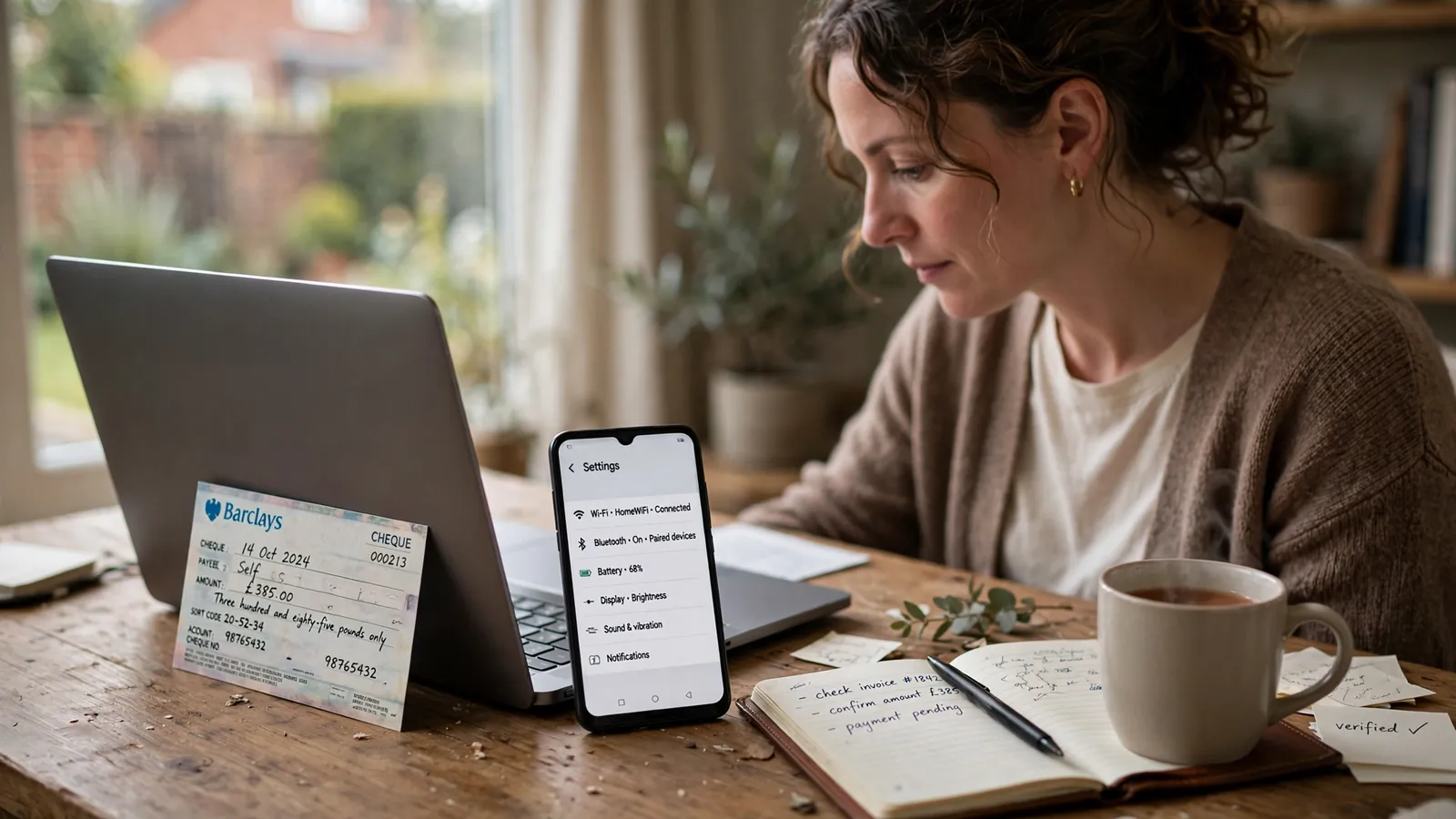
An e-cheque can look like a familiar bank payment on a casino page and still not be available when you try to use it. I’ve learned not to treat a logo, a general payment list or a review’s summary as proof that a cashier will offer that route to me. The useful check is inside the casino account: open the cashier and see which methods are actually displayed for your account before you commit to a deposit.
That distinction matters if you are looking for an e-cheque online casino in the UK. A page may describe payments broadly, but availability can depend on what the operator currently offers through its cashier and what is enabled for your account. The cashier is where you can check the live choice rather than infer support from a label elsewhere.
I’ve made the mistake of seeing a payment method mentioned on a site and mentally adding it to the options I could use. That skips a step. A method may be described in general information without appearing as a selectable option when you reach the deposit screen. If e-cheque is not clearly listed there, don’t assume that a similarly worded bank service is the same thing. Names matter; so does the actual route the cashier presents.
When looking for UK casinos that accept eCheques, check the available payment and payout details before choosing where to play. The listed payout speed can help you understand what to expect after requesting a withdrawal.
EvoSpin
EvoSpin lists a payout speed of 1–3 business days, giving you a stated timeframe to consider for withdrawals.
Revery Play
Revery Play lists a payout speed of 1–3 business days, which gives you a timeframe to keep in mind when planning a withdrawal.
WinBeast
WinBeast lists a payout speed of 1–3 business days. This is the available detail to consider when assessing its withdrawal timing.
Amunbet
Amunbet lists a payout speed of 1–3 business days, giving you a stated guide to withdrawal timing.
Britsino
Britsino lists a payout speed of 1–3 business days. You can use this stated timeframe as a reference when considering withdrawals.
NightWin
NightWin lists a payout speed of 1–3 business days, a useful detail for you to note when reviewing withdrawal timing.
x3bet
x3bet lists a payout speed of 1–3 business days. This stated timeframe is the available information about its payouts.
Jetsetspins
Jetsetspins lists a payout speed of 1–3 business days, giving you a stated timeframe to consider for withdrawals.
NightLuck
NightLuck lists a payout speed of 1–3 business days. You can keep this stated timing in mind when considering a withdrawal.
Dieselwin
Dieselwin lists a payout speed of 1–3 business days, which gives you a stated guide to withdrawal timing.
A specialist review may mention familiar card brands such as Visa and Mastercard, but that is not a substitute for checking current UK availability and whether your particular card product is eligible. In the UK, credit-card payments for gambling are banned, so seeing a card logo does not mean every card linked to that brand can be used. Check the cashier’s terms and the card category before proceeding. A logo alone tells you very little.
The same habit applies to currency. A specialist review may say that GBP is supported, but check the account currency shown before your first transaction. If the account is set to another currency, a payment can involve conversion even if you bank in pounds. I used to skim past currency settings because they looked like housekeeping. They are not. Confirm them while you are still deciding whether to proceed.
When you inspect the cashier, look for the exact method name and the action it supports. If you are seeking e-cheque deposits, the question at this stage is whether the cashier explicitly offers that deposit route. Don’t treat “bank payment”, “bank transfer” or an e-wallet label as interchangeable with e-cheque unless the operator makes that connection clear. Similar-sounding methods can work differently.
 Casinos That Accept Entropay in the UK: What to CheckNo UK casino is confirmed here to accept Entropay. Learn how to check the cashier, compare payment alternatives and review payout routing…
 Casinos That Accept Revolut in the UK: Payment GuideLearn how to check Revolut card acceptance, bonus eligibility and cashier terms; a casino accepting the card does not automatically make a…
Also check whether the option is available in the part of the cashier you are using. A method shown in a general payment-information panel may not appear among the deposit choices for your account. If you are using a phone, make sure you can see the full method name and any accompanying information rather than relying on a cropped tile or a small icon. Mobile e-cheque casino searches may lead to pages that look convincing on a phone; the cashier still needs to show the option itself.
If the cashier does not list e-cheque, pause rather than selecting the closest-looking alternative. You can ask the operator’s support team whether it is currently offered to UK customers, but get a direct answer about the named method and where it appears in the cashier. “Bank payments supported” does not answer whether e-cheque is supported. Nor does a generic response about deposits settle what you were checking.
Finding e-cheque in the cashier answers one narrow question: whether that payment method is offered for the transaction you are about to make. It does not, by itself, explain every part of how the casino handles deposits and withdrawals. Keep those as separate checks. First establish whether the named method is available; then read the information attached to it and the operator’s payment terms so you understand the role it plays.
That separation stops a common bit of wishful thinking: assuming that because a method appears somewhere on a casino site, it must be a complete payment solution for every purpose. The presence of a method is not a promise about all account activity. Don’t fill in the gaps yourself.
There may be a temptation to search for a “best” or “top” e-cheque casino and trust a ranking to settle it. I wouldn’t. A ranking can help you find operators to inspect, but it cannot replace a live cashier check. Payment pages change, and a broad list can’t tell you what is displayed for your account at the moment you are ready to act. Treat any recommendation as a starting point, not confirmation.
So when a casino claims to support e-cheques, I look for the exact wording in its cashier, confirm the account is set to GBP, and check that the available payment information matches what I intend to use. If one of those details is unclear, I stop and ask before depositing. No guesswork.
Payment information can look reassuringly complete without answering the question you actually have. A specialist review of casino payment options mentions Visa, Mastercard, bank transfer, e-wallets and several cryptocurrencies. That tells you those categories appear in the material it examined. It does not confirm that a particular casino accepts e-cheques.
I used to see a broad payment list and treat it like a promise: if one method was named, surely the unusual one I wanted would be there too. That was a bad shortcut. A category such as “bank transfer” does not tell you whether the casino supports e-cheques, which service handles them, or whether the option is available to your account. A general list can help you decide what to investigate; it cannot stand in for a specific confirmation.
The same caution applies to labels such as “e-wallet” or “bank payment”. They group together methods that may work differently. An e-cheque can be described in ways that sound close to a bank transfer, but resemblance in wording is not proof that the cashier treats them as the same thing. If the method is not named, do not silently translate a broad label into an e-cheque offer.
There is another gap between a payment page and a working option. A casino may describe methods it supports in general, while the available choices depend on the customer’s location, account or payment provider. A review can also become outdated when an operator changes its cashier. So even a clear mention of e-cheques in a third-party write-up is a reason to check, not a substitute for seeing the option offered by the casino itself.
 Casinos That Accept Echeck in the UKLearn why a general payment listing is not proof of access and how the casino cashier shows which options are available for…
 Casinos That Accept iDEAL in the UK: What to CheckiDEAL may appear on general payment pages without being offered to every UK customer; the signed-in cashier shows which options are currently…
That distinction matters when comparing UK casinos said to accept e-cheques. “Said to accept” is not the same as confirmed for you, now. Before relying on a claim, look for the exact method name and check whether it appears among the available choices for your account. If the information only says bank transfer, electronic payment or another broad category, keep the conclusion narrow: that category is mentioned, but e-cheque support has not been established.
I also try not to read a list as an endorsement. Payment methods are not proof that a casino is suitable, and a long menu does not make the information more reliable. For anyone looking for an online casino that accepts e-cheques in the UK, the useful question is not how many methods a page names. It is whether a current, specific statement identifies e-cheques at the casino in question.
This is why “best” or “top” lists can be misleading when they do not show how each payment claim was checked. A ranking might tell you which sites its publisher chose to feature, but it cannot establish an unmentioned method. If the payment detail is missing or ambiguous, a confident position on a list does not fill the gap. I learned that the annoying way: polished formatting can make a weak claim look settled.
The careful reading is simple, even if it is less exciting. Treat general payment coverage as background, not evidence of e-cheque availability. Separate what is explicitly named from what you are inferring, and do not assume that a familiar-sounding category includes every related service. If you cannot find a direct reference to e-cheques for the specific casino, the honest answer is that the information you have does not confirm it.
That is not the same as saying no UK casino accepts e-cheques. It only keeps the claim within what the available detail supports. A payment page may mention cards, bank transfers, wallets and crypto, yet leave e-cheques unanswered. No guesswork needed.
A deposit is only half the transaction. Before choosing a payment method, I now think about where a withdrawal could go if I later asked to cash out. That matters with an e-cheque just as it does with a card, bank transfer or e-wallet: the name of the method tells you how money may enter the account, but it does not by itself settle how a casino will return it.
UK anti-money laundering rules commonly require a payout to go back to the original payment source. That is part of what people mean by closed-loop rules. The idea is straightforward: funds should not move through a gambling account and then leave by an unrelated route without a clear reason. Returning the money to its starting point is also a familiar anti-fraud control.
 Bank Cheque Payments at UK Casinos: What to KnowLearn why Boku is not a bank-cheque service, how phone billing works, and what to check about limits, mobile balance and bonus…
 Ukash Casinos in the UK: Availability and AlternativesUK-licensed casinos cannot accept credit-card payments for gambling. Compare debit cards, PayPal and prepaid alternatives, including withdrawal considerations.
So, if you are considering an e-cheque deposit, do not assume that being able to pay in means you can choose any withdrawal route later. The practical question is whether the casino can return funds to that same source, and what it will require if it cannot. Check the payment and withdrawal terms before sending money. If the cashier or terms do not make the route clear, ask the operator rather than relying on a general claim that it accepts e-cheques.
That distinction is easy to miss. I used to treat the deposit screen as the whole story: if a method appeared there, I assumed the rest would be simple. It is not a safe assumption. A payment route can be available for funding while the withdrawal process still follows separate rules. The route may also depend on the particular account and transaction, rather than on a payment method’s label alone.
When a casino returns money to the original source, it may not present the process as a choice between several equally available payout methods. The original route can take priority because the operator has to account for where the funds came from. If you deposited through a named payment account, for instance, that may be the route the operator expects to use when processing a return.
There can be cases where the original route cannot receive the payout or is not available for that transaction. That does not automatically mean the casino can send the money wherever you ask. An alternative may involve additional checks before the operator approves it. The point is not that a different route is impossible; it is that the operator may need to establish why the change is appropriate.
I would treat an alternative payout route as something to clarify, not something to bank on. A support agent’s answer about your specific account is more useful than a broad payment-method list. Keep the response and make sure it addresses both the deposit method and the proposed withdrawal route.
For any payment method, including an e-cheque, read the withdrawal terms alongside the deposit information. Look for wording about returning funds to the original source, restrictions on alternative routes and what happens if the original source cannot accept a payout. If those details are unclear, ask the casino before depositing.
This is not a way to establish that a particular e-cheque service is accepted. It is a way to avoid treating “deposit accepted” as a promise about cashing out. A casino’s payment page can describe one part of the journey while the withdrawal rules govern another. Both matter.
Keep the question specific. Ask whether a deposit made through the method you intend to use can be returned through that same route, and what checks apply if it cannot. A generic answer such as “withdrawals are supported” may not tell you whether the operator will use the same source or require another process.
There is a practical reason to sort this out early: once a payment has been made, you have less room to reconsider the route. If the original source is unavailable for a return, you may need to follow the operator’s alternative procedure and provide further information. Better to understand that before the balance is funded.
 Casinos That Accept Tether in the UK: What to CheckLearn why general crypto payment claims do not confirm USDT support, and why the UK cashier must be checked for the methods…
 Casinos That Accept Dogecoin in the UK: What to CheckLearn why a Dogecoin casino label does not confirm deposit support, bonus eligibility or playable slots, and why promotion payment exclusions matter.
I no longer read a deposit option as a complete payment plan. I look at the way in and the way back, then decide whether the route makes sense for me. No guesswork.
A payment method can make a deposit feel instant without making a withdrawal feel the same. I used to treat the cashier’s “fast” label as if it applied to money coming back, too. It doesn’t. A payment can reach your casino balance quickly, while a payout still has to pass through the casino’s own approval process and then travel through the payment system.
A specialist casino-payment review describes card deposits as potentially instant, with a withdrawal taking several business days. That is one account of how the timing can differ, not a promise about every casino or card. The useful point is the gap between the two stages: money going in and money coming out are separate transactions, with separate processing.
When you request a withdrawal, the casino may need to approve it before sending the funds. That internal step is part of the overall processing time, not an optional detail outside it. So when a cashier displays an estimated payout period, check whether the wording refers to the casino’s review, the payment provider’s transfer, or both.
That distinction matters. If a withdrawal is waiting for casino approval, switching payment methods would not necessarily make that first stage disappear. Once approved, the payment still needs to be handled by the selected route. The total wait can therefore involve more than one clock.
I’ve learned not to read “instant deposit” as “instant cash-out”. Different direction. Different process.
A first payout may involve account verification, and that can add time before the casino approves the request. A specialist review notes that first withdrawals can take longer while verification is completed. That makes the first cash-out a poor test of how quickly later requests will be handled: it may include a review that does not apply in the same way once the account has been checked.
This is why it is worth completing KYC when requested rather than waiting until you want to withdraw. Keep an eye on account messages and requests for documents, and make sure the details you provide are readable and current. That will not guarantee a particular payout time, but it avoids letting an unfinished verification step sit unnoticed.
A delay at this point is frustrating, especially if the deposit appeared straight away. But the two events are not evidence of a contradiction: a quick deposit does not establish that the account has cleared the checks required before a payout.
When considering an e-cheque option—or any other payment route—look for the withdrawal information as well as the deposit description. The method’s name alone does not tell you how quickly a cash-out will be processed. Check the casino’s cashier and payment terms for its stated withdrawal process, and note whether the estimate includes internal approval.
Then allow for the fact that processing estimates are not guarantees. The casino’s review and account status can affect when a withdrawal is released; after that, the payment route still matters. If the stated timing is unclear, ask customer support which stage its estimate covers before depositing. A precise answer is more useful than a banner calling a method “fast”.
I would also avoid judging a route from a single successful deposit. The first transaction you notice is usually the one arriving in your balance; the one that matters for payout speed is the withdrawal. They are not interchangeable measures.
For someone comparing e-cheque casinos in the UK, the sensible question is not simply whether a cashier advertises a quick payment. It is whether the casino explains how long its withdrawal approval can take, what verification may be required, and when the payment is actually sent. If that information is missing, don’t fill the gap with the speed of the deposit.
The practical takeaway is modest: treat a deposit-time claim as a deposit-time claim. The casino may need to approve a withdrawal, and a first request may take longer while verification is completed. Check both stages before you decide what “fast” means. No shortcut in the label.
When you’re considering an e-cheque at a UK casino, check that the casino account and the payment account are both in your own name. A payment route belonging to someone else can create an avoidable ownership mismatch, even if you have permission to use it. I’d rather catch that before starting a transaction than spend time explaining it afterwards.
The same goes for the details attached to each account. A different spelling, an old address or a payment profile registered to another person can make it harder for a casino to establish that the customer and the payment method belong together. Use your own accurate account information, and avoid borrowing a relative’s or partner’s payment account to get around a problem with yours.
This is not a trick for getting a transaction through. It is a basic way to reduce the chance that an ordinary payment prompts extra questions. Casinos have reasons to check who controls an account and where its funds come from; mismatched names can make that harder to resolve. Keep it straightforward.
I’ve learned not to treat the name displayed in a cashier as the whole story. Before choosing a method, look at the account details you would have to provide and whether they match your casino profile. If the payment service has its own account, make sure that account is yours too. For an e-cheque, that means checking the relevant account-holder details rather than assuming that any bank account you can access will be suitable.
A clean setup is often one named account used consistently for deposits and withdrawals. That does not guarantee that a transaction will be accepted or processed without checks, but it avoids creating a basic ownership question yourself. If your details genuinely differ—for instance, because you have recently changed them—contact the casino before paying and ask what information it needs. Don’t try to solve the mismatch by entering someone else’s details.
It sounds dull. Good. Payment details are one place where dull and consistent beats improvising. If you’re comparing e-cheque casinos in the UK, treat ownership as a practical check alongside availability: the method is only worth considering if the payment account belongs to you and its details line up with your casino account.
A payment method can appear in a cashier and still have limits that make it a poor fit for the amount you intend to deposit. Check the minimum and maximum shown for that method before confirming anything. The minimum may differ between a card, bank transfer or e-wallet, and the limit on one transaction may not match the limit applied across a day or month.
A specialist casino review gives a £10–£20 range for minimum deposits, but treats the amount as dependent on the selected payment method. I would not use that as a promise about a particular casino. The cashier is the place to check the current figure for your account.
The maximum is less likely to be a single simple number. It can depend on the payment route and account status, and an operator may apply separate transaction, daily or monthly caps. If you are planning a larger deposit, look for all the relevant limits before making a smaller test payment; otherwise you may find the next transaction is declined or restricted. Annoying, but avoidable.
I used to focus on whether a deposit button worked and leave the limits for later. That is backwards. Check the amount you can put through in one go, then whether a broader account cap affects your plan. If the cashier does not make the figures clear, ask customer support before sending money rather than assuming the limit will be generous.
There is also an account-level distinction: the payment method’s transaction cap is not the same thing as a financial limit you set for yourself. UK Gambling Commission rules require remote gambling licensees to ask new customers to set a financial limit before their first deposit and to provide accessible controls for managing account limits. Treat that as a separate check, not as a substitute for reading the cashier’s deposit limits.
For e-cheque deposits specifically, seeing a limit elsewhere does not prove that the method is available to you. If it is offered in the cashier, check the amount allowed there and whether any account-level restriction applies. If it is not shown, do not infer support from a general payment page. Check first.
I used to read a payment logo as a small promise: if it appeared beside the deposit button, I assumed I could use it for the whole transaction. That shortcut doesn’t hold up. A method can be available for adding money without being suitable for taking money out, and the name of the provider alone doesn’t tell you which functions the casino supports.
Paysafecard is a clear example. It is a prepaid voucher for deposits, not a withdrawal route. So if you choose it, treat it as a way to fund the account rather than a method you can expect to receive a payout through. That distinction is easy to miss when a cashier groups several options under a general “payments” heading.
E-cheques need the same careful reading. Seeing a reference to electronic payments, bank services or a particular payment category does not establish that an e-cheque option is available, or that it works for both deposits and withdrawals. Check the actual method name and its stated function. If the cashier does not make that clear, ask the operator before sending money. No guesswork.
Wallets also differ from one another. Skrill and Neteller appear at some sites, but a specialist review has reported that these methods may be excluded from promotions. That is a report about promotion terms, not a rule you can apply to every casino. Read the relevant offer conditions as well as the cashier details; payment acceptance and bonus eligibility are separate questions.
I now check each method against the job I need it to do: deposit, withdrawal, or both. The method’s label is only the beginning. The casino’s own terms and cashier should explain what is enabled for that account, and the promotion rules may add another condition. Don’t assume two options grouped together behave alike, either. A voucher, an e-wallet and an e-cheque are not interchangeable simply because each is presented as a way to pay.
For anyone looking for an e-cheque casino in the UK, the practical test is not whether the site mentions electronic payments somewhere on its page. It is whether the specific e-cheque method is offered in the cashier and what the operator says it can do. Check before you commit. A payment icon is not a promise.
When I compare a payment option, I don’t stop at the casino’s fee line. That tells you only what the casino may charge; the transaction can also involve a payment-provider fee, a charge from your bank or card issuer, and, where relevant, a network fee. A specialist payment review also points out that exchange-rate spread can add to the cost.
That spread is easy to miss. If the account and payment are handled in different currencies, the rate used for conversion may be less favourable than the rate you had in mind. The difference can outweigh a visible flat charge. No drama on the cashier screen; just less value arriving than you expected.
This matters if you’re considering an e-cheque as well as any other method. Don’t assume the label tells you the total cost, or that an e-cheque has the same charges at every casino. Check the cashier’s terms, then look at the payment provider’s and your bank’s own charges. If the casino account is set to GBP, confirm that before paying so you can spot whether conversion may be involved.
A final cost can include the casino's fee, payment provider charges, bank or card issuer fees, network fees, and exchange-rate spreads if currencies differ.
For a fair comparison, use the amount you actually intend to deposit and add every applicable charge you can identify: casino, provider, bank or issuer, conversion, and network. The cheapest-looking option on the first screen may not be the cheapest transaction overall. There isn’t one payment method that can be called the lowest-cost choice in every case.
I’ve made the mistake of treating “no fee” as “no cost”. It isn’t. Check the total before you confirm, and don’t deposit until the currency and any extra charges are clear.
A withdrawal request can sit in a pending state even after you have pressed the button. A specialist review notes that the casino’s own approval process and the status of your verification can affect how quickly money is released. That means a delay may happen before the payment provider or bank has even started processing it.
I used to treat every pending withdrawal as a payment problem. That was too quick. The operator may still be checking account details or completing KYC, particularly if it has not yet verified the account fully. Until that review is complete, the request may not move on. A returned payment can also mean the route needs to be checked, rather than that the balance has disappeared.
Casinos commonly send withdrawals back to the original payment source as an anti-fraud and anti-money-laundering control. If that route cannot receive the payout, or the casino cannot use it for the withdrawal, an alternative may be considered. But don’t assume a different route is a simple swap: it can bring additional verification, which adds another step.
If a payment is delayed, check the withdrawal status and any account messages first. Then ask the casino whether it is waiting for verification, has sent the payment to the provider, or has returned the request for correction. Those are different stages, and “processing” on a screen does not tell you which one applies.
Keep the explanation and any requested documents within the casino’s secure account channels. Avoid sending payment details through an informal message. It is frustrating to wait, but guessing at the cause—or submitting repeated requests—can make the trail harder to follow. Get the reason in writing.
Before making a first deposit, take a moment to decide what amount you can afford to put into gambling. In Great Britain, remote gambling licensees must prompt new customers to set a financial limit before that first deposit. They must also make account-level limit controls accessible, so you can review or change your limits later.
I used to treat that prompt as another box to get past. That was a mistake. Choosing a limit while focused on getting into a game is not the same as thinking through your spending beforehand. Set it when you are calm, and base it on money left over after essentials—not on what you hope to win or what you might deposit later.
A limit is a boundary, not a prediction of how much you will spend. It does not make gambling risk-free, and it cannot turn losses into something you can afford. If you find yourself wanting to raise it because you have lost money or feel you need to keep playing, pause rather than changing it in the moment.
The controls should be available through your account, not hidden behind a support request. Check where they are before you need them. If you choose to change a limit, read the operator’s explanation of how that change takes effect; do not assume every adjustment works immediately.
This safeguard is separate from whether a casino accepts a particular payment method. A cashier listing an e-cheque or another deposit route does not replace the requirement to set a financial limit before your first deposit. I now look for the control first. Then I decide whether to fund the account at all.
Returning funds to the original payment source is a common anti-fraud and anti-money-laundering control. An alternative may require extra verification.
PayPal, open banking services and debit cards linked to fast payout systems are generally among the quickest options. The casino’s approval process and your account verification also affect how quickly you receive funds.
No. Visa and Mastercard are card brands, and a logo does not confirm that every card product is eligible. Credit-card gambling is banned in the UK, so check that your specific card is a debit card and that the cashier accepts it.
A casino’s internal approval takes time, and first withdrawals may take longer while verification is completed. An unverified account can also slow payment.
Verification may be needed, particularly before a first withdrawal, and completing it can help avoid delays.
No. Withdrawal speed depends on the casino’s approval process and whether your account is fully verified.
UK casino payment options commonly include debit cards such as Visa and Mastercard, bank transfers, e-wallets and, at some sites, Apple Pay. The methods available to you can vary, so check the casino cashier for current options.