Dream Catcher live play combines a studio dealer’s video stream with digital controls, while the game rules and table details still need checking.
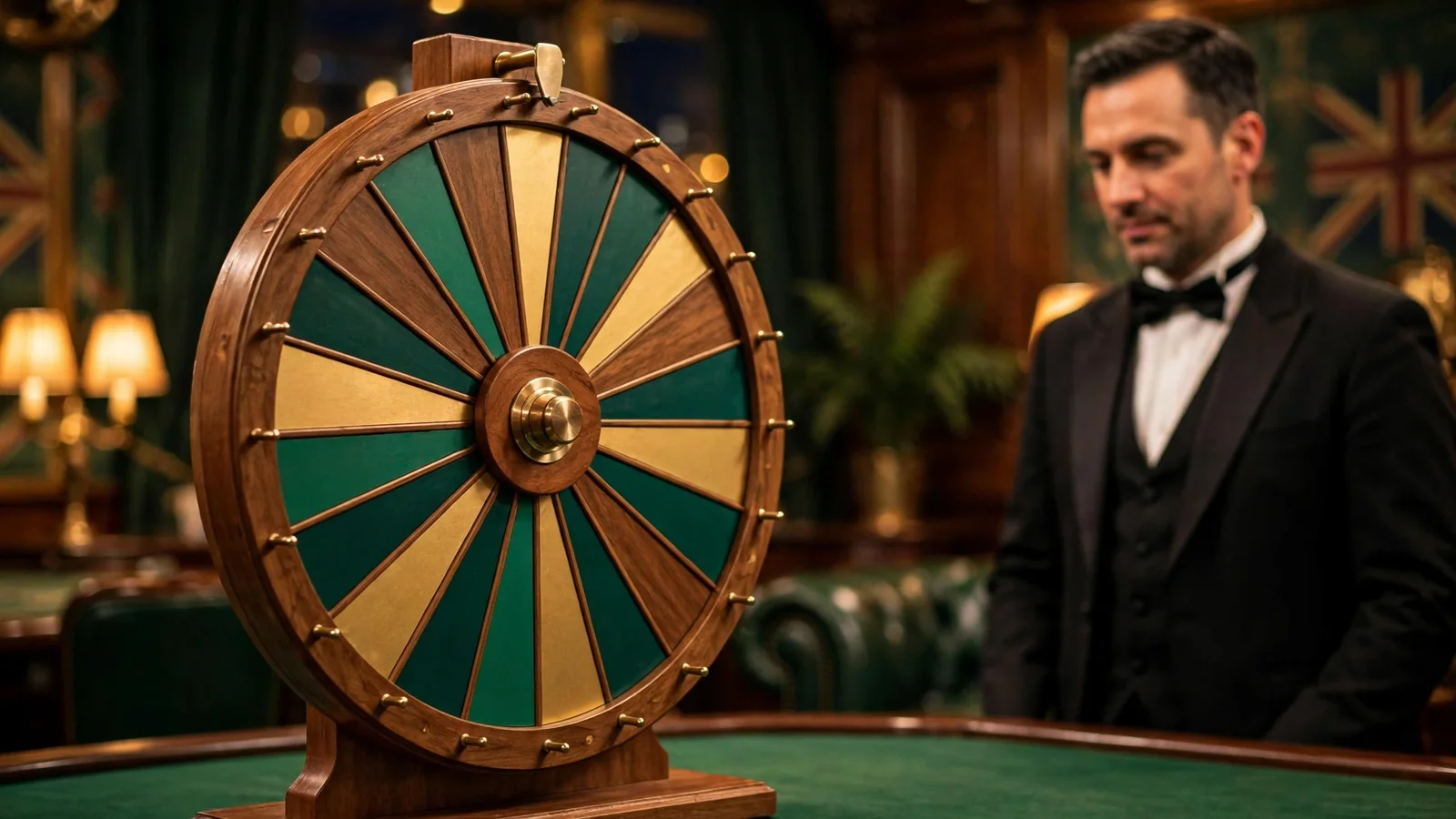
“Live” describes how a casino game is presented, not a promise about what happens in it. In a live dealer game, a human dealer runs play in a studio, and a video stream carries that session to your screen in real time. You make your selections through an on-screen interface rather than handling cards, chips or equipment yourself.
That is the basic idea behind looking for a live casino experience connected with Dream Catcher. The name may lead you to a particular game, but the words “live casino” point to the format: a streamed studio session with a dealer, alongside digital controls for placing bets. They do not, by themselves, explain the game’s rules or establish exactly what a particular table offers.
I used to skim past that distinction. “Live” sounded like a feature that told me everything I needed to know. It doesn’t. It tells you that the action is presented as a real-time dealer session; you still need to understand the game and the table before deciding whether to join.
If you’re looking for a live Dream Catcher casino in the UK, payout timing is one practical detail to check alongside whether a site suits you. This list gives you the stated payout speed for each operator.
EvoSpin
EvoSpin lists a payout speed of 1–3 business days, a useful detail to consider as you explore live Dream Catcher casino options.
Revery Play
Revery Play lists a payout speed of 1–3 business days. Keep this timing in mind when considering it for live Dream Catcher play.
WinBeast
WinBeast’s stated payout speed is 1–3 business days, giving you a clear practical point to consider.
Amunbet
Amunbet lists payouts at 1–3 business days. That stated timing may help you assess whether it fits your preferences.
Britsino
Britsino’s listed payout speed is 1–3 business days, a useful detail to check when choosing where to play.
NightWin
NightWin lists a payout speed of 1–3 business days. Consider this stated timing as part of your choice.
x3bet
x3bet gives a listed payout speed of 1–3 business days, offering you a practical point of reference.
Jetsetspins
Jetsetspins lists payouts at 1–3 business days. You can use that stated timing when weighing your options.
NightLuck
NightLuck’s stated payout speed is 1–3 business days, one concrete detail to consider for your casino search.
Dieselwin
Dieselwin lists a payout speed of 1–3 business days. Check whether that timing works for you.
A live game combines a video feed with a betting interface. The dealer conducts the session in the studio, while the software shows you the options available to select. You use those controls to place a bet, and the streamed session continues as the round unfolds. The screen is doing two jobs at once: showing the dealer and letting you take part remotely.
That can make the experience feel closer to sitting at a casino table than using a fully computer-generated game. But “closer” is about presentation, not a guarantee of atmosphere or outcome. You are still playing through a website or app, and your choices are entered digitally. Seeing a dealer on screen does not change the need to know what your bet means.
The phrase “Dream Catcher casino” can also blur together a game name and the kind of site that makes a game available. They are not interchangeable ideas. A casino is the operator’s service; a live game is one of the options that may appear within it. The name of a game alone does not tell you which operator is offering it, what its rules are, or whether it is available to you.
So, when someone says “Dream Catcher live casino,” I would read that as a request to find a live-casino experience associated with that name, not as a full description of the game. The wording can be useful for identifying what a person is looking for, but it is not a substitute for checking the actual game screen and its rules.
This is the point worth keeping separate. The live dealer format explains how a session is delivered: a human dealer in a studio, streamed in real time, with bets entered through on-screen controls. It does not tell you the game’s objective, how a round is settled, which bets are available, or what a winning selection pays.
Those details come from the specific game and table rules. If you reach a table, take time to read them before placing anything. I have been too quick to click through screens because the layout looked familiar. That is a poor shortcut: a familiar-looking interface can still present rules or options you have not checked.
The same goes for the word “live” in a title or menu. It does not mean every game on a casino site is live dealer, and it does not mean that every result connected with a particular game name has the same presentation. Check that you are looking at the table you intend to play, rather than relying on a label or thumbnail.
For a player in the UK, the legal setting matters too. Live dealer casinos can operate legally here when they hold a UK Gambling Commission licence. Online gambling is legal for adults aged eighteen and over at sites licensed and regulated for the UK market. A live stream does not make an operator exempt from those requirements.
That is a basic distinction, not an endorsement of any particular casino. The word “UK” in a page title or game description is not proof of a licence. Before signing up or depositing, check the operator’s licensing information and make sure it is current. The name of a game is not a safeguard.
I’d also keep the decision to play separate from the curiosity that brought me to the page. A streamed dealer can make a game feel immediate and social, but the screen is still asking you to stake money. Set a budget before you start, and do not treat the live presentation as evidence that a game is safer, more favourable or easier to understand.
In short, live Dream Catcher play refers to interest in a named game within a live-casino setting, while “live dealer” describes the streamed format. The dealer and interface explain how participation works. The actual rules, available bets and operator are separate things to check. No mystery there.
Searching for Dream Catcher online can make the choice sound as simple as finding a table and pressing play. The less glamorous part is deciding whether live play suits the way you actually want to spend your time. The online setting removes the trip to a physical venue, but it does not remove the pauses, the table limits or the dependence on a decent connection. Those details can matter more than the name on the screen.
The first adjustment is pace. A digital game can move from one result to another with very little waiting. Live play follows a real table, so there are moments when the dealer needs to complete a round and the interface has to open the next betting window. You are not controlling the rhythm. If you expect constant action, that can feel sluggish; if you prefer a moment to consider each decision, the slower rhythm may be a relief.
When you are looking for a place to play Dream Catcher live, it is easy to let a polished lobby or a confident “best casino” badge do the thinking for you. I have learned to treat those as advertising, not evidence. A sensible choice starts with a more basic question: is the operator allowed to offer real-money gambling to people in the UK?
Check that the operator holds a current UK Gambling Commission operating licence. The licence is not a decorative badge; remote gambling operators serving the British market need the relevant permission from the Commission. Look for the operator’s legal name and licence information on its own site, then check that information against the regulator’s public register. If you cannot establish who runs the site or verify its status, that is a reason to pause rather than a puzzle to solve after signing up.
A licence does not mean every game will suit you, or that you are guaranteed a good experience. It does mean you have a clear starting point for judging whether the operator is within the UK regulatory system. I would not swap that check for a celebrity endorsement, a large banner, or a page calling itself a “top pick”. Those things can be designed to make a decision feel settled before you have checked the basics.
Next, work out what the live label actually refers to. A live dealer game streams play in real time from a studio, where a human dealer runs the game. You make your selections and place bets through an on-screen interface. That is different from a purely digital game, even if both appear in the same casino lobby. The live label describes how play is presented; it does not, by itself, tell you whether a particular Dream Catcher game is available, what its rules are, or whether its interface will be clear to you.
That distinction matters when you compare casinos. Do not assume a site has the game just because it advertises live casino play in general. Look for the game’s own entry in the lobby and open its information or rules panel before you deposit. Check that the displayed title matches what you intended to find, and that the rules explain how the available bets work. If the description is vague, or the game appears only in a promotional graphic, I would not treat that as confirmation.
I also pay attention to how the operator explains its live tables. You should be able to tell that a human dealer is running the game and that your choices are sent through the betting interface, rather than being left to infer the mechanics from a flashy video. The stream and the interface are separate parts of the experience: one shows the live action, while the other is where you make and confirm a bet. Read the on-screen prompts carefully. A fast click can be a real-money decision.
The same standard applies to claims about “premium” tables, exclusive access or a special Dream Catcher experience. A label is not a rule, and a glossy studio does not tell you how the game works. Before choosing, find the game information and make sure you can follow the sequence from selecting a bet to seeing the result. If the wording does not explain what you are committing to, leave it alone until you can get a clear answer.
A useful comparison is less about finding a crowned winner and more about removing avoidable uncertainty. Can you identify the licensed operator? Can you locate the actual live game rather than relying on a general promise? Are the rules and betting controls understandable before you commit money? Can you set a budget and stick to it? Those checks are not glamorous. They are still more useful than a ranking whose criteria you cannot see.
It is worth separating the casino from the game, too. A licensed operator may host many different games, but that does not make every table identical or make every advertised feature relevant to your choice. The dealer-led format is real-time studio play, with bets placed through the screen; beyond that, check the individual game’s own rules rather than assuming another live table works the same way. I would rather spend a minute reading the information than discover mid-session that I misunderstood a control.
Finally, do not let a recommendation make the decision for you. Rankings can reflect editorial choices or commercial relationships, and a high position is not proof that a casino is right for your needs. If a page includes referral links, it should make that relationship clear. Treat opinions as a prompt to check details, not a substitute for checking them.
For me, the best choice is not the one with the loudest promise. It is the one whose operator, game listing and rules you can verify before you play. If any of those pieces remain unclear, there is no need to force the decision. Keep your budget fixed, and remember that this is entertainment, not gambling advice.
The name Dream Catcher can make it sound as though every detail of the game is settled and easy to describe. I’d be careful with that assumption. A title alone does not tell you the rules, the betting options, the payout table or what happens during a round. Those details matter when real money is involved, so I wouldn’t fill the gaps with guesses or borrow rules from another wheel game.
What can be described clearly is the live-dealer format. Gameplay is streamed in real time from a studio, where a human dealer runs the game. You watch the stream and use an on-screen interface to place your bets. That gives you a real-time view of the action, but the interface is still where your betting choices are made.
That distinction is useful if you want to play a Dream Catcher casino game. “Live” describes how the game is presented; it does not, by itself, explain the rules or tell you what a particular bet pays. Before staking anything, look for the game’s own instructions and paytable. Check what each option means and how the outcome affects your bet. If those explanations are unclear, there is no need to guess your way through a round.
I’ve learned not to treat a polished stream as a substitute for reading the rules. The dealer may make the action feel immediate, while the controls can look familiar, but neither tells you whether you have understood the available bets. Take a moment to read the on-screen information first. Small pause. Better than a costly assumption.
There is another boundary worth keeping in mind: general facts about live dealer games should not be passed off as Dream Catcher-specific facts. Knowing that a human dealer appears on a real-time stream does not establish how this game is played, what choices its interface offers, or how its outcomes are settled. Those are game-specific details, not automatic features of every live table.
The same caution applies to comparisons. A game with a wheel is not necessarily roulette, and rules from roulette or another wheel game should not be imported just because the visuals seem similar. If you see a description making a specific claim, compare it with the rules displayed for the game itself. Familiar-looking graphics are not evidence.
For a reader trying to understand the Dream Catcher live casino game, the solid starting point is therefore modest: expect a studio stream with a human dealer and an interface for placing bets. Then let the game’s own rules answer the practical questions. I’d rather have a plain explanation I can check than a confident-sounding description that leaves the important parts hazy.
Before you place a bet, make sure you know which option you selected and what the displayed rules say about it. The live format tells you how the action reaches your screen. It does not remove the need to understand the game in front of you.
A spinning wheel can make two games look related when their mechanics are not. If you are trying to understand a casino game with “wheel” in its name, it is worth keeping that distinction in view: roulette is a useful comparison, but roulette rules do not tell you how the Dream Catcher wheel works.
In live dealer roulette, a dealer spins a physical wheel and the ball eventually settles into a numbered pocket. In a computerized version, a Random Number Generator determines the result instead. The screen may still show a wheel animation, but the underlying process is different. Either way, the basic roulette bet is simple: choose a number, and you win if the ball lands on it.
That visual difference matters, but it is not the only thing to check. The wheel’s pocket arrangement affects the odds. European Roulette has one green pocket, marked 0. American Roulette has two: 0 and 00. Those extra pockets change the chance of hitting a selected number. The odds are 1 in 37 in European Roulette and 1 in 38 in American Roulette.
Small difference. Real consequence.
It is easy to focus on the dealer, the camera angle or the wheel animation and overlook the game’s layout. I’ve made that mistake in other casino games: the presentation grabs your attention, while the rules sit quietly in the background. With roulette, check whether the table is European or American before you place a bet. The green pockets are not decoration; they are part of the maths.
The same caution applies when you see a Dream Catcher casino wheel described alongside roulette. A shared wheel-like appearance does not prove the games use the same pockets, betting options or outcome process. I would not transfer roulette’s one-in-37 or one-in-38 odds to another wheel game. Those figures describe roulette formats only.
A live stream can show a dealer operating physical equipment, while a digital game can use computer-generated results. But the screen alone is not a rulebook. Look at the game’s own instructions and paytable for its specific bets and outcomes rather than filling gaps with assumptions based on roulette.
For roulette, the distinction is clear: physical wheel with a dealer, or computer-generated result; one green pocket, or two. For a different wheel game, check its own rules. That is less exciting than guessing from the graphics, but it is how you avoid treating a familiar-looking screen as proof.
Features one green pocket (0), resulting in odds of 1 in 37 for hitting a selected number.
Features two green pockets (0 and 00), resulting in odds of 1 in 38 for hitting a selected number.
This section is for entertainment purposes only, not gambling advice.
When I’m checking a site that offers live Dream Catcher, I start with the operator, not the banner. A polished table and a familiar game name do not tell you whether the site is authorised to serve players in Britain. The basic check is whether the operator holds a current UK Gambling Commission licence. Live dealer casinos are legal here when they operate under that licence; an offshore address or a reassuring-looking logo is not a substitute.
I’d verify the operator’s name against the Gambling Commission’s register rather than relying on a claim buried in promotional copy. Make sure the licence belongs to the company running the gambling service, not just to a similarly named business. If you cannot work out who the operator is, or the licensing information is hard to find, I would not rush to register.
Then check whether your setup is fit for live play. Unlike a digital game that runs entirely on your device, a live table depends on a stable internet connection. A stream that freezes or drops out can make it harder to follow what is happening and place a decision in time. I learned not to treat a patchy connection as a minor annoyance. It changes the session.
The pace and price can also feel different from what a promotional image suggests. Live games move more slowly than digital versions, and their minimum bets are higher. So before you join a table, look at the displayed minimum and make sure it fits the amount you have already decided you can afford to lose. Don’t deposit more just because the available table feels like the only way in.
I’d also read the table rules and paytable before staking anything. That is a simple check, not a way to predict an outcome. Set a budget before you play and stick to it; if the stream is unreliable or the minimum is beyond your comfort, close the table instead of adjusting your limit to suit it.
A site can make access look effortless. I still check the licence, connection and table conditions before signing up. No shortcut there.
This content is for entertainment purposes only and is not gambling advice.
A free-play option can sound like the obvious way to try Dream Catcher before putting money in. But a search result or a button labelled “demo” does not, by itself, establish that a playable Dream Catcher demo is available. I wouldn’t treat the label as confirmation until I could open the game and see what mode it actually offers.
There’s a second distinction worth keeping clear: free play is not the same as real-money play. A practice mode, where one is offered, should not be assumed to pay cash winnings. If a page suggests otherwise, read its terms carefully rather than relying on a promotional phrase. “Try it for free” can mean only that you can interact with a version of the game without staking money.
What is clear about live dealer play is the format: a human dealer runs a game in real time from a studio, while players make selections and place bets through an on-screen interface. That describes how live games work generally. It doesn’t prove that a particular Dream Catcher table has a demo mode, or tell you what its free-play settings would be.
If you do find a demo, check whether it is genuinely free to use, whether it asks you to register, and whether the displayed balance is only for practice. Don’t read a simulated balance as money you can withdraw. And don’t assume that demo play reproduces every condition of a real-money table; the label alone cannot tell you that.
I’ve learned to pause when a page makes a simple feature sound like a sure thing. Check the game screen and the operator’s own terms before relying on it. If there is no clear demo option, that is not a reason to deposit just to find out. Keep any live session within a budget you set beforehand. This is for entertainment, not gambling advice.
A review can sound convincing while telling you very little. I look for a clear account of how a game works, rather than adjectives such as “thrilling” or “immersive” doing all the heavy lifting. Those words describe the pitch, not the play.
For a Dream Catcher review, that distinction matters. A page may use the game’s name in its headline, then spend most of its space making broad claims about live casinos. That does not tell you how a particular game operates. Treat general enthusiasm as general enthusiasm; don’t mistake it for a tested account of the game’s rules or outcomes.
Blackjack gives you a useful example of the sort of detail that should be explained plainly. The aim is to beat the dealer with a hand worth 21 points or less. That is the objective, not a promise that a particular approach will win. Blackjack still has a house edge, so a review that describes the target but skips the risk is telling only half the story.
Be especially wary when a review presents a staking system as a way to “beat” the game. Martingale, for instance, involves changing your stake after losses. The label can make it sound like a method with a built-in safety net; it isn’t. Staking systems can lose money, and a sequence of bets does not remove the house edge. I used to give neat systems more credit than they deserved. Neat is not the same as safe.
When reading a live casino review, I’d separate three things: the rules it actually explains, the opinions it gives, and the claims it cannot demonstrate. Does the description tell you what the player is trying to do? Does it acknowledge that the game carries risk? Or does it lean on confident language and imply that a system can control the result? That last move deserves scepticism.
A review is most useful when it helps you understand the game without pretending to predict your session. If it blurs those lines, close the tab and keep your expectations modest. No system fixes the edge.
This content is for entertainment purposes only and is not gambling advice.
Before you start a live Dream Catcher session, decide whether you have the time, connection and budget for it. Live games move more slowly than their digital counterparts, so a short session may feel different from a quick run of online spins. I’ve made the mistake of sitting down without thinking about pace, then feeling impatient and making decisions I wouldn’t have made calmly. Not a great start.
Stakes need a check too. Live tables can have higher minimum bets, and the figure shown at the table matters more than a general impression of what live play costs. A specialist review has reported some live roulette and baccarat tables starting at around 20p, while blackjack tables often have higher starting limits; that is a report from one source, not a promise about the table you will find. Check the displayed minimum before joining, and make sure it fits the amount you have set aside.
Your connection is part of the decision. Live play needs a stable internet connection; if your signal drops or the stream keeps pausing, the session may become frustrating. I’d rather wait until the connection is reliable than try to play through interruptions.
Set a budget before you begin and stick to it. Decide in advance when you will stop, whether the session is going well or badly. Don’t chase losses or keep going to extend a win. If the minimum stake, pace or connection does not suit you today, leaving the table is a sensible choice.
Check the table rules and paytable before placing a bet, and treat gambling as entertainment, not a way to make money. This is not gambling advice.
A casino may advertise a welcome bonus beside a live game, but that does not mean the bonus is useful for playing it. I learned to separate the headline from the conditions: the offer can look generous while the games you actually want to play barely help you meet its wagering requirement.
Live games may count for only a small share of wagering. One stated example is a 10% weighting, so a live-casino stake may contribute much less than you expect. The exact rule depends on the offer, which is why I would check the terms for game weighting, wagering requirements and any maximum bet limit before opting in. Don’t rely on a banner to explain the detail.
There is another catch with welcome offers. A specialist review of UK promotions reports that many are free spins for slots, which cannot be used at live tables. That distinction matters if you are looking for a casino that offers Dream Catcher: a bonus shown on the site may not apply to that game at all. Free spins are not a cash balance for live play.
I used to treat “welcome bonus” as extra money to play with. It is an offer with conditions, and those conditions decide where it can be used and how much it helps. If the live-game weighting is low, or the offer is restricted to slots, it may add little to the session you had in mind.
I now read the terms before depositing, then decide whether the offer fits my plans. If it does not, skipping it is a perfectly sensible choice. Set a budget before playing, and do not raise it to chase a bonus or recover losses. This is entertainment, not gambling advice.
You place bets through the on-screen interface while a live dealer spins a physical wheel. You win if the ball lands on a number you selected.
The types described here are European Roulette, with one green pocket, and American Roulette, with 0 and 00. French Roulette has a rule that returns half of an even-money bet when the ball lands on zero.
In roulette, straight-up bets have a 2.9% house edge, while other bets have a 2.7% edge. French Roulette reduces the loss on an even-money bet to half when the ball lands on zero.
The dealer does not always win: you can beat the dealer by making a hand closer to 21 without going over. Blackjack still has a house edge, so the dealer has an advantage over time.
You win when the ball lands on a number you selected. In American Roulette, the odds of winning are 1 in 38; in European Roulette, they are 1 in 37.