A practical look at how the zero shapes payouts, what separates live from RNG play, and why limits and bonus terms matter.
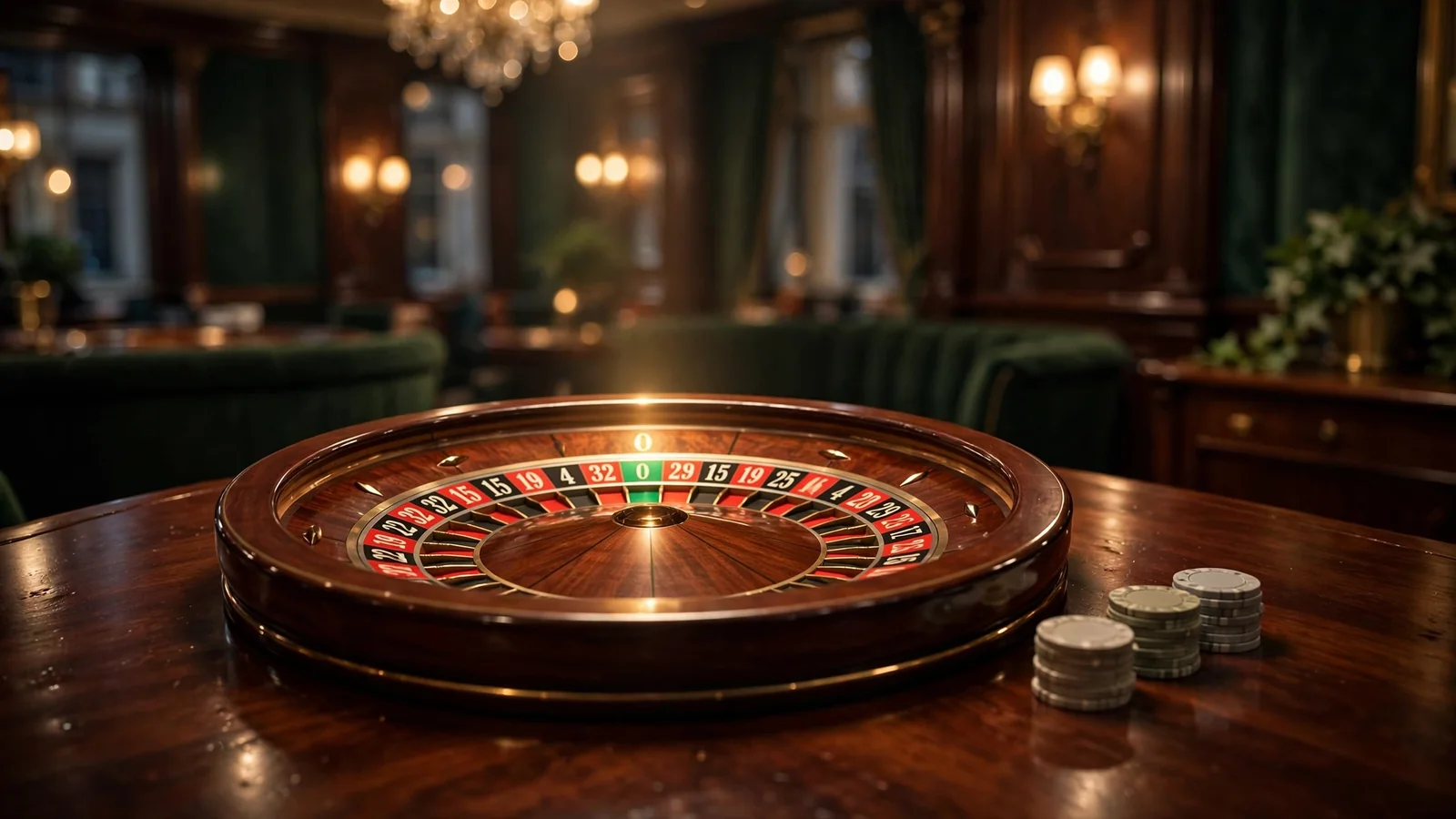
A roulette wheel can look familiar while carrying a different mathematical cost. The detail that matters is the green zero. On a European wheel there are 37 pockets: numbers 1 to 36 and one zero. That extra outcome affects every wager because it gives the house a result that does not belong to red or black, odd or even, or the numbered groups players bet on.
I used to think of zero as just another pocket to watch for. It is more useful to see it as the reason roulette bets do not pay out at perfectly even odds. A red bet, for instance, covers a set of numbered outcomes, but zero is not red. If the ball lands there, the casino wins the bet under ordinary European rules. The payout does not fully compensate for the chance of losing, and that difference is the house edge.
For European roulette, the house edge is 2.70%. That figure describes the game’s built-in mathematical advantage for the house over time, not a prediction of what happens in one session. A player can win a spin, several spins or a whole visit; none of that changes the underlying calculation. I have learnt the unglamorous way that a short winning run is not evidence that the wheel has started favouring me.
French roulette changes what happens to certain bets when zero appears. Its best-known rule is La Partage. On an even-money wager, such as red or black, the casino returns half the stake if the ball lands on zero. You still lose part of the bet, but not all of it. That refund lowers the house edge on those wagers to 1.35%.
That is a real mathematical difference, not a decorative French label on the table. The same zero is still there, and it can still cost you money. La Partage simply softens its effect on the even-money bets it covers. It does not reduce the edge on every kind of wager, so it would be wrong to treat 1.35% as the house edge for every bet on a French roulette table.
En Prison is the other rule associated with French roulette. When zero lands on an eligible even-money bet, the stake is held rather than immediately settled as a full loss. The next spin determines what happens to it. That can give the player another chance to recover the stake, but it does not make the wager risk-free: the result is still governed by the wheel, and the bet may be lost. Check the table’s displayed rules, because the important point is whether the rule applies to the wager you are placing.
Together, La Partage and En Prison are why French roulette has the lowest house edge among standard roulette variants. The advantage comes from the treatment of zero, not from a special way to predict where the ball will land. A table may look more generous when it offers these rules, but the game remains a chance-based wager. No clever reading of recent results changes that.
There is a distinction worth keeping in mind: the wheel’s pocket count and the table’s rules work together, but they are not the same thing. The 37-pocket layout sets the possible outcomes. The rules decide how a particular wager is settled when one of those outcomes is zero. La Partage alters the loss on eligible even-money bets; En Prison changes how an eligible bet is carried forward. Neither rule removes the zero from the wheel.
When I first started playing, I paid more attention to the colour of the layout than to the small-print rules beside it. That was backwards. If you are choosing a French roulette table, the useful question is not just whether the title says “French”. Look for the actual wording for La Partage or En Prison and make sure you understand which bets qualify. A name alone does not tell you how the table settles a zero.
The distinction matters most when you are deciding what kind of risk you are taking. A red or black wager with La Partage has a lower house edge than the same even-money bet under ordinary European rules. Other wagers do not automatically receive that treatment. So the lower figure is meaningful, but only when it is attached to the bet and rule that produce it.
French roulette does not turn a bad run into a good one, and it cannot promise a better result on your next spin. What it offers is a more favourable settlement when zero lands on qualifying even-money bets. I find that a much less exciting claim than casino copy tends to make, but it is also the useful one. The zero still matters. It just takes a smaller bite under the right rule.
When you’re looking for French roulette online in the UK in 2026, payout timing is one practical detail to check. Use these verdicts as a brief reference when considering your options.
EvoSpin
EvoSpin lists a payout speed of 1–3 business days, giving you a stated timeframe to consider.
Revery Play
Revery Play lists payouts as taking 1–3 business days. This gives you a basic indication of how quickly you may receive a payout.
WinBeast
WinBeast has a stated payout speed of 1–3 business days, a useful detail for your planning.
Amunbet
Amunbet lists a payout timeframe of 1–3 business days. You can use this as one practical point when assessing the operator.
Britsino
Britsino states that payouts take 1–3 business days, offering you a clear timeframe to bear in mind.
NightWin
NightWin lists payout speed as 1–3 business days. That is the available practical detail to consider when reviewing it.
x3bet
x3bet gives a payout speed of 1–3 business days, which can help you understand the stated wait for a payout.
Jetsetspins
Jetsetspins lists payouts as taking 1–3 business days. Keep this stated timeframe in mind as you review your options.
NightLuck
NightLuck states a payout speed of 1–3 business days, providing you with a basic expectation for payout timing.
Dieselwin
Dieselwin lists a payout timeframe of 1–3 business days. This is the available timing detail for you to consider.
“Best” sounds like a verdict. For roulette, I treat it as a checklist instead: does the game follow the rules I expect, are its details clear, and does the way it plays suit me? A casino cannot make the wheel more favourable by putting a polished label on a table. What matters is the game itself and whether you can understand what you are choosing before you place a bet.
A French roulette title is not enough on its own. Open the table information and check which rules apply, especially how a zero affects an even-money bet. If the rules are not easy to find, that is a practical reason to pause rather than guess. I have made the mistake of assuming two tables with similar names worked alike. They did not feel alike once I had money on the layout.
This is not about finding a secret advantage. European roulette has a house edge of 2.70%, and no selection of bets or playing system can predict the result of a spin. The point of checking the rules is to know what game you are playing, not to imagine that a particular casino has changed the underlying chance.
RTP can be useful as a comparison point, but only if it refers to the exact game and rules on offer. Look for the game’s information panel or help pages, then check that the stated return applies to the version you have opened. A figure without clear context is not much help; it may be easy to misread a general description as a promise about your session.
RTP describes expected returns across many plays, not what will happen during yours. It does not tell you whether the next spin will win, nor does it guarantee that you will get back a particular amount. I used to see a return figure and treat it as reassurance. It wasn’t. It is a long-run measure, not a forecast for your balance.
If a table’s rules and its displayed RTP seem difficult to reconcile, do not fill in the gaps yourself. Check the game details or choose a table whose information is clearer. The useful comparison is between like and like: the same roulette variant, with the same rules, rather than two figures stripped of their context.
The format can affect the feel of a session even though it does not let you forecast the wheel. A digital game and a streamed table may differ in presentation, pace and how you interact with the game. If you prefer a quieter, quicker session, one style may suit you; if seeing a physical wheel and dealer matters, another may feel more engaging.
I would not call one format inherently better. The right question is whether you can follow the game comfortably and whether its pace encourages you to stake more than you intended. When I have felt rushed, I have been more likely to click without thinking. A good fit is the format you can use at a pace that leaves you in control.
Before opening a table, look at its displayed rules, available stakes and any restrictions shown in the game information. Make sure the options are readable on your device, too. A cramped layout can make it harder to check a bet before confirming it; that is a usability problem, not a change to the odds.
The table minimum and maximum matter because they determine whether the available stakes fit your own plan. They do not make a higher-stakes table more likely to pay out. I have been drawn to a table that looked more impressive and then found that its limits were simply wrong for me. “Premium” is presentation. The numbers still matter.
Also check whether the game name matches the rules you expect. Similar-looking titles can describe different versions, so rely on the table’s own information rather than a thumbnail or promotional wording. If you cannot confirm the rules, stakes and game details before playing, there is no need to rush into it.
When I compare options, I put clear rules and useful game information ahead of grand claims. I want to know what version I am opening, what the stated RTP refers to, how the table works and whether its format suits my pace. Then I check that the stakes on screen are ones I am comfortable with.
That is a less exciting definition of the best online French roulette casino than an advert would offer. It is also more useful. No casino can remove chance from roulette, and a confident sales line cannot tell you how a spin will land. Clear terms, understandable rules and a table that fits your way of playing: enough to make a considered choice. Not a promise.
A live French roulette table feels different from a simulated game because there is an actual wheel in front of a dealer. The studio feed shows the wheel turning and the ball travelling around it before it drops into a pocket. You are watching a physical event unfold, not waiting for a graphic to animate a result.
That changes the rhythm. Bets close, the dealer spins, the ball circles, then the result is announced and the next round begins. There is a pause built into every spin. When I first switched to a live table, I kept expecting the next one to start as quickly as it did in a computer game. It didn’t. That’s the point.
A live French roulette casino table can make a session feel more social, even when you are watching alone. The dealer’s voice, the studio setting and the visible wheel give each round a sense of occasion. Chat may be available, but it is optional; you can simply follow the game. The screen is still doing the work of bringing a distant table to you, so the experience depends on a clear stream and a layout you can read without squinting.
The pace is noticeably more measured than rapid simulated play. Live dealer roulette commonly runs at 50 to 60 spins per hour, while RNG American roulette can run at 150 to 200 or more. That comparison is about the tempo of two different formats, not a promise that every table will run at precisely the same speed. A dealer’s cadence, the time allowed for betting and the stream itself all affect how quickly rounds pass.
Slower can be useful. You have more time to look at the table, place your bets and decide whether you want to continue. I have also found it easier to lose track of time when a game is quick and repetitive; a live round gives you a natural moment to pause. But the camera’s calm pace is not a safeguard by itself. It can make a long session feel pleasant, which is not the same as making it harmless.
When you look for live casino French roulette, check that the table is actually labelled as French roulette rather than assuming every live roulette stream uses the same version. The live format describes how the game is presented: a real wheel, a human dealer and a physical ball drop. It does not, on its own, tell you which rules or table conditions apply. Read the table information before joining.
Some games described as auto roulette may show a physical wheel without a dealer conducting each round on camera. That is not the same viewing experience as a staffed live table, even though the ball still lands in a real pocket. If watching a dealer and the full spin is what you want, look for a live table where those details are visible.
The draw is the ceremony; the trade-off is waiting between rounds. On a live French roulette table, that slower pace is part of the experience, not a technical fault. I used to treat every pause as dead time and chase a faster game. I enjoyed the session less. Slow is slow.
A table’s minimum is the amount you need to place to take part; its maximum is the ceiling on a single bet. Those two figures shape the practical feel of a session more than a label such as “standard” or “VIP”. I’ve learned not to treat a higher ceiling as a perk by itself. It can simply make it easier to stake more than I meant to.
At the low end, the point is to keep each decision within an amount you are comfortable losing. A specialist review of UK tables reports live roulette minimums starting at 10p, with auto-roulette and speed roulette sometimes available from 5p. Treat those as examples to verify on the table itself, not a promise that every casino or game will offer the same entry point. The displayed minimum can differ between formats, and a table’s limits can change.
A low minimum does not force you to bet at that level, and it does not make a roulette outcome more favourable. It gives you room to choose smaller stakes. That can be useful if you want to make occasional bets without committing much on each spin, but a small stake is still money at risk. I used to focus on how little I could put down, then ignore how quickly repeated bets added up. Bad arithmetic, even when every individual bet looked harmless.
“Standard” is more of a table category than a dependable stake range. One casino’s ordinary table may have different limits from another’s, and even the same game can appear in more than one limit band. Check the minimum and maximum shown in the table information before joining. If the maximum is far above what you plan to stake, that may not matter; if the minimum is already uncomfortable, it is the wrong table for your budget.
VIP tables tend to signal higher limits or a more exclusive setting, but the name does not improve your chances. It also does not tell you whether the minimum suits you. I’d read the actual limits rather than letting “VIP” do the selling. A higher maximum only matters if you need it, and taking it as an invitation to raise your stake is an easy way to lose control of the session. Status costs nothing to ignore.
Before you sit down, decide what a single bet can be and what you are willing to spend across the session. Then check that the table’s minimum lets you stick to that plan. Your chosen stake should not depend on trying to recover an earlier loss or on how expensive the table looks. If the minimum pushes you into betting more than you intended, leave it. No drama.
There is a difference between a table’s limit and your own limit. The casino sets the range of permitted bets; you decide what fits your finances. I’ve found it useful to check the table details before opening the betting layout, because it is easier to walk away before the first stake than after a few spins. A low-limit table can suit a cautious budget, while a higher-limit one may suit someone with a different plan. Neither label says anything about what the wheel will do. The stake is your choice; the result isn’t.
The first choice is not really about the wheel’s appearance. It is about how each spin happens and how quickly you want the game to move. An online French roulette table may use a random number generator, or it may stream a physical wheel with a dealer. The screen can look similar; the rhythm does not.
Software-generated results with quicker play and often lower minimum stakes starting at 10p.
Physical wheel and human dealer with a measured pace and a shared table experience.
A live format that reduces waiting time, reporting more than 150 spins per hour.
With RNG roulette, software generates the result of each spin. There is no ball travelling around a wheel on camera: the game simulates the outcome, then lets you place the next bet. That tends to make play quicker, and RNG tables can have lower minimum stakes, often as low as 10p. If you want to try a small stake without waiting through a live table’s routine, that can be a practical difference.
I used to treat a faster game as a more efficient one. That was a mistake. A quicker spin gives you less time between decisions, not a better chance of getting the result you want. If you find yourself betting on autopilot, the software’s pace can make it easier to spend more quickly than you intended. Keep the stake and session length in mind before you start.
Live roulette works differently: a real wheel is filmed in a studio, and a human dealer launches the ball. The wait while bets close and the ball settles is part of the format. It gives you a more visible, shared table experience, but it also means you are not moving from one result to another as quickly as you might with RNG play.
Speed roulette sits between those formats in feel, though it is a live game rather than a software-generated sequence. A specialist review reports more than 150 spins per hour for speed roulette, compared with 80–100 at a standard table. Treat those figures as a comparison reported by that type of source, not a promise about every table: schedules and formats can differ. Either way, a faster live table leaves less space between decisions.
What matters to me is matching the pace to the way I actually play. RNG is useful when you want a direct, quick session and a low entry stake. Live roulette suits you better if watching a physical ball drop is part of the appeal and you do not mind the pauses. Speed roulette is for someone who wants a live wheel with less waiting.
There is no special advantage hidden in choosing one format. The result still comes from chance, whether a generator produces it or a ball lands on a physical wheel. The format changes the experience and the time between bets; it does not make a losing run predictable or turn a stake into a safer one.
Before sitting down, check that the table is actually French roulette and read its displayed rules. A game’s name or thumbnail does not tell you everything about its format, pace or stake options. Look at the minimum shown for that particular table, too: a low minimum is a feature of some RNG games, not a guarantee that every online French roulette game will offer it.
I have paid for the feeling that I could “keep up”; mostly, I just made decisions faster. Pick the pace you can comfortably manage, and let the format serve that choice.
Finding a French roulette table is a two-part check: does the casino actually list the game, and is the operator allowed to offer real-money gambling to people in Britain? A familiar logo or a polished lobby answers neither question. I’ve learned not to treat a game tile as proof that the table is available to play.
Start in the casino’s game lobby and search for “French roulette”. Check the game’s details, not just its thumbnail: the title should identify French roulette, and the rules or help screen should explain which version you are opening. If the listing is unclear, look for the table’s rules before depositing. The same broad roulette label can cover different games, and a French-themed name alone does not establish which rules apply.
Then check the operator. The UK Gambling Commission (UKGC) is the regulator for online casino activity in Great Britain. Remote operators serving British customers need the relevant UKGC operating licence; a platform without a valid UKGC licence cannot legally offer real-money live roulette to British residents. Don’t rely on a badge in the footer. Find the operator’s licence details and verify the licence number against the UKGC public register before putting money in.
A quick check, not a hunch.
A UKGC-licensed operator must verify your age before it allows you to deposit. Online gambling is for adults aged eighteen and over, but the operator still has to check rather than take your word for it. If verification is incomplete, don’t try to work around it; contact the operator and resolve the check first.
I also look for the account controls before depositing, not after a session has gone sideways. New customers must be prompted to set a financial limit before their first deposit, and account-level limit controls must remain accessible. UKGC-licensed live casino operators must also offer deposit and loss limits, session time reminders, reality checks, cool-off periods and GamStop self-exclusion. These are practical tools, not decoration. If you cannot find them, that is a reason to pause and ask the operator where they are.
There should be a clear route to raise a complaint, too: UKGC licensees must provide an internal complaints process and access to an approved Alternative Dispute Resolution service. Keep the relevant messages and account details if you need to use either route.
Finally, check the game information once you have found a table. RTP should be accessible when you are looking at roulette offered by a UKGC-licensed operator. Read the game’s rules and information for that specific table rather than assuming every listing with the same name is identical. If something is missing or contradictory, ask support before you play.
That is the difference between spotting a French roulette listing and checking that you can access it with the protections expected in Britain. No need to rush. A table will still be there after you’ve checked the licence and the controls.
A premium label can make a roulette table feel like a different class of game. In practice, it describes the experience or the stakes, not a better chance of winning. The wheel does not know whether you are playing at a quiet standard table or one dressed up as a VIP room.
I’ve been drawn to that sort of presentation before. It’s easy to read “premium” as a hint that something extra is on offer, then discover the extra is a higher minimum and a sharper sense of how quickly your balance can move. The label is decoration. The stake is real.
Before joining a higher-limit table, check its minimum and maximum bets in the game information. Those figures can differ between tables, even within the same casino, and they determine whether your usual stake is accepted and how much room you have to adjust it. Don’t rely on a lobby tile or a table name; open the rules or information panel and look at the limits for that specific game.
Then set a financial limit in your account before you start. UKGC-licensed operators must prompt new customers to set a financial limit before their first deposit and provide accessible account-level controls. Use those controls to choose an amount you can afford to lose, rather than letting the table’s atmosphere decide for you. A limit is useful only if you stick to it.
The stakes shown can also vary by format. A specialist review has reported UK live roulette minimums starting at 10p, while auto-roulette and speed roulette formats sometimes start at 5p. Treat those as reported examples, not promises about every table: check the current game screen before staking anything.
If you find yourself increasing your stake because the table feels exclusive, pause. A polished interface doesn’t change the risk attached to each bet, and a bigger limit is not a sign that you should use it.
Keep the boundary you chose. That’s the point.
When I first played roulette, I treated the betting layout like a menu and picked whatever looked simple. It helps to know that the main choice is whether to cover a small part of the layout or a broader group of outcomes. The payout reflects the bet type; it does not tell you what the next spin will do.
Inside bets sit on the numbered grid. A split bet covers two neighbouring numbers, with the chip placed on the line between them. If either number wins, the payout is 17:1. A street bet covers a horizontal row of three numbers; it pays 11:1 if the ball lands on one of those three.
Those bets are easy to spot on a digital layout, but it is worth checking exactly where the chip has landed before confirming it. I once thought I had covered a pair and had actually selected a different spot. The interface does not know what you meant.
Payout notation can also be easy to misread. A stated payout of 17:1 means the winning bet earns 17 units for each unit staked, with the original stake returned separately. The same principle applies to 11:1.
Outside bets cover larger groups shown around the edge of the numbered grid. Red or black, even or odd, and high or low each pay 1:1. If one of those selections wins, the payout matches the amount staked, and the stake is returned as well.
The labels make these choices feel straightforward, but they are still bets on a roulette outcome, not a way to control it. Check the table’s layout and the bet slip, especially if the screen is small or you are placing several chips at once. I’ve found it’s better to pause for a second than to spend a spin wondering what I clicked.
In an online French roulette game, the layout may look familiar, but the available bet areas and placement controls can vary by table. Read the displayed payout before confirming a wager. Keep the bet you intend to place separate from the result you hope for. A larger quoted payout is attached to a narrower selection; it is not a forecast.
The Martingale sounds tidy when you first hear it: after every loss, double your next bet, then stop once you win. I tried thinking of it as a way to get back on track. That was the mistake. It turns a run of losses into a steadily larger demand on your bankroll, just when you may be feeling least able to make a calm decision.
The plan also depends on being able to keep increasing the stake. A bankroll is not endless, and a table or personal limit can stop the sequence before a win arrives. Even without a formal cap, chasing losses can leave you staking more than you meant to. It is easy to focus on the next bet and forget how much you have already put at risk.
That matters whether you play French roulette online or at another roulette table. A betting system changes the size and timing of your wagers; it does not make the next spin more knowable. I had to learn that distinction the hard way. A pattern in your betting is not a pattern in the wheel.
If you use a system, decide beforehand what you are willing to lose and stop when you reach it. Do not treat a loss as a debt the next spin must repay. Sometimes the sensible move is to leave the sequence unfinished. No system predicts a spin, and doubling after losses can put real pressure on your bankroll. Stop there.
A bonus can look generous on the banner and turn out to be awkward once you read how games count towards its wagering requirement. Roulette is not automatically treated like slots: the game’s contribution is set by the operator, and live and RNG tables may be treated differently.
Most UK operators count roulette wagers at 10% to 20% of the requirement. A specialist review reports a different split by format: live roulette may contribute 10% or 20%, while RNG roulette may count in full. Treat those figures as a prompt to check the terms for the specific bonus and table, not as a promise about every casino. “Roulette included” is not the same as “every roulette spin counts fully”.
Look for the game-weighting rules before opting in. Check whether French roulette is included, whether live tables are excluded or weighted differently, and whether the terms apply to bonus funds, cash balance, or both. If the wording is vague, ask the operator before playing; I have learned that assuming all games count equally can leave you chasing a requirement for longer than expected.
There is also a UK cap on bonus wagering. A specialist review reports that, from January 2026, the maximum wagering multiplier for UKGC-licensed operators is 10x. Read the offer’s own terms to see the multiplier and how it is calculated. A cap does not make a bonus easy to clear, and game weighting still matters.
Check first. Then decide if the terms suit you.