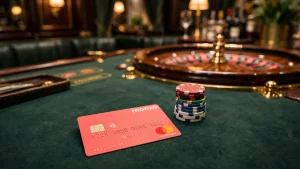
A crypto-friendly label is not confirmation: Litecoin should be named in the operator’s payment information and available to the UK customer.

A casino saying it accepts cryptocurrency has not necessarily confirmed that it accepts Litecoin. That distinction is easy to miss: a broad payment label can sound like a promise, while the actual options available to you may be narrower. I treat “crypto-friendly” as a prompt to check, not as proof that Litecoin is supported.
A specialist review of casino payment pages mentions Visa, Mastercard, bank transfer, e-wallets and several cryptocurrencies. That tells you the sites discussed offer a range of payment categories; it does not establish that Litecoin is one of them, or that every method is available to every UK customer. A list of crypto options needs to name Litecoin specifically before I’d rely on it.
The same caution applies when a page says it takes Bitcoin or other digital currencies. One coin does not stand in for another. Networks, supported assets and payment arrangements can differ, so a general reference to crypto is not enough to conclude that a casino takes Litecoin. Look for Litecoin named explicitly in the operator’s own payment information, then confirm that it is actually offered to your account.
If you’re looking for a UK casino that accepts Litecoin, check the payment options and terms before choosing. This list gives you one known detail to consider for each operator: its stated payout speed.
EvoSpin
EvoSpin lists a payout speed of 1–3 business days. Check whether Litecoin is available for deposits and withdrawals before you sign up.
Revery Play
Revery Play lists a payout speed of 1–3 business days. Check its payment options to confirm whether Litecoin is supported.
WinBeast
WinBeast lists a payout speed of 1–3 business days. Confirm directly whether its current payment options include Litecoin.
Amunbet
Amunbet lists a payout speed of 1–3 business days. Check its terms and payment options to see whether Litecoin is supported.
Britsino
Britsino lists a payout speed of 1–3 business days. Verify whether Litecoin is available before relying on it for payments.
NightWin
NightWin lists a payout speed of 1–3 business days. Check with the operator whether Litecoin is currently among its payment options.
x3bet
x3bet lists a payout speed of 1–3 business days. Confirm whether Litecoin is supported for the payments you plan to make.
Jetsetspins
Jetsetspins lists a payout speed of 1–3 business days. Check its current payment options to establish whether it accepts Litecoin.
NightLuck
NightLuck lists a payout speed of 1–3 business days. Verify Litecoin availability directly before choosing it for that purpose.
Dieselwin
Dieselwin lists a payout speed of 1–3 business days. Check its payment terms to confirm whether Litecoin is supported.
I’ve learned not to let a polished payment badge do the thinking for me. “Instant” can describe a marketing claim, not a confirmed Litecoin option for a UK player. And wording about Litecoin cards or debit payments can blur two different things: Litecoin is a cryptocurrency, while a card is a separate payment route. That distinction matters before you act on a claim.
There is also a difference between a method appearing somewhere on a website and being available in the UK. A specialist review lists Visa and Mastercard, but its list is not confirmation of current UK availability or of whether a particular card product is eligible. The operator’s cashier is the more relevant place to establish what your account can use.
For a legal online casino serving UK players, the operator must hold a current UK Gambling Commission operating licence. A payment claim does not tell you whether that requirement is met, and a licence does not by itself confirm Litecoin support. Those are separate checks.
So, can a UK casino take Litecoin? A site may say it does, but don’t infer support from the word “cryptocurrency” alone. Check for Litecoin by name and confirm the option is presented for your UK account before treating the claim as real. Small distinction. Big difference.
A payment logo on a landing page is a starting point, not proof that you can use that method from a UK account. I have learned to check the cashier before getting attached to a site: the methods shown there are more relevant than a broad claim that the casino accepts crypto or supports a particular payment service.
Availability can depend on the country selected during registration and the account itself. So check the cashier as a UK customer, rather than relying on a page written for a wider audience. If Litecoin is not clearly listed among the available methods, do not treat a general cryptocurrency mention as confirmation. Promotional pages can lag behind what the payment screen actually offers.
Currency deserves the same check. A specialist review I checked says GBP is supported, but that does not establish the currency setting for every account or every customer. Look for the account currency in the cashier or account details before making a transaction. If the account is set to another currency, a payment may be converted, adding a cost that is easy to overlook when the amount first appears on screen.
I once focused on whether a method was named and missed the more basic question: what currency would the account actually use? That made the headline payment option look more straightforward than it was. Check both details together—method and account currency—rather than treating one as a guarantee of the other.
It also helps to distinguish between a method being mentioned somewhere on the site and being available to your account. A page may describe several payment routes without showing which ones a UK customer can select. The cashier is the practical place to verify that distinction; if the information is unclear, ask the operator before registering or moving money.
Keep the check narrow. You are not trying to guess from a row of logos, nor to infer support from another customer’s experience. You want to see whether the specific method appears for your UK account and whether the account is denominated in GBP. If either point is unclear, pause and get an answer from the operator instead of assuming the transaction will work as expected.
That small check can save a frustrating detour. Payment support is not just a feature listed in a review; it has to match the customer, the account and the currency shown at the point of use. Check the cashier first. No guesswork.
If Litecoin appears as a deposit option, I would still pause before sending anything. The cashier should show the minimum for that specific method and the account currency the transaction will use. A general minimum displayed elsewhere on the site may not apply to a Litecoin deposit.
One specialist review puts minimum deposits across payment methods at £10–£20, but that is not a Litecoin-specific figure or a promise about what a particular cashier will accept. Treat the amount shown in your own account as the one that matters. If the cashier does not display a clear minimum before you commit, ask the operator rather than guessing.
Currency deserves the same check. One specialist review reports that GBP is supported, but that does not establish the currency selected for every new account. Confirm yours before the first transaction. If the account is set to another currency, a deposit intended as a particular pound amount could be converted, changing what reaches your balance.
I’ve learned not to treat the button as the whole story. Before confirming, check the payment method, the amount requested, the minimum, and the currency shown together. If the cashier offers Litecoin but gives no clear amount or currency details, stop there and get the operator to clarify. A vague screen is not a reason to improvise.
Searches for a small Litecoin deposit can make a fixed figure sound universal. It isn’t. The amount can depend on the selected method, and the cashier’s stated minimum is the practical threshold for that transaction. Don’t send a smaller amount assuming it will be credited, or increase it just to fit a number you saw elsewhere.
A no-deposit promotion is a different offer from a deposit transaction; the label alone does not tell you whether a Litecoin payment is needed or eligible. Keep the deposit check simple: confirm the method is available in your account, read the cashier’s own minimum, and verify GBP before you submit. If those details do not line up, leave the transaction unconfirmed. Short pause. Worth it.
A search for a casino that accepts Litecoin by card can blur two different things: paying with a bank card and sending cryptocurrency. A debit card transaction does not become a Litecoin payment just because the casino also supports crypto. Likewise, a site mentioning Litecoin has not necessarily said anything about card deposits. Treat them as separate payment routes and check what the cashier offers for your account.
UK casinos commonly accept debit cards, including Visa and Mastercard. That makes a debit card a familiar option for funding an account, but it does not confirm that a particular casino accepts every card product or that your card will work there. The cashier is the place to check current availability. I have learned not to rely on a logo in a footer: it can tell you what a site recognises in general, not what you can actually select.
Credit cards are different. The regulator banned credit card gambling on 14 April 2020, and the rule has not been relaxed. A UK-licensed casino cannot accept a credit-card payment for gambling, whether you try to pay directly or route the funds through a money service business. A wallet cannot be used as a workaround when it allows credit-card funds to be used for gambling either. “Alternative route” does not mean permitted route.
That distinction matters if you are comparing Litecoin casinos with card-friendly casinos. A debit card may be available even where Litecoin is not; Litecoin support, where offered, is a separate feature. Neither one should be inferred from the other. On mobile, the same principle applies: a payment option appearing in an app or mobile site is still a card or crypto method in its own right, not evidence that the two are connected.
I once saw “cards accepted” and mentally ticked off the payment question before checking which card type the wording meant. That shortcut was on me. For UK gambling deposits, focus on debit cards, not credit cards, and confirm the option in the casino’s cashier before you rely on it. If the payment screen does not make the distinction clear, pause and ask the operator rather than testing a prohibited route. Different rails. Different rules.
A slot can look like the reason to choose a casino, and a welcome offer can make the choice feel settled. I have made that mistake: I focused on the headline and left the conditions for later. The headline is the easy bit. Before you get attached to a particular game or promotion, check whether the game is available to you, whether it is eligible for the offer, and what the offer actually asks you to do.
There is no useful shortlist of “best” Litecoin slots or bonuses without verified details about the games and the terms attached to them. A casino mentioning cryptocurrency does not tell you what its slots library contains, and a generous-looking promotion does not tell you whether it applies to your chosen payment method. Keep those questions separate. Payment availability, game availability and bonus eligibility are not interchangeable.
A bonus has conditions, and the promotion’s full terms are where you find them. Look for the rules on who can claim it, when it applies, which games count towards any requirements, and what happens if you opt out or make a withdrawal while it is active. If the wording is unclear, do not fill in the gaps with the most favourable interpretation. That is how a small misunderstanding turns into a frustrating account dispute.
Pay particular attention to any wagering requirement and its calculation. The amount shown in an offer is not necessarily the amount you can withdraw, and games may contribute differently towards meeting the terms. Check whether the promotion has a maximum conversion amount, an expiry condition or restrictions on play. Those details can change the practical value of an offer far more than its headline figure.
I also look for terms that explain what happens to bonus funds and any winnings linked to them. Do not assume that cancelling an offer has no effect on funds already attached to it; read the cancellation rules before accepting. A promotion should make sense on its own, without needing you to guess what a clause means.
Read the rules first.
A payment method that works for an account may not qualify for a particular promotion. The two checks answer different questions: one is whether you can use a route to fund the account; the other is whether the casino’s offer terms allow that route while claiming a bonus.
One specialist casino review reports that PayPal may be excluded from bonus eligibility. Treat that as a reason to check the current offer terms, not as a rule for every casino or every promotion. Terms can be specific to the offer, and relying on a general statement can leave you with the wrong expectation.
The same habit applies if you are considering Litecoin. Do not infer bonus eligibility from a payment logo, a page about cryptocurrency, or an offer banner. Find the promotion’s payment-method exclusions and confirm that they cover the method you intend to use. If you cannot find a clear answer, ask the operator before accepting the offer. Keep a copy of the terms as they appeared when you made your decision.
There is little point chasing a bonus that your chosen method disqualifies. I would rather know that before signing up than discover it after I have already planned around the offer.
If you are comparing slots, start with what matters to you in the game itself: the rules, features, pace and how clearly the game explains its mechanics. Do not take a bonus page as proof that a particular slot is available, or that it will contribute fully to an offer. Check the game information and the promotion rules separately.
In Britain, online slot autoplay is banned, and each online slot spin must last at least 2.5 seconds. Those rules are worth keeping in mind when you compare how games feel to play. A mobile layout or a feature advertised as “fast” does not remove the rules that apply to online slots.
If you play on a phone, check that the game and the account pages work comfortably on your screen before treating the site as a good fit. Can you read the rules without fighting the layout? Can you find the bonus terms and account controls? A polished home page is not much use if the details you need are buried or difficult to read.
There is no need to pick a game because it is attached to an offer. If the rules are confusing, or you do not enjoy the way it plays, skip it. A promotion is not a reason to spend more time or money than you planned.
UK Gambling Commission rules require remote gambling licensees to prompt new customers to set a financial limit before their first deposit and to make account-level limit controls accessible. Take that prompt seriously. Pick a limit you can afford, and use the account controls to keep your spending within it. A bonus should not change the amount you have decided is acceptable to lose.
I would also decide in advance how much attention I am willing to give an offer. If understanding the terms takes more effort than the promotion is worth to you, leave it alone. You do not owe a casino a claim, and a missed bonus is not a loss.
The same applies to a game you have not checked. Read its rules, confirm any bonus restrictions, and make sure the choice still suits you without the promotion. If it does not, move on. That is a better filter than chasing a “best” label.
If Litecoin is not offered, I’d look for a familiar payment route rather than treating every cryptocurrency badge as interchangeable. The practical alternatives at UK casinos include debit cards, bank transfers, prepaid vouchers and, at some sites, e-wallets. Availability still depends on the casino and the account, so check the cashier before choosing one.
Debit cards are a straightforward place to start: UK casinos commonly accept Visa and Mastercard. That does not mean every card product will work, though, and a payment logo on a general information page is not proof that the method is available to you. Check the cashier and use a card in your own name. Credit-card payments for gambling are not an alternative at UK-licensed casinos.
Bank transfers and open banking are another route to check. A specialist review describes these as capable of providing instant deposits and fast withdrawals at many sites, but that is not a promise for every casino or every transaction. The bank, payment service and casino can all affect what happens. I’d check whether the option shown is an open banking service or a standard transfer, and whether the cashier presents it for both deposits and withdrawals. Names can sound similar; the route matters.
UK casinos commonly accept Visa and Mastercard. Use a card in your own name and check the cashier for availability.
Check if the option is an open banking service or standard transfer and if it supports both deposits and withdrawals.
Paysafecard allows deposits but cannot be used for casino withdrawals.
Skrill and Neteller are available at some sites but are often excluded from promotions.
Paysafecard works differently. It is a prepaid voucher for deposits, not a way to receive casino withdrawals. That can suit someone who wants to keep a deposit separate from a bank card, but the deposit-only restriction is important: don’t assume the same voucher can be used to cash out.
Skrill and Neteller are e-wallets available at some sites. A specialist review says these methods are often excluded from promotions, so read the promotion’s payment terms before using one if a bonus matters to you. The cashier and offer terms are more useful than a broad claim that a method is “bonus-friendly”. Small print, not a badge.
For any route, I’d keep the account details and payment account in the same name. It reduces the chance of basic ownership checks getting in the way, though it does not guarantee that a transaction will be accepted. Also check whether the method can be used for the part of the transaction you need: a deposit option is not automatically a withdrawal option. Paysafecard is the clear example of why that distinction matters.
There isn’t one best Litecoin alternative for every player. If you want a familiar card route, check Visa or Mastercard; if you prefer a bank route, inspect the exact transfer option; if you want a voucher or e-wallet, check its limits and terms in the cashier. Choose based on what the casino actually offers and what you need the payment to do—not the label attached to it.
A payment can look cheap at first glance and still cost more than you expect by the time it reaches your casino balance. I used to look for a visible fee and treat “no fee” as the whole story. It isn’t. The cost can sit with the casino, the payment provider, your bank or card issuer, the exchange rate, or the network handling a crypto transfer. A specialist payment review identifies these as separate possible charges, so check the full route rather than just the cashier’s headline.
With Litecoin, the amount you send and the amount credited need not match exactly if conversion or network costs apply. If your casino balance is in pounds, a crypto payment may involve converting between Litecoin and sterling; the exchange rate used for that conversion matters. A spread is the gap between the rate you might expect and the rate actually applied. A specialist payment review notes that this spread can outweigh a flat fee. The quiet cost, then.
Before you confirm a payment, look for any fee shown by the casino or provider, and check whether your bank or card issuer could charge separately. For a crypto transfer, account for the network cost as well. These charges may be presented in different places, so compare the final credited balance with the amount leaving your wallet, not just the number on the first screen. If the rate or fee is unclear, pause and ask the operator or provider before sending funds.
Costs can arise from the casino, payment provider, bank, exchange rate spreads, or network fees. A spread is the gap between the expected and actually applied rate, which can outweigh a flat fee.
There is no single payment method that is always the cheapest. A specialist payment review recommends comparing casino charges, provider fees, exchange-rate spread and network cost against the amount you actually plan to send. That last part matters: a fixed fee and a percentage-based cost do not affect every deposit in the same way. Nor does a method that costs less at one casino necessarily cost less at another. Compare the terms for the specific payment route and amount, rather than relying on a general claim that one method is “free”.
The amount you can deposit may depend on the payment method and the state of your account. A specialist payment review notes that maximums can apply per transaction, per day or per month, and may differ with account status. Read the cashier’s displayed limits and the operator’s payment terms before budgeting around a particular figure. A limit shown for one route is not proof that another route has the same cap.
It is worth checking whether the restriction is on a single transaction or on total deposits over a period. Those are different constraints. If your intended deposit would exceed a per-transaction cap, splitting it into several payments might not solve the problem: a daily or monthly cap could still apply, and extra transfers can mean extra network or provider costs. Don’t assume that repeatedly sending smaller amounts will be accepted or cheaper.
Your account settings matter too. UKGC rules require remote gambling licensees to prompt new customers to set a financial limit before their first deposit and to make account-level limit controls accessible. Treat that as part of your budget, not an obstacle to work around. Choose an amount you can afford to lose, then compare the payment route and its caps against that boundary. The cashier’s maximum is not a spending target.
I also find it useful to separate three figures before committing: what leaves my payment account, what the casino says it will credit, and what I can afford to spend. If those figures are unclear, the sensible move is to stop and get the terms clarified. A displayed balance can make a payment feel settled, but it does not erase fees or conversion costs that applied on the way in.
For Litecoin, don not treat the coin’s quoted market price as the rate your casino will use. Check whether conversion is involved, which rate is applied, and whether a network charge is deducted from the transfer. Compare the resulting credit with a pound-denominated budget. If you cannot tell what the final cost will be, you cannot make a meaningful “cheapest option” comparison. Better to wait than guess.
A deposit that lands straight away tells you little about how quickly you can take money out. The casino still has to approve the withdrawal, and your account may need to be verified before payment is released. A specialist casino review describes both the operator’s approval process and the state of the player’s verification as factors in withdrawal speed. The first payout can take longer while checks are completed. Fast in, not fast out.
That matters if you are looking at a casino that appears to support Litecoin. Check the cashier’s withdrawal options as well as its deposit methods; seeing Litecoin on one side does not, by itself, confirm that you can withdraw in Litecoin. The same goes for searches for a Litecoin card or a direct Litecoin payout: a card payment and a cryptocurrency transfer are different routes, and the option shown for your account is what counts.
There is also a reason a casino may not let you choose any destination you like. UK anti-money-laundering rules generally require winnings to go back to the original payment source. This is part of the payout process, not a quirk of making a deposit. If you used more than one route, the casino may explain how it handles the return of funds in its withdrawal terms.
Closed-loop rules can make a tidy payment trail useful: the cleanest route is often to use one account in your own name for both depositing and withdrawing. If the casino needs to send money by another route, expect it to ask for additional verification. Keep the account details consistent and read the cashier’s instructions before you request a payout. It can save avoidable back-and-forth.
I would not treat “instant withdrawal” as a promise that the money will be in your wallet immediately. There can be a casino review before the payment is sent, then the payment route has its own processing. Check the stated method, any verification requirements and the casino’s payout terms before you deposit. For Litecoin specifically, confirm that the same route is available for withdrawals; otherwise, you may need to use the casino’s stated alternative.
No shortcuts.
 Payment Methods at UK Online CasinosExplore UK casino payment options, from cards and bank transfers to e-wallets and cryptocurrencies, with an overview organised by method.
 Casinos That Accept ClickandBuy in the UKLearn how to check whether a UK casino accepts ClickandBuy, whether deposits qualify for bonuses, and what to verify about withdrawals and…
 Casinos That Accept Echeck in the UKLearn why a general payment listing is not proof of access and how the casino cashier shows which options are available for…
 Casinos That Accept Klarna in the UK: What to CheckLearn why a Klarna mention does not confirm slot availability, and what to verify in the cashier before treating it as a…
 Casinos That Accept Solana in the UK: What to CheckLearn why casino registration, Solana support and bonus eligibility are separate, and what payment terms to check before depositing.
 Casinos That Accept Tether in the UK: What to CheckLearn why general crypto payment claims do not confirm USDT support, and why the UK cashier must be checked for the methods…
 Casinos That Accept Click2Pay in the UKLearn why a Click2Pay listing may not confirm availability, how deposits relate to slots, and what to check in the cashier and…
 UK Casinos That Accept Boku: Deposits and LimitsLearn how Boku deposits are verified by SMS, charged to a mobile bill or PAYG balance, and why the payment route affects…
A search for Litecoin casinos outside GamStop can make two separate things sound like one: how a site handles payments and whether it is part of a self-exclusion scheme. They are not the same check. A casino might mention crypto without offering Litecoin, and Litecoin support would not tell you anything about its GamStop status.
I would not treat “not on GamStop” as a recommendation. It does not establish that a site is safe, suitable or authorised to serve people in Britain. Remote gambling operators taking customers in Great Britain need the relevant UK Gambling Commission licence; an offshore casino outside that system is not made legitimate by accepting a familiar coin or appearing in a list.
Check the operator’s current licence on the UKGC public register before you deposit. If you are considering an operator that is not licensed for the British market, be clear that it sits outside the UK regulatory system. A payment option cannot fill that gap. Different question.
If you use self-exclusion because gambling has stopped feeling manageable, looking for a site that avoids that barrier is a warning sign, not a clever workaround. I have learned the hard way that an easy route back can cost more than it appears to in the moment. Pause, and use the support options available to you rather than trying to bypass a safeguard.
For any UKGC-licensed casino, there should also be practical controls before play begins: remote operators must ask new customers to set a financial limit before their first deposit and make account-level limit settings accessible. I would check that those controls are there and usable, rather than assuming a payment method or a site label tells me how the account is run.
So keep the questions separate: verify licensing and account protections, then confirm whether Litecoin is actually offered. A site being described as “outside GamStop” answers neither question on its own.
PayPal, open banking and debit cards linked to fast payout systems are generally among the quickest options. The casino’s approval process and your verification status also affect how quickly you receive the money.
Yes, casinos may need to complete verification before approving a withdrawal, particularly for a first payout. Having your account fully verified can help avoid delays.
No. Withdrawal speed depends on the casino’s approval process and whether your account is fully verified.
Returning funds to the original payment source is a common anti-fraud and anti-money-laundering control. Using another route may mean additional verification.
No. Visa and Mastercard identify card networks, not whether a particular card is eligible; check the cashier for your card product. Credit card gambling is banned in the UK.
The casino must still approve the withdrawal, and verification—especially on a first payout—can take extra time. A card deposit may be instant even though the payout takes several business days.
Yes, Skrill is available at some UK-friendly casino sites and remains a common deposit method. It may be excluded from promotions.